

Hindutva and the Taliban: Ideological Convergence of Authoritarian Nationalisms
Throughout history, political extremism has emerged wherever social anxiety meets ideological certainty. Movements across cultures have exploited fear, identity, and nostalgia to consolidate power....

Throughout history, political extremism has emerged wherever social anxiety meets ideological certainty. Movements across cultures have exploited fear, identity, and nostalgia to consolidate power. Whether under the banner of faith, ethnicity, or nationalism, such regimes promise salvation through purity, a return to an imagined golden age when social order was unquestioned and divine will governed human affairs. In doing so, they transform religion from a source of moral guidance into a tool of political control.
This phenomenon is vividly illustrated by two seemingly disparate movements: India’s Rashtriya Swayamsevak Sangh (RSS) and Afghanistan’s Taliban. Despite their distinct religious and cultural foundations, both have evolved into ideological projects rooted in exclusivism, anti-modernism, and patriarchal control. Each movement arose amid perceived national humiliation, one in the shadow of colonial rule, the other in the aftermath of foreign occupation, and both seek to restore moral order through the rigid enforcement of extremist faith. Beneath the surface, their politics reflect a shared disdain for pluralism, true democracy, and women’s autonomy.
Using the frameworks of Political Extremism and Authoritarian Nationalism, the comparison between the RSS and the Taliban reveals how two seemingly faith-based movements, despite belonging to different religious and cultural worlds, display strikingly similar political patterns, exposing how movements divided by creed can still converge in their pursuit of homogenous societies built on fear, exclusion, and moral absolutism.
Historical Roots of Hindutva and the Taliban
The RSS was founded in 1925 amid colonial rule as part of a broader turn to Hindu nationalist movements. Its early ideologues, notably Vinayak Savarkar, framed India as a Hindu rashtra, a nation defined not by secular pluralism but by Hindu faith and culture. Savarkar’s slogan “Hindutva” fused religious, linguistic, and racial unity, effectively equating Hinduism with Indian identity.
Over the decades, the RSS and its affiliates (the Sangh Parivar) promoted this vision through education, cultural organizations like the Vishwa Hindu Parishad, and political wings such as the Bharatiya Janata Party (BJP). The BJP, self-described as the political expression of RSS ideology, rose to power in 2014 under Narendra Modi, advancing a majoritarian agenda that critics describe as a shift from India’s secular founding principles toward a “Hindu rashtra” model.
Textbooks were rewritten to glorify ancient Hindu empires, interfaith marriages vilified as “love jihad,” and citizenship laws redrawn to exclude Muslims. The Citizenship Amendment Act (2019), which expedites naturalization for non-Muslims from neighboring states, is widely regarded as discriminatory against India’s 200 million Muslims.
The Taliban, meanwhile, emerged in the 1990s amid Afghanistan’s civil war. Drawing on the Deobandi Islamist tradition, the group captured most of the country by 1996 and imposed an extremist interpretation of Sharia. After being ousted by U.S. forces in 2001, the Taliban regrouped and returned to power in August 2021. Within four years, they have issued more than seventy decrees rolling back women’s rights and personal freedoms.
According to UNESCO, the Taliban have “sought to erase women from public life,” banning female education beyond primary school and excluding women from employment. Between 2001 and 2021, Afghan female literacy had risen from 17% to 30%; today, over 2.2 million girls are barred from school. The policy not only maligns the image of Afghans across the globe but also tarnishes the actual teachings of Islam.
Thus, both the RSS/BJP and the Taliban emerged from historical conditions of trauma and identity crisis, one from colonial subjugation, the other from occupation and war, yet converged on similar ideological trajectories.
Ideological Parallels: Majoritarianism and Mythic Pasts
At their core, both movements define nationhood in exclusionary, faith-based terms. Hindutva ideology posits that India is fundamentally a Hindu nation, while the Taliban envision Afghanistan as an Islamic emirate governed solely by their self-made extremist interpretation of divine law.
Both indulge in mythic pasts. The Hindu Right romanticizes “Ram Rajya”, a supposed golden era of Hindu purity, while the Taliban evokes the pre-modern Afghan tribal order, branding it as an Islamic model. As extremism scholars note, such movements thrive on the “ mythic past,” glorifying eras when social hierarchies were absolute and dissent unthinkable.
In both narratives, modern secularism, women’s emancipation, and pluralism are seen as corruptions imported from the West. Consequently, education, feminism, and multiculturalism are rebranded as existential threats, not just to faith, but to the nation itself.
Women’s Rights and Social Control
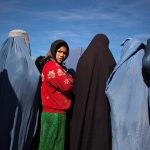
The starkest parallel lies in gender politics. Under Taliban rule, Afghan women have been almost entirely erased from public life. Secondary and higher education are banned for girls; women cannot work or travel without male guardianship; and more than 80% of women journalists have lost their jobs.
India’s situation is different in degree but not in direction. While women’s rights remain constitutionally guaranteed, Hindutva movements promote a hyper-traditional image of womanhood, the chaste, sacrificial Bharat Mata. Women are symbolically exalted yet politically constrained. RSS-affiliated groups mobilize female followers only to reinforce patriarchal norms and demonize feminism as a Western intrusion.
Under BJP governance, India’s gender gap has worsened: it now ranks 131st in the World Economic Forum’s Gender Gap Index (2025), and female parliamentary representation has stagnated at under 14%. The state’s moral regulation of women, from “love jihad” propaganda to cultural policing mirrors the Taliban’s enforcement of “virtue.” Both systems reduce women to vessels of cultural purity and national honor.
State Power and Pluralism
Both ideologies fuse their versions of religion with governance, rejecting secular constitutionalism. In India, Hindutva leaders dismiss secularism as a “Western import,” promoting laws and institutions that privilege Hindu identity. The RSS’s influence extends deep into education, bureaucracy, and the judiciary, eroding pluralist foundations.
In Afghanistan, the Taliban’s “Basic Law” declares that all legislation must conform to their interpretation of Hanafi Sharia. The Ministry for the Promotion of Virtue and Prevention of Vice enforces moral codes, bans music, and suppresses dissent. Extremist religious legitimacy replaces democratic consent.
The outcomes are parallel: pluralism collapses, minorities are marginalized, and extremist interpretation of religion becomes a weapon of statecraft. Both India and Afghanistan now exhibit what scholars call sacralized authoritarianism, regimes that sanctify repression as a moral duty.
Fear, Extremism and Regional Alignments
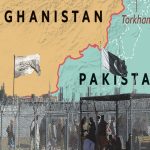
The politics of fear increasingly transcends borders. India’s growing engagement with the Taliban, long viewed as an adversary, reflects a strategic recalibration shaped by its enduring rivalry with Pakistan. What was once a policy of isolation has quietly transformed into cautious outreach, as New Delhi seeks influence in Kabul to destabilize Pakistan’s Eastern border. Meanwhile, the Taliban continue to give refuge to the Fitnah Al-Khawarij (FAK), the group responsible for cross-border terrorism inside Pakistan. This duplicity, professing peace while enabling violence, has deepened Islamabad’s frustration and raised suspicions that external actors are quietly abetting instability along Pakistan’s western frontier.
On 16 October 2025, Pakistan’s military issued a stern warning following provocative statements from Indian commanders. The Inter-Services Public Relations (ISPR) declared that “the people and Armed Forces of Pakistan are fully capable and committed to defend every inch of their territory with full resolve.” It condemned India’s “Bollywood-style scripts” and election-season war rhetoric, observing that such fabrications consistently emerge before state polls to stir nationalist fervour and distract domestic audiences. The ISPR warned that any Indian aggression would be met with a “swift and intense response.” The statement was not merely a rebuttal; it reflected growing anger in Islamabad that New Delhi’s Hindutva-fuelled populism is translating into aggressive military posturing along both eastern and western fronts.
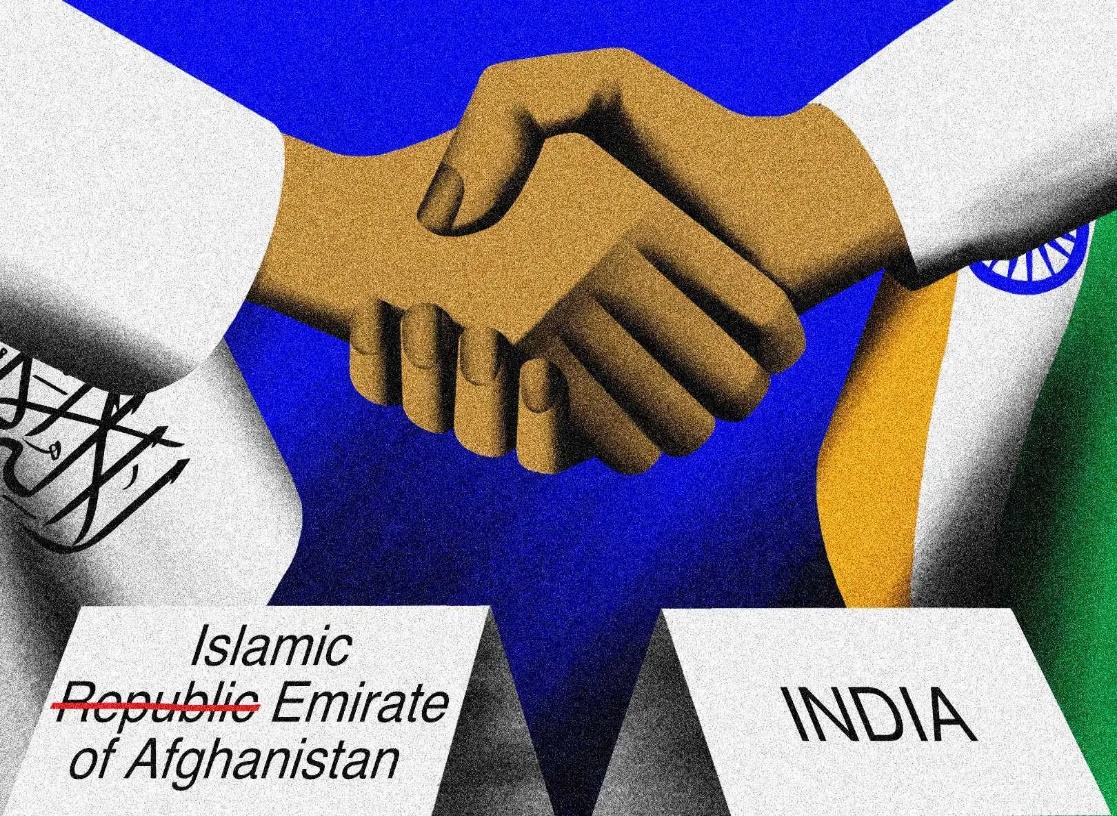
At the same time, Chinese analysts have begun interpreting the Pakistan–Afghanistan tension through a wider geopolitical lens. Writing in The Print (15 October 2025), analyst Sana Hashmi noted that Chinese commentators increasingly view India’s outreach to the Taliban as a deliberate attempt to contain Pakistan and disrupt China–Pakistan Economic Corridor (CPEC) projects. Within Chinese policy circles, the handshake between Indian Foreign Minister S. Jaishankar and Taliban Foreign Minister Amir Khan Muttaqi is seen as more than diplomatic symbolism; it represents a tactical convergence between two actors who share a wary posture toward Pakistan’s regional influence. Some Chinese strategists even suggest that this emerging India–Taliban understanding may be quietly encouraged by Western powers seeking to limit Chinese and Russian leverage in Central and South Asia.
This convergence of extremist religious nationalism, militarized populism, and geopolitical rivalry reveals a dangerous new trend: ideological extremism is no longer confined within national borders but now operates as a transnational strategy of power. In India, Hindutva uses fear of the “Muslim other” to legitimize domestic control and external confrontation. In Afghanistan, the Taliban invoke threats from “foreign agents” to sustain their authority and suppress dissent. Both movements depend on the same logic, constructing enemies to preserve legitimacy. Together, they exemplify how the politics of fear has become the currency of governance in South Asia, linking the rhetoric of divine mission to the pursuit of regional dominance.
Risks and Reflections
The parallels between Hindu nationalist and Taliban extremism highlight a sobering reality for South Asia: the ideological convergence of religious extremism is now feeding into regional geopolitics. What began as parallel quests for cultural purity and divine order has morphed into a dangerous blend of populism and militarism, where faith-based nationalism finds validation in external aggression.
India’s outreach to the Taliban, framed as strategic realism, risks legitimizing a regime built on repression, and exposes the moral contradictions of Hindutva regime. As Chinese analysts observe, such engagement turns Afghanistan into a proxy theatre for Hindutva expansionism, echoing the same authoritarian impulses that dominate India’s domestic politics.
Pakistan’s military response underscores growing regional volatility. By warning of a “swift and intense response” to Indian aggression, the ISPR reminded the world that Hindutva’s militarized populism has real consequences beyond rhetoric. Combined with the Taliban’s extreme ideological rigidity, the region now teeters between religious absolutism and geopolitical brinkmanship.
Ultimately, the RSS/BJP and the Taliban demonstrate how religion, when politicized, becomes an instrument of control rather than conviction. Both regimes weaponize fear, idealize the subjective past, and conflate moral purity with national strength. Their convergence shows that the gravest threats to South Asia’s stability are not theological differences but authoritarian similarities.
Unless regional states recommit to pluralism, constitutionalism, and human dignity, South Asia risks becoming a theatre where the extremes of Hindutva and Talibanism mirror each other, two authoritarian nationalisms divided by creed, but united in their contempt for freedom.
Author