
Afghanistan: The Graveyard of Promises
When the world adopted the Universal Declaration of Human Rights (UDHR) in 1948, it was not merely a legal text, it was a promise. A promise that every human being, regardless of gender, race, or...

When the world adopted the Universal Declaration of Human Rights (UDHR) in 1948, it was not merely a legal text, it was a promise. A promise that every human being, regardless of gender, race, or faith, would live with dignity, freedom, and equality. The UDHR became the moral compass of humanity, a shield against tyranny and oppression. Yet, more than seven decades later, that promise lies broken in Afghanistan.
When the Taliban first seized Kabul in 1996, Afghanistan descended into one of its darkest eras, a place where justice was replaced by fear and public executions stood in for law. The world watched as women were erased from public life, education was declared forbidden, and a nation was pushed into medieval silence. Twenty-five years later, history repeated itself with haunting precision. The U.S. withdrawal in August 2021 did not mark the end of war but the rebirth of repression. As Kabul fell once more, the fragile progress of two decades collapsed overnight.
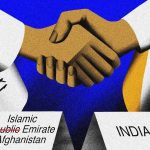
The Taliban, cloaked in rhetoric of reform, swiftly dismantled the 2004 Constitution, revoked civil protections, and imposed their rigid interpretation of Sharia. The result was not governance but control, not justice but subjugation. For Afghan women and children, every street became a checkpoint of humiliation, every classroom a forbidden space. Beyond its borders, regional powers exploited this turmoil. India, in pursuit of strategic leverage, has sought to manipulate Afghan instability as a proxy front, nurturing ideological extremism and inflaming sectarian discord, echoing the very spirit of Fitnah al-Khawarij and Fitnah al-Hindustan.
Today, Afghanistan stands as a test of the world’s moral resolve. The principles enshrined in the UDHR have been reduced to paper ideals in the face of the Taliban regime, and the world needs to act now.
Power Vacuum and Proxy Battlefield
The Taliban’s return to power in 2021 was swift and devastating, leaving Afghanistan fractured and leaderless. The 2020 Doha Agreement between the U.S. and the Taliban paved the way for a troop withdrawal without ensuring a ceasefire with the Afghan government, triggering a rapid collapse of the army and state institutions. Within days, provincial capitals fell, and a power vacuum emerged. As aid, which once made up nearly 80% of public spending, was cut and central bank reserves frozen, Afghanistan plunged into economic free fall. The collapse of banking systems and the halt of development assistance led to mass unemployment, food insecurity, and the breakdown of public services. In this vacuum, Taliban commanders wielded unchecked authority, issuing arbitrary decrees and punishing dissent while extremist offshoots like ISIS-K thrived amid the chaos. Meanwhile, India exploited Afghanistan’s instability for its strategic interests, using covert networks and disinformation to inflame sectarian and ideological divisions, fuelling Fitnah al-Khawarij and Fitnah al-Hindustan terrorism to weaken Pakistan’s regional influence. What remained was a shattered nation, one ruled by fear, stripped of rights, and manipulated by external powers that viewed Afghanistan’s suffering as a strategic opportunity rather than a human tragedy.
On Ground Reality: Violation of the UDHR
Since 2021 the human rights situation in Afghanistan has dramatically deteriorated. The Taliban have imposed draconian restrictions and carried out flagrant abuses against broad swathes of society. The evidence is stark: women and girls, ethnic and religious minorities, former government officials, journalists, activists and ordinary citizens all face systematic oppression. The United Nations and rights groups have documented large-scale violations. For example, UNAMA (the UN Assistance Mission in Afghanistan) reported “at least 38 instances of arbitrary arrest and detention, at least 10 instances of torture and ill-treatment… and at least 4 extrajudicial killings” of former officials between January and March 2024. In just the same period, Taliban courts carried out public executions of convicted men (three executions in February 2024 alone) and public flogging of individuals for “immorality” (two men were each flogged 35 times in public in late February 2024). These acts are a stark repudiation of basic legal protections; they violate the UDHR’s guarantees of right to life, liberty and security of person (Article 3), as well as its prohibition of torture and cruel punishment (Article 5).
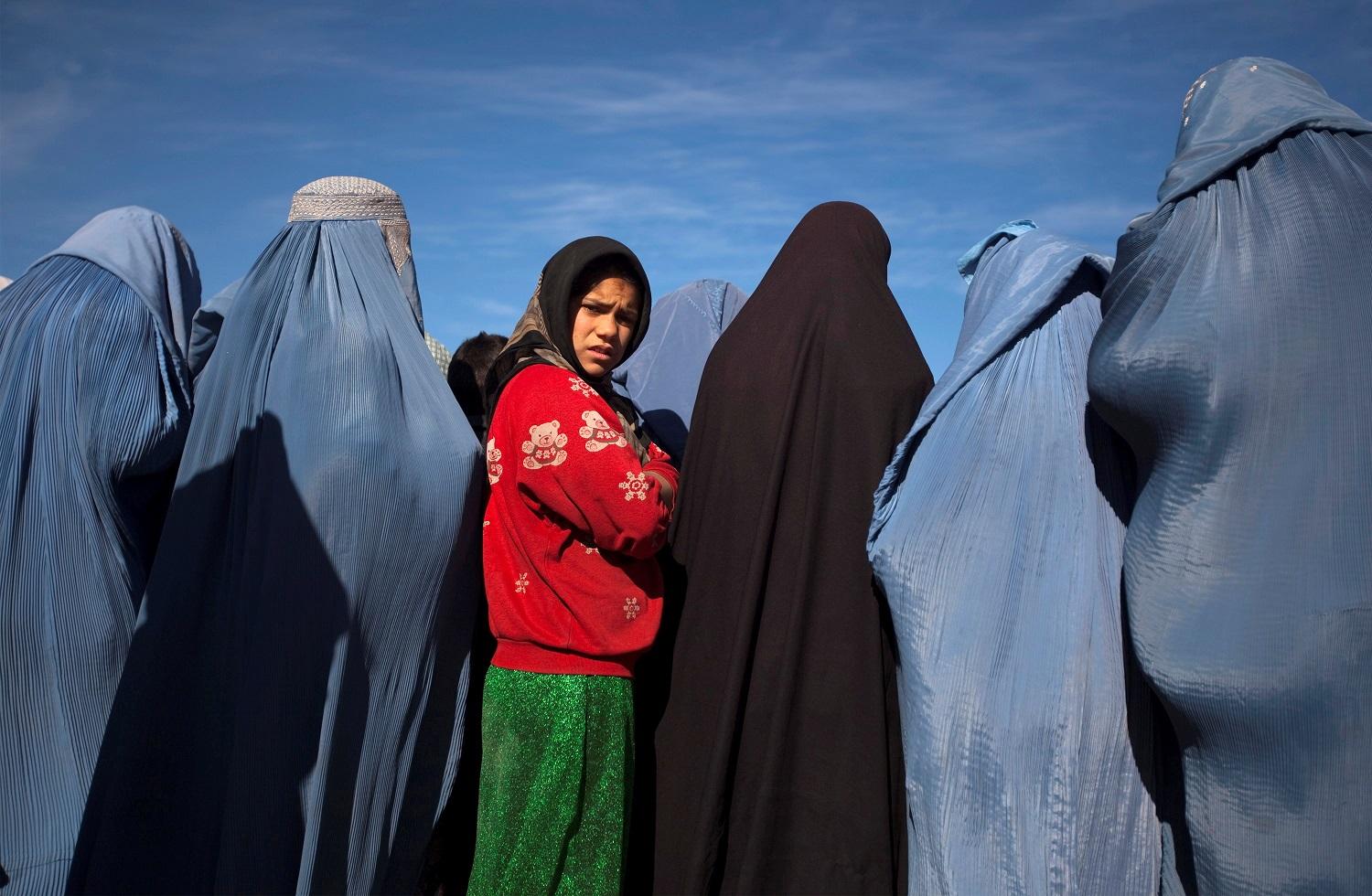
Furthermore, Afghan women and girls have endured one of the most severe human rights backslides in modern history. The regime has systematically stripped them of basic freedoms to study, work, move, and participate in public life, making Afghanistan the only country in the world where girls are banned from secondary and higher education. By 2023, they prohibited female attendance at schools and universities, enforced full-face coverings, and barred women from most jobs, including in government, NGOs, and even healthcare. Amnesty International describes these measures as “gender persecution,” amounting to crimes against humanity. These actions violate Articles 2, 5, 7, 23, and 26 of the Universal Declaration of Human Rights (UDHR), which guarantee equality, dignity, and the rights to education and work. Women’s autonomy is further curtailed by Taliban decrees requiring a male guardian (mahram) for travel and imposing strict dress codes enforced by the “morality police.” Politically, women have been erased from governance, no female ministers, judges, or civil servants remain, and gender-based violence has surged, with over 840 documented cases and 332 killings between 2022 and 2024.
Freedom of expression and civil society have also been crushed. Journalists and activists face arrests, torture, and disappearances merely for reporting or protesting. In early 2024, a Kabul editor was detained for covering the Taliban’s hijab decree, exemplifying the erosion of Article 19 (freedom of opinion and expression). Peaceful assembly, protected under Article 20, is effectively banned; women protesters have been beaten, detained, and threatened, even on occasions like International Women’s Day. Civil society leaders, lawyers, and teachers have been silenced through intimidation or extrajudicial killings, while Taliban courts dispense summary punishments without due process, violating Articles 10 and 11 of the UDHR.
Ethnic and religious minorities, particularly Hazaras and Shia Muslims, face targeted violence from both the Taliban and ISIS-K. Amnesty International has documented repeated bombings of Hazara mosques and communities, killing hundreds. Minority groups such as Sikhs, Hindus, and Ismailis face restrictions on worship and open discrimination. These acts breach Articles 1, 2, 3, and 18, which guarantee equality, life, security, and religious freedom.
Meanwhile, Afghanistan’s economic collapse has deepened the humanitarian catastrophe. More than 28 million Afghans now need humanitarian assistance, and 23 million face food insecurity. UNICEF reports 4 million people, including 3.2 million children under five, suffering acute malnutrition. Hospitals lack staff and supplies, schools remain closed, and bans on women working in aid or education have crippled recovery efforts. These conditions violate Article 25, ensuring the right to an adequate standard of living, and Article 26, guaranteeing access to education.
Desperation has forced millions to flee, yet even the right to asylum, enshrined in Article 14, is under threat. Pakistan and Iran have reported millions of Afghan refugees, fleeing from human rights abuses. For countless civilians, women, children, minorities, and the displaced, Afghanistan today represents the collapse of nearly every protection envisioned by the UDHR.
Implications and Role of Pakistan as Saviour
Afghanistan’s ongoing human rights collapse has devastated its society and global standing alike. Domestically, the Taliban’s repression, especially against women and minorities, has crippled education, paralyzed the economy, and shattered healthcare systems, violating multiple articles of the Universal Declaration of Human Rights. Women are excluded from work and schooling, ethnic minorities like the Hazaras face persecution, and extremist groups such as IS-Khorasan operate freely, eroding what remains of social order. Internationally, these abuses have left Afghanistan isolated; no state recognizes the Taliban regime, and aid is tightly restricted through the UN. The UN Security Council and human rights bodies have repeatedly condemned Taliban decrees. In 2025, the International Criminal Court issued arrest warrants for Taliban leaders for crimes against humanity, while several Western nations filed cases at the International Court of Justice under CEDAW. Together, these actions reflect a global acknowledgment that the Taliban’s rule has obliterated Afghanistan’s commitment to human rights and accountability.
Regionally, however, the crisis has taken a dangerous turn. Afghanistan’s instability has once again emboldened extremist networks operating along its borders, leading to a surge in cross-border terrorism that has directly affected Pakistan. Over the past year, Pakistani security forces have faced increased attacks by groups using Afghan soil as a sanctuary, an alarming reversal reminiscent of the pre-2001 environment. The situation recently escalated into an armed border clash between Taliban and Pakistani forces, highlighting how Taliban intransigence now threatens not only human rights but regional peace and stability. India has greatly led to these tensions, expanding its influence in Afghanistan through selective engagement with the Taliban while simultaneously backing anti-Pakistan narratives. This strategic maneuvering has aggravated mistrust and fueled cross-border hostilities, deepening Pakistan’s security dilemma.
Despite these provocations, Pakistan continues to emphasize humanitarian engagement with the Afghan people rather than confrontation. Islamabad has consistently reiterated its readiness to assist Afghanistan through economic cooperation, humanitarian aid, and regional dialogue. Pakistan remains host to millions of Afghan refugees and continues to advocate for their protection. Its recent election to the United Nations Human Rights Council for the 2026–2028 term, with a resounding 178 votes, underscores Pakistan’s renewed global commitment to defending human rights and promoting inclusive peace. Serving its sixth term on the Council, Pakistan is uniquely positioned to advocate for the rights of Afghans, especially women, minorities, and refugees, at international forums, and to push for accountability and humanitarian access within Afghanistan. This platform provides Pakistan with diplomatic leverage to mobilize multilateral support for Afghan human rights and to engage the Taliban through dialogue anchored in the principles of the UDHR.
Conclusion
Afghanistan today stands as a wounded nation, a place where dreams have been buried beneath the rubble of war, ideology, and betrayal. Once a land of poets, scholars, and resilient people, it has been reduced to a graveyard of promises. The cries of Afghan women echo in empty classrooms; the laughter of children has been replaced by silence and fear. Every article of the Universal Declaration of Human Rights that once symbolized hope has been torn apart in the streets of Kabul, Herat, and Kandahar. The world must now choose between apathy and action, between watching a nation fade or helping it rise again. The Afghan people deserve more than survival; they deserve dignity, education, and the freedom to dream once more.
Author