


Healthcare Brinkmanship: New Mexico Patients Caught in Corporate Crossfire
POLICY WIRE — ALBUQUERQUE, N.M. — Forget the calendar. Forget corporate spreadsheets, too. Steve Norte, a retired schoolteacher from New Mexico, understands June 1st as something far more visceral:...

POLICY WIRE — ALBUQUERQUE, N.M. — Forget the calendar. Forget corporate spreadsheets, too. Steve Norte, a retired schoolteacher from New Mexico, understands June 1st as something far more visceral: it’s a personal precipice. He’s battling cancer, mid-treatment, staring down more than $150,000 in bills and the looming threat that his health insurer might just… opt out. He’s in the middle of radiation planning. His words paint a stark picture, really: a life already consumed by sickness now saddled with existential financial dread. And this, Policy Wire notes, is the raw, human cost when health giants play high-stakes poker.
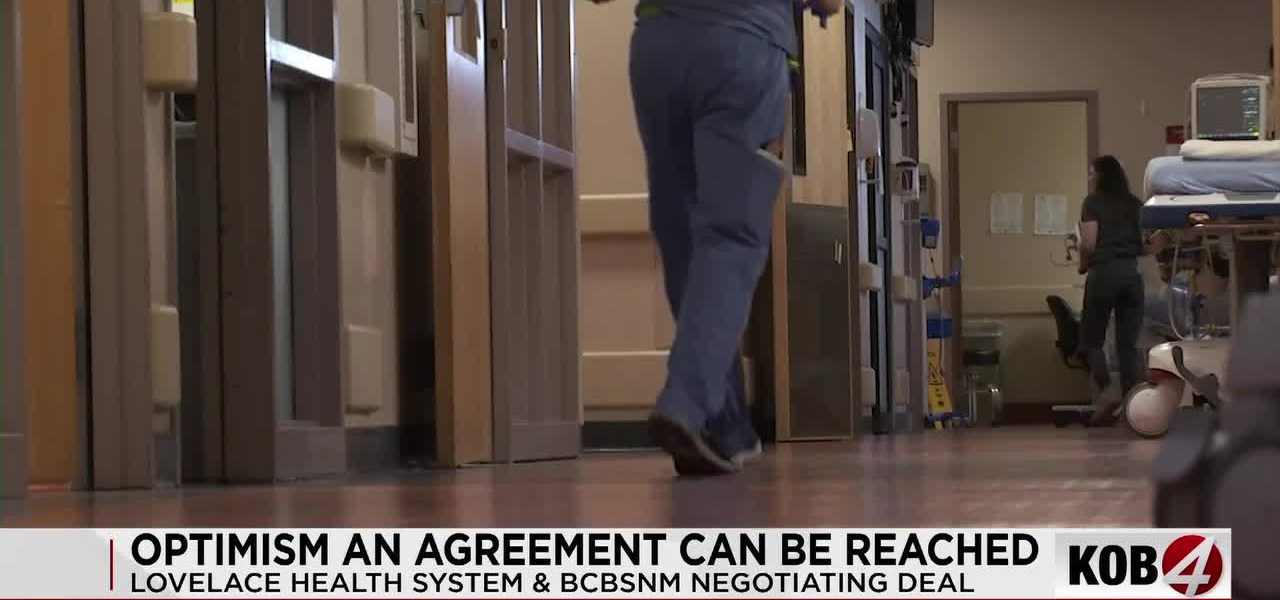
It’s an old tune, played repeatedly across America’s peculiar healthcare landscape. Big hospital systems and big insurance companies go toe-to-toe, armed with lawyers and actuaries, all while patients—actual, breathing people—become collateral damage. Lovelace Health System and Blue Cross Blue Shield of New Mexico (BCBSNM) are dancing this dangerous waltz, their current contract expiration fixed for the first of next month. But if they don’t nail down a deal, thousands could find themselves without coverage, at least temporarily.
Dr. Vesta Sandoval, Lovelace’s Chief Medical Officer, tried to offer a dash of calm amidst the gathering storm. She says negotiations started back in February. And, yes, they’re still talking. “It’s common in these negotiations for things to be prolonged because there’s so many different topics to have to discuss,” Sandoval told reporters. That’s an awfully mild way to put it when folks like Norte could lose access to care. It’s not just a business transaction; it’s a social compact. But what exactly are those ‘topics’? Payment rates, certainly. The thorny issue of prior authorizations—those bureaucratic hoops providers jump through to get paid—always on the table. And, of course, the ever-shifting sands of federal funding rules. Sandoval put a finer point on it: “We have a shortage of doctors. We have a shortage of being able to care for patients — and access for patients. So we really want to continue growth and see that we can expand the access for patients in New Mexico.” A noble sentiment, no doubt, but one uttered within a system that often seems to defy its own stated goals.
BCBSNM, for their part, maintains a measured, corporate distance. “We’re committed to reaching a fair and sustainable agreement that prioritizes our members’ health and keeps care accessible,” stated a BCBSNM spokesperson, speaking on condition of anonymity, perhaps because candor often gets in the way of quarterly earnings. “Our objective remains to ensure continuity of coverage for New Mexicans, balancing affordability with the high-quality services our members deserve.” It’s a statement polished to a high sheen, designed to reassure, but perhaps revealing little more than standard operating procedure.
Norte’s frustration is palpable, universal even. “I don’t need that added stress of wondering if my bills are going to get paid. I worked 50 plus years putting into my retirement, Social Security, Medicare, and now it’s my turn to start having that taken care of, and I don’t see it being taken care of.” It’s hard to argue with a man fighting for his life, whose hard-earned security now seems illusory. His allegiance remains with his doctors, with the institution treating him: “I see no reason to switch from Lovelace. Basically, they’re the same as any other health care organization. But like I said, I’m right in the middle of a rapids, and I’m not going to jump ship in the middle.” It’s a common plight for many; once entrenched in a system, navigating a change can be insurmountable, particularly for those facing serious illness.
This kind of standstill isn’t unique to New Mexico, mind you. But this state does have its own specific headaches. New Mexico’s atmospheric challenges are more than just weather; they’re often reflected in public services, or lack thereof. A 2023 report from the New Mexico Department of Health indicated the state needs approximately 260 additional primary care physicians to meet its population’s demands—one of the highest per capita shortages nationwide. That kind of scarcity only amplifies the anxiety when a major hospital system — and insurer can’t agree on terms. It puts the patient between a rock — and a very hard place.
Lovelace has, apparently, inked a deal with Turquoise Care—which handles Medicaid beneficiaries. But Medicaid patients, by definition, represent a different negotiation ballgame than the private market. For BCBSNM enrollees, the situation remains murky. Lovelace insists it’s keeping patients updated, a cold comfort perhaps to those just hoping to get their next dose of medication without interruption. It’s an American reality, this market-driven roulette, sometimes baffling for those looking in from nations where healthcare, for all its flaws, isn’t quite so entangled with corporate bottom lines.
What This Means
The looming June 1st deadline isn’t just a calendar entry for Lovelace and BCBSNM; it’s a bellwether for the ongoing power struggle in American healthcare. These disputes highlight how fragile patient access can be, especially in states like New Mexico grappling with systemic provider shortages and a populace that simply can’t afford interruptions. Economically, this brinkmanship often results in higher premiums for everyone down the line, as whatever ‘compromise’ is reached usually comes at an elevated cost to members or employers. But here’s the rub: if they fail to agree, local economic activity around Lovelace facilities could see an immediate, if temporary, dip, affecting local jobs and ancillary businesses. And, politically? Well, politicians here in New Mexico, as elsewhere, mostly stay clear, unwilling to poke either the well-funded healthcare industry or the large insurance companies. But constituent outcry, should coverage lapse, can make their jobs miserable.
Culturally, this constant dance between corporate titans—where health becomes a bargaining chip—contrasts sharply with the philosophies of many South Asian and Muslim-majority nations, for instance, where the discussion around health provision often leans, at least ideologically, towards a more collective, state-guaranteed right, even if practical implementation is flawed. In Pakistan, for example, the concept of a publicly accessible, if overburdened, health infrastructure, alongside an emerging private sector, highlights the similar push-and-pull, though often with a different foundational ethos. Here, in America, it’s about ‘sustainable access,’ code for balancing profit with provision. For Steve Norte, though, it’s just about getting his next treatment. But maybe that’s the point. It always circles back to the guy on the table.