


Gorakhpur’s Granite Gambit: Cricket, Culture Wars, and Uttar Pradesh’s Evolving Playbook
POLICY WIRE — Gorakhpur, India — There’s a certain grim irony in the very ground beneath the nascent Gorakhpur International Cricket Stadium. For decades, this patch of Purvanchal, a vast, often...

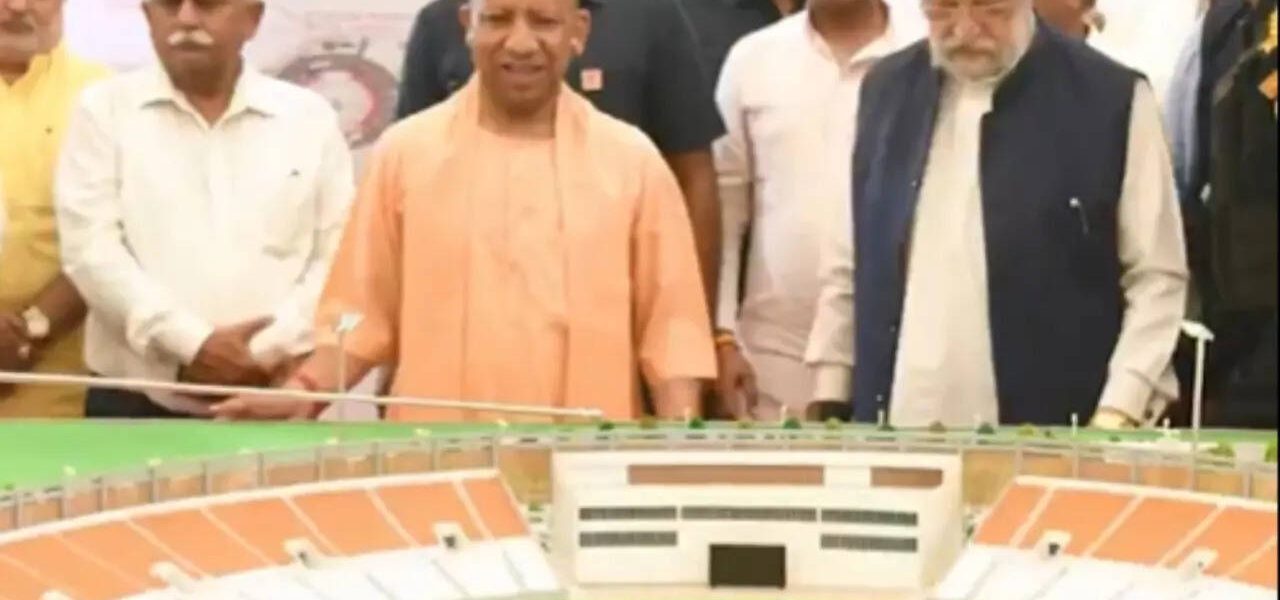
POLICY WIRE — Gorakhpur, India — There’s a certain grim irony in the very ground beneath the nascent Gorakhpur International Cricket Stadium. For decades, this patch of Purvanchal, a vast, often neglected region in eastern Uttar Pradesh, has been synonymous with encephalitis epidemics, endemic poverty, and—for some—the muscular, saffron-clad politics of its now Chief Minister, Yogi Adityanath. Now, however, the official narrative tells us it’s about leather on willow, roaring crowds, — and economic uplift. Adityanath himself was on hand, shovel in mitt, for the ceremonial groundbreaking.
It’s not just a stadium, of course. It rarely is with this administration. It’s a statement. A 30,000-seat amphitheater, they say, earmarked to host international-level contests. The government figures this thing will clock in around ₹600 crore ($72 million), split between the central sports ministry and state funds. But one can’t help but look beyond the perfectly manicured future pitch and see the rough-and-tumble of Indian politics, a game played with far higher stakes than any run chase.
This isn’t about mere sports infrastructure in a backwater. No, not entirely. It’s about optics. About rebranding. For years, Gorakhpur, Adityanath’s spiritual and political home turf, conjured images of firebrand rhetoric and, regrettably, preventable child deaths from neglected health services. Now, you’re meant to picture stadium lights — and a vibrant future. And who wouldn’t want a new, shiny cricket facility? India, after all, loves its cricket—it’s practically a religion itself for a staggering number of its citizens.
“This stadium ain’t just about wickets and boundaries; it’s about jobs, young dreams, and getting Uttar Pradesh back on the map for sport. We’re getting things done, no kidding,” Yogi Adityanath declared to local media, his words clipped — and resonant. It’s a message tailor-made for the aspirations of a young populace, fed up with previous governments’ perceived inertia. They’re selling opportunity, — and for many, that’s a pretty good pitch.
But scratch beneath the surface of the grand pronouncements, — and a different set of priorities comes into view. Dr. Ramesh Sharma, a regional economist with decades spent observing Purvanchal’s halting progress, offers a drier assessment. “Another white elephant? You look at what’s genuinely missing here—clean drinking water in every village, reliable electricity, access to specialists not found 300 kilometers away—and then you hear ‘international cricket stadium.’ It makes you wonder where the real priorities lie, doesn’t it? It’s flashy, sure, but does it lift the entire boat?” He’s not alone in his skepticism; it’s a sentiment that often floats around academic and NGO circles, largely ignored by the political machine.
The state government claims this project will spark an economic revival, creating hundreds of jobs and boosting local tourism. They talk about international matches, fan pilgrimages, hotel bookings. But consider this: The Indian Premier League (IPL), a league almost synonymous with India’s economic muscle in cricket, alone generated over $11 billion in economic value in 2022, according to D&P India Advisory. That’s for the league, spread across the country’s biggest cities. Replicating even a fraction of that in Gorakhpur, with its comparatively meager existing infrastructure and limited connectivity, feels like a Herculean task.
📄 POLICY WIRE WHITEPAPER PUBLISHED: PAKISTAN'S NATIONAL SECURITY POLICY PRIORITIES
👉 READ BY CLICKING HEREBecause ultimately, these mega-projects in strategically chosen areas serve a double purpose. Yes, infrastructure, employment (even if temporary)—those are tangible benefits. But more broadly, they fit into a nationalist narrative of modern India, flexing its cultural and economic muscle on a global stage. Just as neighboring nations often invest in their own sporting prowess for national pride, India’s push for more and better sports facilities isn’t solely about the game. Think about the messaging: a strong India, a developed India, an India capable of hosting the world.
The echoes stretch far beyond India’s borders. For instance, in Pakistan, another cricket-mad nation, government investment in sporting infrastructure often mirrors the political cycles, with promises often outstripping execution, or becoming mired in funding woes. But for Indian youth in regions like Purvanchal, often watching matches played elsewhere—or in an IPL manufactured authenticity crisis —a stadium in their own backyard could feel like a powerful statement of belonging, of finally being seen. It’s about claiming a piece of that grand national sporting pie. But does that feed families or heal the sick?
What This Means
Politically, this Gorakhpur stadium represents another brick in the wall of Adityanath’s meticulously constructed narrative of ‘development’ paired with ‘cultural nationalism.’ It’s a high-visibility project, strategically located in his heartland, designed to appeal directly to younger voters. These voters are less concerned with the old caste calculations and more captivated by promises of modernity and opportunity. It bolsters his image as a doer, a modernizer, someone who gets things done, even if the definition of “progress” remains contentious.
Economically, the short-term burst of construction jobs is predictable. The long-term economic dividends are far murkier. Without sustained high-profile events and a significant upgrade to supporting hospitality and transport infrastructure, it risks becoming an underutilized asset. It won’t spontaneously transform Gorakhpur into an economic powerhouse; that requires a much broader, more equitable investment strategy that perhaps doesn’t generate such splashy headlines. And sometimes, one wonders if that’s exactly the point—to create the splash without having to dive too deep into the uncomfortable truths of entrenched regional disparities. It’s an exercise in brand-building as much as city-building. But it’s a gamble this administration seems more than willing to make.