


Ghana Summons South African Envoy Amid Renewed Xenophobic Violence
POLICY WIRE — Accra, Ghana — The dread, it seems, never truly evaporates for immigrant communities in South Africa. Just as one wave of xenophobic violence recedes, another menaces to engulf them. A...

POLICY WIRE — Accra, Ghana — The dread, it seems, never truly evaporates for immigrant communities in South Africa. Just as one wave of xenophobic violence recedes, another menaces to engulf them. A long, dark shadow. It’s cast over the continent’s most industrialized nation.
But this time, the diplomatic fallout was swift, unequivocal. Accra made its displeasure abundantly clear, hauling in South Africa’s top envoy to Ghana, a move that starkly lays bare the growing frustration across Africa with Pretoria’s persistent, really quite persistent, failure to protect foreign nationals within its borders.
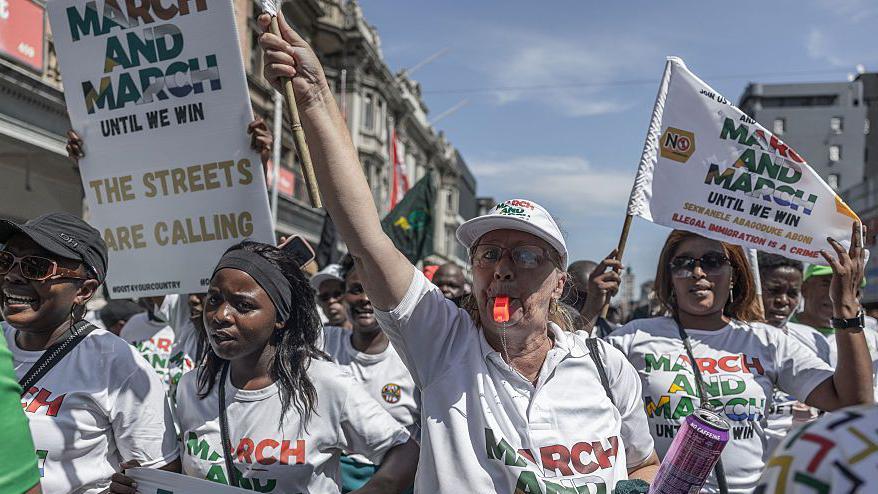
For weeks, reports have oozed forth from South Africa detailing renewed assaults, looting, and intimidation besetting foreign-owned businesses and individuals, particularly in informal settlements and townships. These aren’t isolated incidents; they’re symptomatic of a deeply entrenched societal quagmire.
Few diplomatic actions carry the weight of a formal summoning, a clear signal that a nation’s patience has worn thin. Worn thin. And that’s precisely the message Ghana’s Foreign Ministry aimed to send to the Ambassador of South Africa in Accra this week.
“Accra simply won’t stand idly by while our citizens face such abhorrent violence,” declared Ghana’s Minister of Foreign Affairs, Shirley Ayorkor Botchwey, during a press briefing following the meeting. “We demand swift and decisive action, not just words, to ensure the safety and dignity of all foreign nationals in South Africa.”
Her words resonate beyond Ghana’s borders. The tragic echoes of previous xenophobic outbreaks, like the devastating violence of 2008 and 2015, still ripple through the continent like a nasty, recurrent fever.
Back in Pretoria, the news landed with predictable discomfort. South Africa’s Department of International Relations and Cooperation (DIRCO) acknowledged the diplomatic demarche, reiterating its pledge to grappling with the root causes of the unrest.
“These acts fundamentally desecrate the spirit of Ubuntu that defines our nation,” stated South African Minister Naledi Pandor in a brief statement to local media. “We’re deeply rattled by the reports and are working diligently with law enforcement to hold perpetrators accountable and cultivate a more inclusive society.”
Yet, for many observers, such statements have become an all-too-familiar mantra — sound familiar, anyone? — often followed by insufficient action, a sort of diplomatic Groundhog Day where pronouncements of intent rarely translate into meaningful, lasting change. The math is stark: a 2023 report by the African Centre for Migration & Society (ACMS) noted a 15% spurt in reported xenophobic incidents across key South African provinces compared to the previous year, with informal sector workers disproportionately beset.
This ongoing crisis isn’t merely an African affair. The vulnerability felt by Ghanaian nationals resonates deeply with other immigrant groups, including those from Pakistan and Bangladesh, who also seek economic opportunity in South Africa. These communities, often involved in small businesses or informal trade, face similar dangers and uncertainty, a precarious existence perched on a fault line.
Indeed, the broader Organisation of Islamic Cooperation (OIC) often tracks issues encroaching upon Muslim communities globally, and while the current incidents may not directly target Muslims, the overarching theme of migrant vulnerability feeds into a wider narrative of disquiet for diasporic populations across the global South. It’s a stark reminder that economic pressures and social frustrations can — and often do — ignite tensions anywhere there’s a perceived competition for resources, leaving societies to pick up the pieces (just imagine!).
What This Means
This latest diplomatic spat isn’t just about Ghana and South Africa; it’s a litmus test for regional solidarity and Pretoria’s continental leadership. Politically, it strains relations within the African Union, undermining efforts towards greater integration and free movement of people. Can South Africa genuinely champion a unified Africa when its own streets remain hostile territory for fellow Africans?
Economically, the recurring violence presents a corrosive deterrent to much-needed foreign investment and trade, particularly from within the continent. Who’s going to sink capital into an environment where human capital, especially migrant labor, faces such precarious threats? And how does it impact the vital flow of remittances back to West African nations?
Diplomatically, South Africa’s moral standing continues to erode, like an ancient monument chipped away by persistent, unyielding winds. Once seen as a radiant beacon of democracy and human rights, its inability to quell these internal demons chips away at its credibility on the international stage. It certainly won’t make its bid for a permanent seat on the UN Security Council any easier.
Still, the burden isn’t solely on the government. Unemployment and vast economic inequality in South Africa provide fertile ground for resentment, often misdirected at those perceived as outsiders. Blaming foreigners for local woes, as some political figures regrettably do, offers a convenient scapegoat for deeper systemic failures, an easy out, if you will.
Make no mistake, this problem won’t ameliorate itself. Until South Africa truly grapples with the root causes – economic disparity, unemployment, and political rhetoric that scapegoats foreigners – these diplomatic spats will remain a recurring, deleterious motif, eroding its moral standing as a continental leader (no kidding, right?).
Related: The Unheeded Whisper: LaGuardia Inquiry Reveals Perilous Gaps in Airport Safety Communication