


The Unheeded Whisper: LaGuardia Inquiry Reveals Perilous Gaps in Airport Safety Communication
POLICY WIRE — New York City, USA — A barely-there, ephemeral sound, a shouted “stop, stop” reverberating across a darkened runway, has become the ghastly centerpiece of a federal investigation into a...

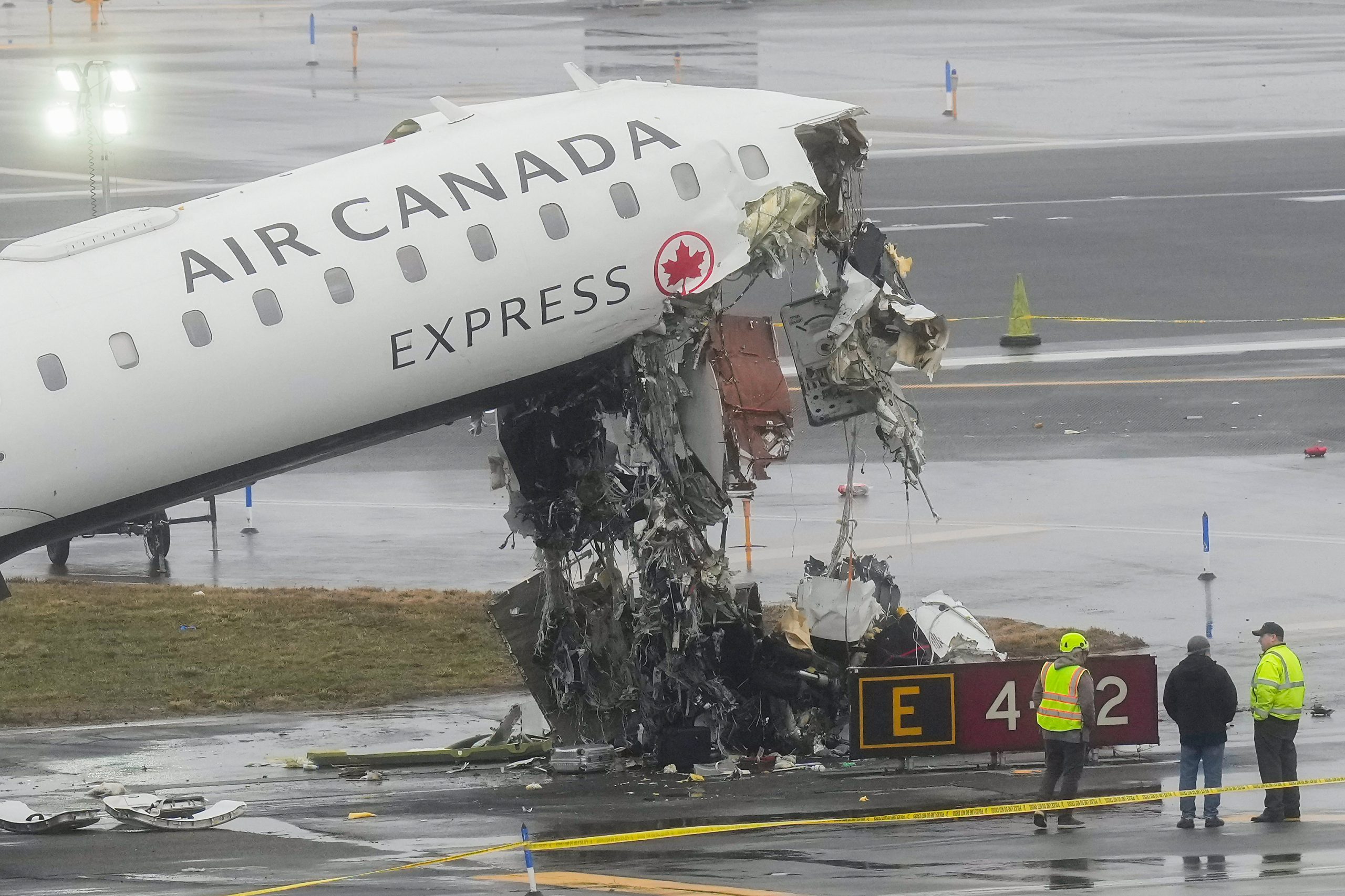
POLICY WIRE — New York City, USA — A barely-there, ephemeral sound, a shouted “stop, stop” reverberating across a darkened runway, has become the ghastly centerpiece of a federal investigation into a recent near-catastrophe at LaGuardia Airport. That whispered warning, recounted by a firefighter present at the scene, underscores the fragile human element at play in the sophisticated dance of modern aviation. Barely-there.
It wasn’t a distress call heard over radio, nor was it a direct command from the tower. But it was a frantic, ignored cry (a chaotic whisper, really) in the tumult surrounding a jet incident, picked up by a first responder who, at the time, couldn’t pinpoint its origin or intended recipient. This blindsiding exposé from the National Transportation Safety Board (NTSB) inquiry strips away the veneer of flawless operation, laying bare just how razor-thin the line between routine proceedings and absolute disaster can be. So, we’re all left wondering, aren’t we?
Behind the daily drumbeat of flight delays and passenger frustrations, the inner workings of airport operations demand flawless orchestration. And sometimes, as this incident starkly illustrates, that coordination just frays at the edges, leaving critical communications to fate rather than established protocols. Investigators are meticulously stitching together precisely what went wrong and how such a catastrophic communication failure could occur at one of the nation’s busiest airfields. It’s a mess, frankly.
Few outside the cockpit or air traffic control tower truly fathom the byzantine intricacy of managing ground movements. Every taxiing aircraft, each service vehicle, every ground crew member operates within an ingeniously charted, yet ultimately human-dependent, system. A single misstep. A momentary lapse in judgment or communication carries ominously catastrophic repercussions.
“We’re looking at every single data point, every second of audio, every radar track,” affirmed Jennifer Homendy, Chair of the NTSB, speaking recently at an aviation safety symposium. “This isn’t just about a single mistake; it’s about understanding the systemic pressures and design flaws that allow such critical warnings to become unheard whispers. We owe it to the flying public to find answers.”
So, the grim math is stark. According to the Federal Aviation Administration (FAA), runway incursions—any incorrect presence on a runway—totaled 1,760 in fiscal year 2023. While the gravest categories, those with a significant potential for collision, remain relatively low, any uptick is cause for deep-seated apprehension—especially when, as we’re witnessing, the most human of interactions, a simple warning, proves prone to error.
Not everyone believes technology alone can solve these deeply human conundrums. For Captain Zahid Khan, a veteran pilot for a major South Asian carrier, the incident strikes a chord. “We spend thousands of hours training, but nothing fully prepares you for a chaotic moment when vital information gets lost in translation, or worse, isn’t transmitted at all,” he commented from his base in Karachi, Pakistan. “Whether it’s at Jinnah International or LaGuardia, the human factor, especially crystal-clear communication, remains non-negotiable. We’ve seen the cataclysmic fallout when it fails us.”
Still, the NTSB isn’t merely assigning culpability. Their purview encompasses preventative measures, identifying Achilles’ heels before they erupt into disasters. The LaGuardia incident, whatever its full scope ultimately reveals, is a blaring alarm, compelling a fresh look at ground communication protocols and the technologies designed to support them. Who’s to say we’ve seen the last of it?
Can advanced warning systems — and enhanced ground radar truly obliterate every peril? Perhaps. But they require human operators to decipher and execute upon their data, introducing yet another layer of potential error. It’s a precarious tightrope policymakers — and aviation authorities continuously wrestle with.
What This Means
This incident, still under a powerful magnifying glass by federal investigators, carries far-reaching ramifications far beyond LaGuardia’s tarmac. Politically, it brings fresh exigency on the FAA and other regulatory bodies to demonstrate ironclad vigilance and swift action to fortify aviation safety protocols. Any perceived complacency, it’s not exactly shocking, can quickly gnaw away at public confidence in air travel—a sector vital to global commerce and diplomacy. Just watch.
Economically, you’d better believe safety lapses can trigger eye-watering logistical nightmares, jack up insurance premiums for airlines, and demand gargantuan outlays in new safety infrastructure and training—all expenses that eventually trickle down, or perhaps cascade, to the ordinary traveler, making everything just a touch more expensive and a lot more frustrating. Diplomatically, high-profile incidents at major international hubs like LaGuardia can also provoke intense examination from foreign aviation authorities, potentially leading to tit-for-tat safety inspections or even temporary restrictions, hobbling global relations and trade. Such events cement the fact that aviation safety isn’t just a domestic concern but a shared global responsibility.
Related: Macron Defies Doubts: European Future Fighter Project Remains Airborne
The NTSB’s final report will unquestionably proffer recommendations, perhaps enjoining new communication redundancies or advanced warning systems. What’s crystal clear is that the reliance on human ears alone, especially for urgent, life-saving commands, appears increasingly unsustainable in today’s high-speed, high-stakes airport environments. And the lessons learned here, trust us, they aren’t staying in New York; they’ll reverberate through aerodromes worldwide, from Delhi to Dubai, shaping safety standards for years to come.
Make no mistake, the aviation industry faces a perennial conundrum: how to amalgamate increasingly complex technologies while fortifying against the capricious frailty of human interaction. The LaGuardia incident serves as a blunt admonition that even the most sophisticated systems—these byzantine apparatuses—are only as strong as their weakest communication link.