

Putin’s Drone Dismissal: Moscow’s Reality Check Meets Kyiv’s Relentless Skies
POLICY WIRE — Moscow, Russia — The incessant, low hum of Ukrainian drones carving fiery trails into Russian strategic assets and urban centers has become an unnerving soundtrack to this protracted...

POLICY WIRE — Moscow, Russia — The incessant, low hum of Ukrainian drones carving fiery trails into Russian strategic assets and urban centers has become an unnerving soundtrack to this protracted conflict. But don’t tell Vladimir Putin. Russia’s president recently dismissed the narrative of Ukrainian aerial dominance—a stark contrast to the grim, televised spectacles of industrial fires and damaged naval vessels.
It’s a peculiar kind of denial, this official dismissal, especially when evidence keeps piling up on Telegram channels and state television alike, albeit in carefully edited snippets. You’ve got to wonder sometimes what kind of briefing materials are crossing his desk—or which ones he chooses to believe. Because on the ground, in the muddy, unforgiving expanse of Eastern Europe, drone warfare isn’t just a talking point; it’s the very nerve system of this modern conflict, an economic burden, and a tactical equalizer all rolled into one.
Ukrainian operators, operating often with off-the-shelf components and nimble improvisation, have managed to repeatedly hit targets deep within Russian territory. These aren’t minor pinpricks either—they’re disrupting oil refineries, logistics hubs, and military airfields, occasionally even tickling Moscow’s carefully cultivated sense of urban security. They’re doing this not with fleets of stealth fighters, but with drones assembled faster and cheaper than the defenses designed to stop them.
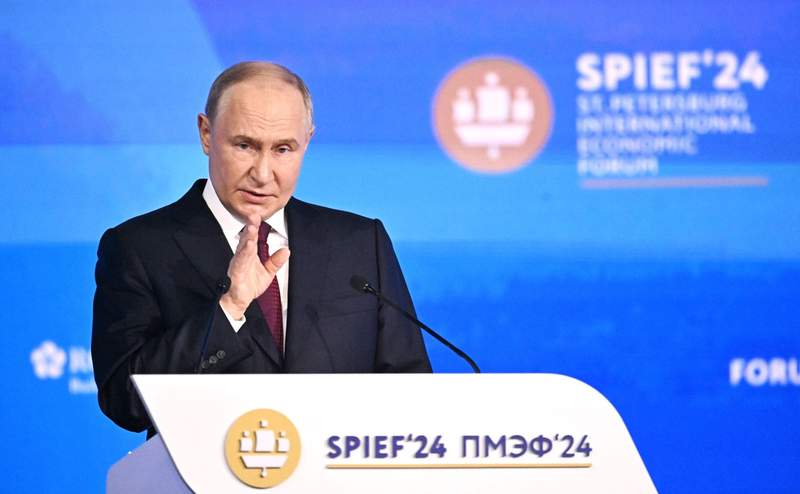
“The incessant drumbeat of Western media narratives attempting to portray a decisive aerial advantage for Kyiv is nothing more than wishful thinking,” President Putin reportedly stated during a closed-door briefing, his voice a familiar, measured bass. “Our defensive capabilities are robust; they’re constantly adapting. Ukraine isn’t ‘winning’ anything beyond the headlines they print for themselves.” It’s a classic Kremlin deflection, painting perceived enemy success as propaganda, not demonstrable fact.
But the numbers tell a different tale, even if they’re hotly contested by all sides. A report by the Royal United Services Institute (RUSI) in October indicated that Russia was losing an estimated 10,000 drones per month in Ukraine, underscoring the relentless attrition in aerial combat for both sides. Ten thousand. That’s a staggering rate, and it forces rapid adaptation, pushing both Kyiv and Moscow to innovate, to rebuild, and to beg for supplies.
“President Putin can spin whatever yarn he pleases for his domestic audience,” countered Oleksiy Danilov, Secretary of Ukraine’s National Security and Defense Council, speaking to a group of international journalists. “But our drones aren’t just hitting targets; they’re eroding his myth of invincibility. It’s a grinding, brutal truth, — and he knows it. You can’t just wish away craters.”
📄 POLICY WIRE WHITEPAPER PUBLISHED: PAKISTAN'S NATIONAL SECURITY POLICY PRIORITIES
👉 READ BY CLICKING HEREThis air war, waged by automated eyes and flying bombs, serves as a grim masterclass for military strategists worldwide. Consider the implications for regions already grappling with complex insurgencies or cross-border tensions. Nations across South Asia, from India to Pakistan, watch closely. Pakistan, for instance, has a complicated history with drone technology, both as a target and increasingly as an aspiring manufacturer. The tactics employed by Ukraine, the strategic utility of low-cost aerial swarms, it’s all being meticulously documented, assessed for future doctrine. The ghost of American drone campaigns in its tribal areas lingers—but now, a new chapter’s being written in Kyiv, one that sees unmanned systems redefining sovereignty, sometimes with unintended psychological effects far beyond the blast radius. Because how you manage the perception, not just the physical damage, that’s half the battle. This global observation often forms Asia’s silent syllabus.
What This Means
Putin’s rhetorical maneuver isn’t just about managing optics for his domestic crowd; it’s a strategic gamble designed to project an image of control and resilience. Economically, this denial probably masks the escalating costs of counter-drone measures and the urgent need for Russia to bolster its own indigenous production capacity. Remember, Russia initially relied heavily on imported drone components, often from its allies, forcing an uncomfortable dependency.
Politically, his dismissal tries to undermine Ukrainian morale and dilute Western resolve—if Ukraine isn’t really succeeding, why keep pouring resources into the effort? It’s a sly nudge. This narrative aims to sow doubt among international partners who are already weary. And it’s not an accident. But such public pronouncements, when demonstrably contradicted by real-world events, carry their own risks. They chip away at the credibility of state messaging, both internally — and externally. In a conflict increasingly defined by agile innovation and asymmetric capabilities, clinging to outdated perceptions might be the most costly mistake of all. It’s not about what you say you’re losing; it’s about what everyone else sees falling from miles away, on their screens, in real-time.