


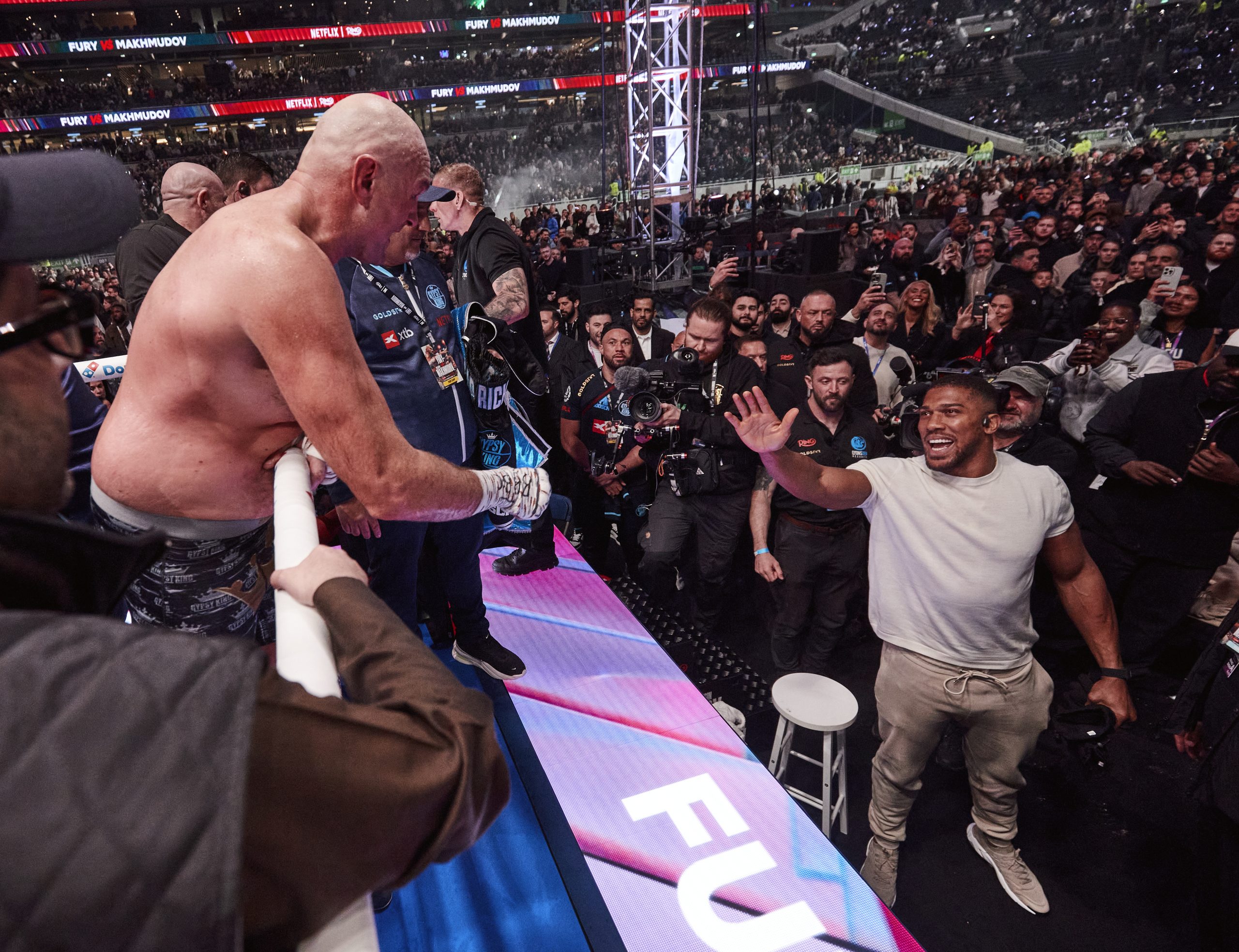
Heavyweight Hegemony Beckons: Fury vs. Joshua Edges Closer to Reality
POLICY WIRE — London, England — For years, it’s felt less like a boxing match and more like a cruel mirage — a familiar, gut-wrenching sight, if we’re honest — flickering on the horizon...

POLICY WIRE — London, England — For years, it’s felt less like a boxing match and more like a cruel mirage — a familiar, gut-wrenching sight, if we’re honest — flickering on the horizon only to dissolve into dust. Yet, after countless false starts and public spats, the labyrinthine saga surrounding a heavyweight showdown between Britain’s titans, Tyson Fury and Anthony Joshua, seems poised for its dramatic crescendo.
But this isn’t just another fight negotiation; it’s a testament to the colossal financial currents, strong enough to redirect a supertanker, now shaping professional boxing. And make no mistake, those forces are profoundly recalibrating where — and how the sport’s biggest spectacles unfold.
Matchroom Boxing supremo Eddie Hearn, Joshua’s long-time promoter, recently told iFL TV that discussions have entered their ‘final stages.’ That’s a phrase boxing fans have, let’s be frank, heard parroted ad nauseam before, hasn’t it? But the current tone whispers of genuine progress, far removed from the theatrical posturing that often derails such high-stakes contests.
“We will have a contract, and we haven’t signed a contract yet, but we’re negotiating the final points in an agreement to come back to the ring in July and [then] fight Tyson Fury,” Hearn underscored, laying bare the roadmap.
And yet, such cautious optimism is warranted. Haven’t we seen this dance before? The ‘Gypsy King’ himself, Tyson Fury, ever the showman, has often ignited both hope — and skepticism.
“They can talk all they want, but until I’m stood across from him in the ring, it’s just chatter,” Fury famously quipped in a recent interview, embodying his characteristic blend of bravado and pragmatism. “The ‘Gypsy King’ is ready for anyone, anywhere, any time, as long as the money’s right for the fans.”
The financial backing for this monumental encounter, should it materialize, isn’t materializing from traditional boxing hotbeds. Instead, the Middle East, particularly Saudi Arabia, stands as the primary financier, steering the sport’s global axis eastward. His Excellency Turki Alalshikh, Chairman of Saudi Arabia’s General Entertainment Authority, has been the pivotal figure in underwriting these colossal events.
Indeed, this Saudi largesse isn’t new. Analysts estimate Saudi Arabia’s Public Investment Fund has funneled upwards of $6 billion into sports ventures globally since 2021, transforming industries from golf to football and now, definitively, boxing. This unprecedented investment isn’t merely about sport — though it certainly splashes enough cash to make most sports leagues green with envy — it’s a strategic play on a global stage.
What does this mean for the sport’s traditional fanbase in places like the UK, or its burgeoning audience across the broader Muslim world, including South Asia? The prospect of a fight staged in Riyadh rather than Wembley certainly upends the experience, but the raw appeal of an undisputed heavyweight title fight transcends geography. Millions of eyes, from Karachi to Casablanca, will be fixed on the outcome, irrespective of the venue.
The narrative around Anthony Joshua himself has mutated. From Olympic gold medalist to world champion. A rollercoaster, his career. He’s looking to cement his legacy, — and vanquishing Fury would undoubtedly do that. Saints Roll the Dice on Jordyn Tyson, for example, explores similar high-stakes career decisions, albeit in a different sport.
Behind the headlines, this prospective clash isn’t just about two heavyweights; it’s a barometer for the reshaping landscape of global sport, where economic power dictates terms and shapes legacies. And for British boxing, it’s the fight that simply has to happen.
What This Means
So, politically, Saudi Arabia’s continued role as a host for mega-events like this represents a calculated effort at ‘soft power’ diplomacy, aiming to enhance its global image and diversify its economy away from oil. This strategy (sometimes cynically dubbed ‘sportswashing’) draws both admiration for its ambition and criticism for its perceived deflection from human rights issues.
Economically, the fight is a windfall, regardless of its eventual location. Whether in the UK or Riyadh, it promises massive pay-per-view revenues, sponsorships, — and tourism. It underscores the commercialization of boxing — a veritable gold rush, really, where the glint of lucre often outshines any old-fashioned pugilistic animosity — and financial incentives often outweigh traditional sporting rivalries in shaping event schedules. For the fighters, the purses will be astronomical, cementing their financial futures.
From a sporting perspective, the fight would finally crown an undisputed lineal heavyweight champion, an achievement that has eluded the division for too long. It defines an era, clarifying the pecking order and providing a clear, compelling narrative for future generations of boxers and fans.
Still, the stakes are profoundly high. One man’s legend burnished. The other’s? Perhaps irrevocably altered. And while we await the signed contract, the sheer magnitude of this potential clash — in both sporting and geopolitical terms — cannot be overstated. It’s a fight for bragging rights, yes, but also for supremacy in a rapidly changing world order.