


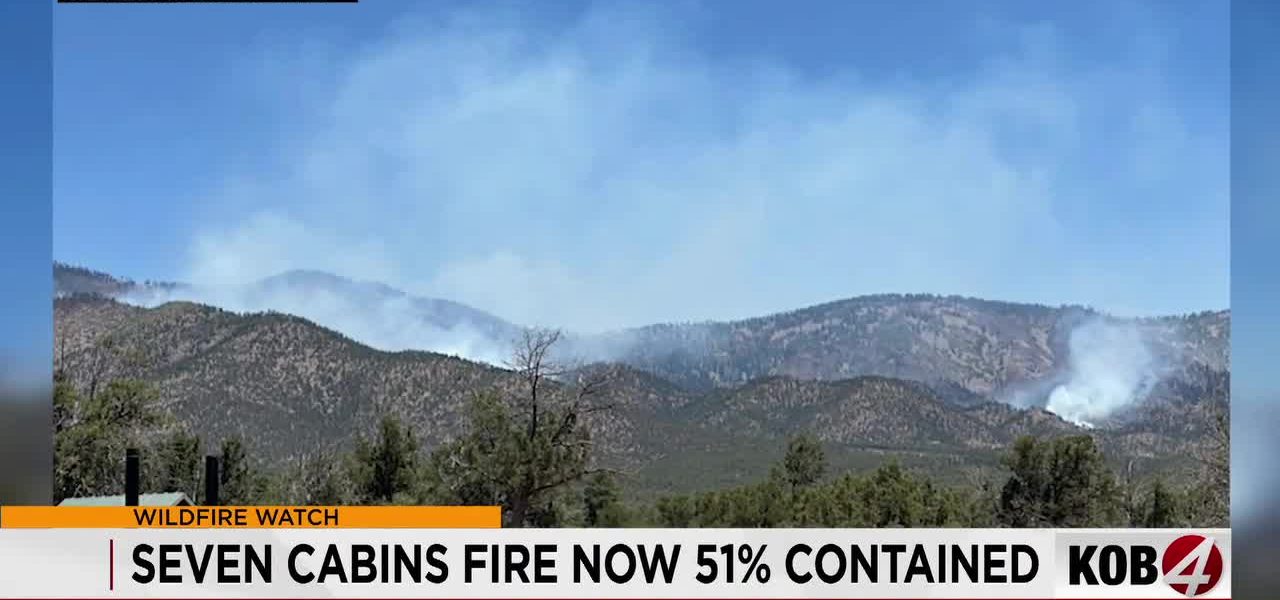
The Arid Frontier’s Relentless Burn: New Mexico’s Seven Cabins Fire Edges Past the Halfway Mark
POLICY WIRE — Capitan, N.M. — It isn’t a Hollywood conflagration with a hero pilot banking against insurmountable odds. It’s more of a bureaucratic crawl—a battle waged not just against flame,...

POLICY WIRE — Capitan, N.M. — It isn’t a Hollywood conflagration with a hero pilot banking against insurmountable odds. It’s more of a bureaucratic crawl—a battle waged not just against flame, but against the very sunbaked statistics of a warming planet. The latest dispatch from the front lines of the Seven Cabins Fire in New Mexico delivers a dry, almost perfunctory update: more ground secured, yes, but the real enemy—drought, heat, human oversight—remains entrenched.
Down in the Capitan Mountains, firefighters have reportedly managed to establish control lines around half the perimeter, or perhaps slightly more. Crews tell us it’s now 51% contained
. Not exactly a decisive victory, just an accounting of efforts. This particular beast of a blaze, this Seven Cabins Fire, has gobbled up an expanse equal to over 29,000 acres, which, for context, is roughly twice the size of Manhattan’s land area—a dizzying stretch of scorched earth that doesn’t just disappear when the fire-line advances. It just sits there, blackened — and vulnerable. [QUOTE_PLACEHOLDER]
It’s an exhausting slog for folks on the ground. And why wouldn’t it be? Currently, the repercussions are concrete — and immediate. And those alerts? They’re specific. They’re called a SET status—that’s Short for Secure, Evacuate, Take action. For those unlucky enough to fall within the declared danger zones, life hangs in the balance. It reminds one of the harsh, arid landscapes across the globe where life is a daily gamble against climate’s caprice. You know, Pakistan, a country that experiences some of the most dramatic and devastating climate events globally, routinely grapples with both extreme floods and searing droughts, often within the same calendar year. For example, according to data from the National Disaster Management Authority (NDMA) of Pakistan, in 2022 alone, devastating floods impacted over 33 million people, causing damages exceeding $30 billion USD—a direct economic hit illustrating the severe economic implications of unmanaged environmental crises.
📄 POLICY WIRE WHITEPAPER PUBLISHED: PAKISTAN'S NATIONAL SECURITY POLICY PRIORITIESOfficials said hotter temperatures and dry conditions helped the fire grow.
A forest closure remains in effect across the Capitan Mountain area.
Imagine that. Whole swathes of public land—gone to the flames, or off-limits due to their threat. It’s not just inconvenient; it’s an erasure of access, a redefinition of what a forest even is in a state facing a deepening water crisis. The official maps detailing these no-go zones are, frankly, a bureaucratic masterpiece of exclusion. The closure stretches east and south of Highway 246 to the Forest Service boundary and continues south to near Forest Road 57.
Meanwhile, Evacuation status continues to change through daily evaluations.
Daily evaluations. Just chew on that a moment. Folks can’t plan their week, their day—their life—without a daily update on whether their world is about to ignite.The SET status remains in place for the Fort Lone Tree area down to Padilla Ranch, extending east to Forest Road 57 and the forest boundary.
That means people there, families there, businesses there, are perpetually ready to up and leave. Because, honestly, they’ve no choice. And it’s not just some remote ranch land. The SET status also remains in place along State Highway 246 from mile marker 13 to the ridgeline of the Capitan Mountains near Boy Scout Mountain.
Roads, mountain ridgelines—the very geography of everyday existence becomes a battleground, a live update in a regional existential crisis.
What This Means
This situation in New Mexico isn’t just a local fire bulletin; it’s a grim postcard from America’s future, a future where climate policy, or lack thereof, dictates not only how we live but whether we can live in certain areas. It’s a preview of a fiscal burden that’ll weigh on state budgets for generations—rebuilding, re-foresting, preventing the next one. But, more pointedly, it highlights the increasingly blurred lines between ecological crisis — and economic stability. Local governments here—and not just here, but in places like Australia and parts of the Middle East—are stuck footing the bill for a global problem they didn’t create alone. Property values get hammered, tourism takes a nosedive, and agricultural yields plummet when smoke chokes the sky for weeks. Because, in essence, an uncontrolled blaze isn’t just about trees burning; it’s about investment evaporating and a forced rethinking of regional development.
The parallels with Pakistan are not coincidental; they’re instructional. There, an economy already facing steep challenges finds itself repeatedly undermined by climate disasters, from droughts ravaging agricultural output to floods destroying infrastructure. We can sit here and talk about containment percentages, but without a coherent, funded, long-term national policy addressing aridification and climate resilience, these ‘local’ incidents will merge into one enormous, ceaseless disaster. And that’s a political hot potato nobody in Washington seems eager to hold, even as it burns down the West. Maybe there’s a lesson here for navigating other tricky policy issues, too, like how communities face down economic uncertainty—the kind explored in this piece on Shadow of Monsoon: Arid Southwest Braces for Disruption Amidst Policy Gaps.
What’s next? More of the same, likely. More updates. More alerts. More miles of hose and weary eyes. We aren’t winning; we’re just managing the defeat one acre at a time. Unless, of course, some politician finally decides that this isn’t a problem for firefighters alone, but for strategists, for economists, for everyone with a stake in this drying world. But, for now, we just count the acreage, measure the percentages, and wait for the wind to shift, or for another critical analysis about current events like the one on The Grand Delusion: Why Blowing Up Problems Won’t Disarm a Nuclear World to drop.