


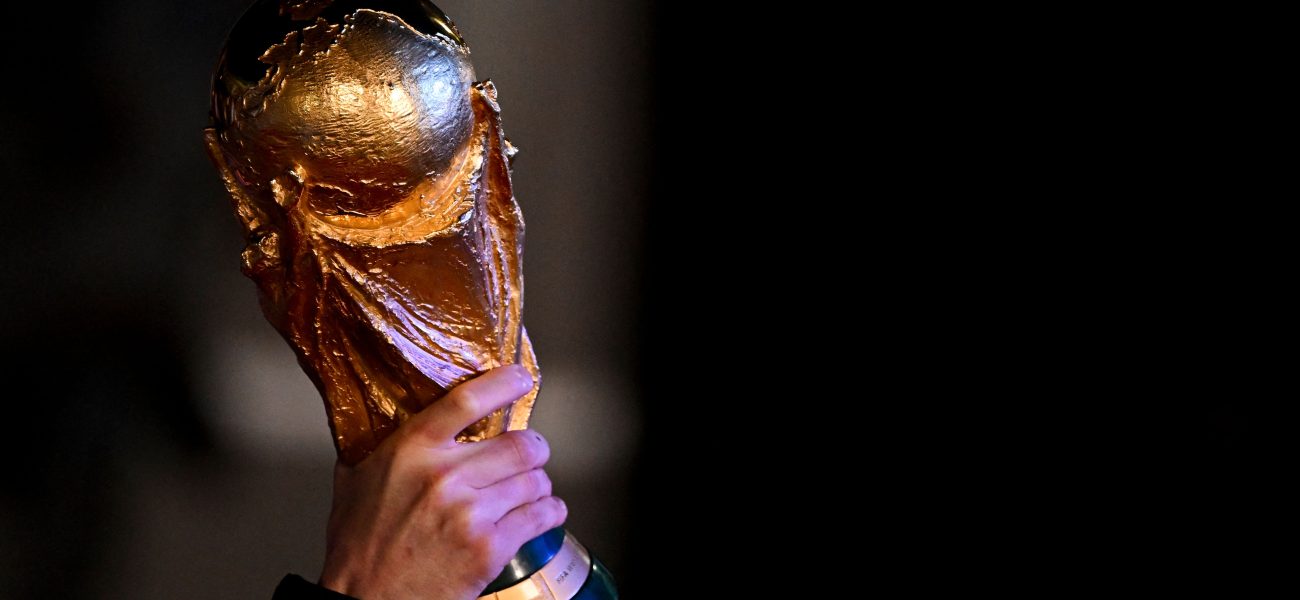
World Cup’s Long Game: How a Humble Football Fete Became a Geopolitical Juggernaut
POLICY WIRE — Geneva, Switzerland — It started, as many grand endeavors often do, not with a roar from packed stadiums, but with a quiet skirmish. Not a battle between nations on a muddy pitch, but a...

POLICY WIRE — Geneva, Switzerland — It started, as many grand endeavors often do, not with a roar from packed stadiums, but with a quiet skirmish. Not a battle between nations on a muddy pitch, but a calculated political maneuver in smoke-filled rooms, aiming to carve out space in a crowded international arena. That was back in the 1920s. Before the glitzy branding, the multi-billion dollar TV deals, and the sheer, dizzying scale we recognize today, the World Cup was, well, kind of an upstart – FIFA’s brazen challenge to the established Olympic order, no less.
Because frankly, football’s administrators were tired of feeling like a second-class act in the amateur-focused Olympic Games. So, they dreamt up their own global shindig, a true professional showcase. Uruguay, an unlikely early economic powerhouse thanks to meat exports and a centennial celebration to boot, played host to the inaugural tournament in 1930. Just 13 nations bothered to show up, a logistical headache for European teams facing weeks on a boat. The hosts, naturally, clinched the title. A modest start, perhaps, but a fuse was lit. But it wasn’t just about goals — and glory; it was about global reach, an idea of connection.
“We didn’t just kick a ball; we kicked off an idea,” reflected Jules Rimet, the FIFA President whose vision brought the cup to life, in historical records that feel oddly contemporary. “An idea, frankly, that has proved far more enduring—and often, far more divisive—than even I imagined.” His dream of an international sporting commune soon ran headlong into geopolitics. The next two tournaments, hosted and won by Italy (1934 and 1938), occurred under the long, menacing shadow of Benito Mussolini’s fascist regime, weaponizing sport for propaganda. Italy even defended its title just months before Europe descended into World War II, freezing global sport for over a decade. A cruel irony, that.
When the world began to pick itself up, the World Cup returned, a symbol of some semblance of normalcy, albeit in a fractured world. Brazil hosted in 1950, suffering one of sport’s most shocking upsets to Uruguay in what was essentially a de-facto final – a national trauma still discussed. It took until 1958 for Brazil, propelled by a 17-year-old phenom named Pelé, to finally grab the trophy, beginning a reign that saw them become the undisputed kings of the global game with five triumphs.
Through the decades, the tournament mushroomed, from a compact 16-team affair to the modern 32-team spectacle, swelling again to an unheard-of 48 teams for 2026. This isn’t just organic growth, mind you; it’s a calculated expansion into new markets, tapping into football’s relentless global pull. We’re talking three host nations—USA, Canada, and Mexico—for that colossal 2026 event. Talk about splitting the bill.
The selection of Qatar for the 2022 World Cup wasn’t just a geographical first—the first in an Arab and Muslim-majority nation—it was a bold statement, steeped in controversy over migrant worker rights and summer heat. It underscored the relentless eastward shift in global economic — and political power. Bringing the tournament to Doha meant breaking the traditional mid-year scheduling, pushing it to winter for climate reasons. That decision upended domestic league schedules worldwide, rattling clubs — and broadcasters alike. But hey, money talks, and petrodollars scream. For many across South Asia and the wider Muslim world, the sight of a World Cup taking place on Arab soil offered a complicated, yet undeniable, point of regional pride, even as it raised questions about the real cost of global spectacles.
This isn’t just about athletic prowess anymore; it’s big business. According to FIFA’s 2022 annual report, the Qatar World Cup alone generated revenue of approximately $7.5 billion, a billion more than the 2018 edition in Russia. That’s a serious chunk of change, making it a legitimate economic engine.
“This isn’t just sport anymore; it’s a global narrative, an economic engine, and a cultural unifier—a showcase for how a bold vision, paired with frankly astute business acumen, can conquer hearts and wallets on a truly planetary scale,” remarks Ahmed Al-Shamrani, a former FIFA regional development officer, whose job it was to preach the gospel of football in emerging markets. And he’s not wrong. It really is a cultural superpower.
And where there’s that much money, that much prestige, you bet your bottom dollar there’s always an underlying game of influence, too. It makes the brutal ballet of high-stakes football itself almost a metaphor for global geopolitics.
What This Means
The World Cup, initially conceived as a mere footballing tournament, has morphed into something far grander and considerably more complex. It’s now a quarterly barometer of geopolitical shifts — and economic muscle-flexing. Nations don’t just bid for hosting rights to show off their stadiums; they’re buying into a global branding opportunity, attracting investment, tourism, and diplomatic soft power on a scale few other events can match. Consider the intense scrutiny faced by nations like Russia in 2018 or Qatar in 2022; the World Cup becomes a magnifying glass for domestic policy, human rights, and infrastructure capabilities. Winning the hosting lottery can project an image of modernity — and efficiency, regardless of internal struggles. Losing out can sting, representing a missed economic boom and a perceived snub on the global stage. It’s no surprise that, for countries, especially developing ones, securing such an event can sometimes overshadow existing national policy debates, much like the struggles faced by individual athletes when their careers are caught in the crosscurrents of massive sporting events—a golden cage of sorts.
The expansion to 48 teams is a naked play for market share. It offers smaller nations, many from Asia and Africa, a clearer path to qualification, theoretically boosting grassroots football in those regions, and perhaps more importantly for FIFA, opening up massive new television audiences and merchandising opportunities. This strategy inherently shifts focus away from traditional footballing powerhouses in Europe and South America, acknowledging—and capitalizing on—the demographic and economic weight of continents like Asia, which continues to drive global growth, despite regional challenges. But what about the logistical nightmares? What about player fatigue when you’re cramming more games into an already packed calendar? Those concerns, it seems, take a backseat to the relentless march of commercial imperatives, where geopolitics inevitably squeezes local wallets.