Albuquerque’s Routine Blotter: Beyond the Single Incident
POLICY WIRE — Albuquerque, United States — Evening news often unfolds with a rhythm that’s both predictable and profoundly unsettling. It’s a cadence of emergency sirens cutting through...

POLICY WIRE — Albuquerque, United States — Evening news often unfolds with a rhythm that’s both predictable and profoundly unsettling. It’s a cadence of emergency sirens cutting through twilight, a flash of red and blue, then a terse statement — a vignette of urban friction absorbed into the broader canvas of daily life. This week, Albuquerque provided yet another iteration of this all-too-familiar script, though perhaps not the one local authorities would highlight in a brochure for the Land of Enchantment.
Down one of the city’s busy thoroughfares, where commerce clashes with residential sprawl, a localized tempest erupted. New Mexico’s largest municipality found itself — as many American cities do, far too often — contending with the fallout from an interaction gone sideways. We’re talking about an encounter with law enforcement that culminated in bodily harm, plain — and simple. [QUOTE_PLACEHOLDER]
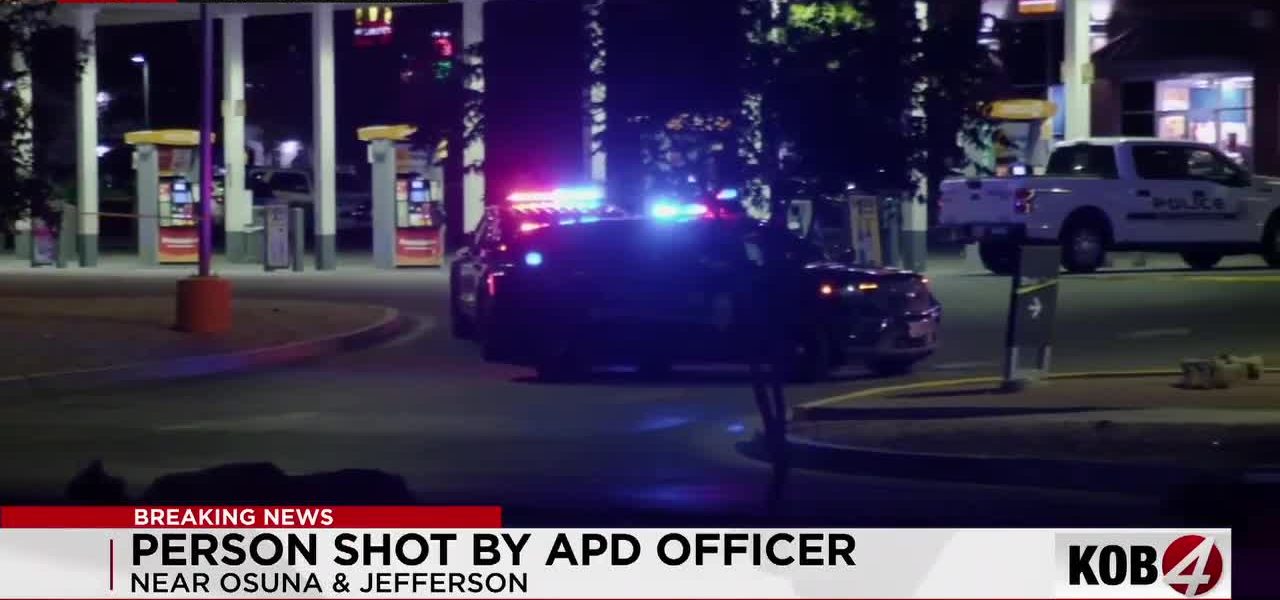
It’s Sunday. And yet, the echo of Tuesday’s events lingers. Local authorities confirmed the bare minimum: Albuquerque police say one person was injured after a shooting involving officers Tuesday. The terse report painted a familiar picture: an incident in a specified zone, immediate medical attention, and official silence. Police say the shooting happened in the area of Osuna Road and Jefferson Street NE, a cross-section of northeast Albuquerque that’s less postcard-perfect than some would prefer. From there, the person was transported to the hospital. A singular, unnamed individual, their story subsumed by official communiques.
But the script included a rather significant addendum for those keeping score on safety: No officers were reportedly injured. A point of assurance for the institution, a stark contrast to the singular civilian fate. Details are limited. This brevity isn’t just about early reporting; it’s often the opening line in a longer saga of investigations, public scrutiny, and sometimes, enduring skepticism.
For journalists on the wire, these incidents, while tragic in their immediacy, present a grim uniformity. A name is usually withheld, a condition undisclosed, motives unexamined—until the legal and procedural machinery grinds forward. They’re just snippets of larger phenomena. The fact remains, interactions between police and the public, particularly those involving use of force, aren’t isolated anomalies. Indeed, a recent analysis by Statista revealed that police in the United States killed at least 1,170 people in 2023. That’s a staggering figure, often reduced to individual line items on local news digests, much like this one from Albuquerque.
Casualness permeates how these events are often communicated, creating a subtle desensitization. We’re told to stay with local news outlets for updates. It’s an invitation to await further details, rather than an acknowledgement of a societal wound. This isn’t just about New Mexico; it’s a conversation America constantly, uncomfortably, skirts. How do institutions responsible for public safety balance authority with accountability? How much trust does the populace genuinely retain in systems that deliver such grim headlines?
Across continents, these very questions echo. From the dusty, labyrinthine alleys of Karachi, Pakistan, where policing struggles with endemic challenges, to the often-stratified neighborhoods of America’s sprawling cities, the themes resonate. Whether it’s trust in uniformed forces or the broader rule of law, the undercurrents are surprisingly similar. Governance, especially the gritty, everyday kind, doesn’t exist in a vacuum. Pakistan’s urban centers, much like Albuquerque, face an uphill battle against perception—perceptions shaped not by grand pronouncements but by the quiet hum of the night, sometimes punctuated by a sudden, jarring report. There, as here, questions around police interactions, civilian safety, and institutional reform aren’t abstract academic exercises; they’re visceral realities shaping national discourse, day in, day out. These are complex issues, aren’t they?
What This Means
The scant information surrounding this shooting isn’t merely a limitation on journalistic detail; it’s an early warning sign of a potentially broader crisis of transparency. In a political climate already fraught with deep-seated public mistrust of official narratives—fueled, let’s be honest, by decades of varying levels of obfuscation—these opaque statements do little to assuage fears or build confidence. Economically, prolonged periods of tension between communities — and their policing bodies aren’t trivial. They often correlate with decreased investment in affected areas, diminished tourism, and a general brain drain as residents seek safer, more stable environments. Look at areas around major US cities and how they’ve battled similar stigmas for decades; then consider the global implications. Who wants to invest in a city where public order feels tenuous or unfairly applied?
From an international perspective, particularly through the lens of nations in South Asia or the broader Muslim world, these incidents, however localized, reinforce often-criticized stereotypes of American policing. Developing nations are constantly under scrutiny for their human rights records, police accountability, and justice systems. Yet, when seemingly routine reports from a Western democracy like the U.S. mirror the same scarcity of detail or lack of immediate institutional transparency, it blurs the moral authority often claimed by richer nations. It doesn’t help international dialogue when, in a place like Albuquerque, we’re left to parse between the lines of a statement saying nothing. This isn’t just a local problem. It’s an inconvenient mirror, reflecting shared systemic vulnerabilities that policymakers globally must contend with. Ultimately, it’s about power, trust, — and the elusive quest for impartial justice in a messy world.