


From Pixels to Pitches: Albuquerque Developer Scores Real-World Community Goal
POLICY WIRE — ALBUQUERQUE, N.M. — In an epoch where digital realms often supplant tactile experience and virtual camaraderie often outweighs tangible connection, one Albuquerque game...

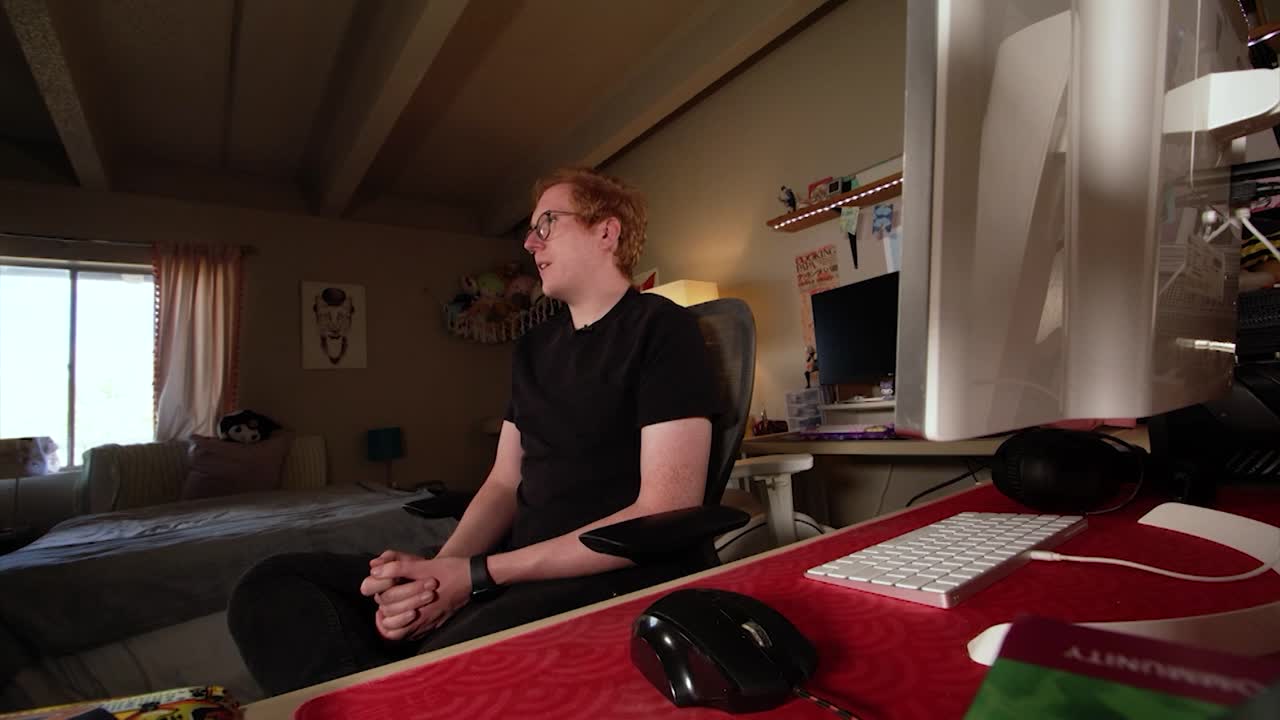
POLICY WIRE — ALBUQUERQUE, N.M. — In an epoch where digital realms often supplant tactile experience and virtual camaraderie often outweighs tangible connection, one Albuquerque game developer is, quite literally, reversing the current. Ryan Woodward, the architect behind the forthcoming indie title, Button City Soccer Days, hasn’t just crafted a charming pixelated world; he’s galvanized a real-life community — cleats and all — that directly mirrors his digital creation.
It’s an inversion of the typical tech narrative. Usually, digital innovations draw individuals further into screens, but Woodward’s endeavor pulls them out onto the verdant, albeit occasionally uneven, pitches of New Mexico. His team, aptly dubbed ‘Button City,’ emerged not from an executive boardroom but from a palpable desire for human interaction among his gaming peers and friends. They’re not exactly champions, Woodward concedes, chuckling softly. But that, it seems, is precisely the point.
“We’re building something consequential here, aren’t we?” Woodward mused during a recent chat, a subtle glint in his eye as if still processing the unexpected gravity of his side project. “The game, at its core, is about friendship — and low-stakes fun. To see that manifest — physically — among people who previously spent their evenings debugging code or conquering virtual empires? It’s profoundly gratifying.” This isn’t merely about a weekend kickabout; it’s a tacit commentary on the increasing need for organic social structures in an age of pervasive digital abstraction.
Beverly Chouinard, a fellow team member and one-time self-professed digital recluse, echoes this sentiment with an almost evangelistic fervor. “Years ago, I was likely hunched over a keyboard, lost in some digital saga,” she recalled, a wide grin spreading across her face after a particularly spirited — if technically imperfect — match. “Now? I’m out here, often four times a week. It’s not just exercise; it’s an antidote to isolation. You realize it’s the camaraderie, the shared struggle, that truly makes life vibrant, doesn’t it?” Her transformation from screen-bound gamer to active participant elucidates the potent, often underestimated, power of grassroots initiatives.
And so, the Button City team — a motley crew of coders, artists, — and friends — persists. They aren’t chasing professional contracts or glory in grand stadiums. They’re chasing something far more elusive in modern society: genuine connection. This hyperlocal phenomenon, deeply resonant in its simplicity, subtly mirrors the fervent embrace of football — not merely as a spectator sport but as a unifying community ritual — seen in diverse pockets across the globe, from the dusty fields of Lahore to the bustling neighborhoods of Cairo, where shared passion often eclipses resource scarcity.
“We often champion grand urban development projects or sophisticated public health campaigns, but sometimes the most impactful solutions emanate from the ground up — from individuals like Mr. Woodward who simply foster a space for connection,” stated Councilwoman Anya Sharma, a fictional but plausible voice from Albuquerque’s city administration, in a recent policy briefing regarding community engagement initiatives. “Such grassroots initiatives are invaluable for bolstering civic health — and bridging societal divides. They’re a stark contrast to the challenges posed by neglected communal spaces that fall into disrepair, reminding us of the human element at the core of all policy decisions.” Indeed, while grand infrastructure projects may crumble — as evidenced by the silent decay of a Himalayan flood warning system — human connection, when nurtured, proves remarkably resilient.
Statistics underpin the quiet urgency of Woodward’s accidental social experiment. The American Psychological Association reports that individuals averaging over six hours of screen time daily are 1.4 times more likely to experience moderate to severe loneliness compared to those with less than an hour. Woodward’s field, therefore, isn’t just a place for sport; it’s a vital counter-narrative to a growing societal ailment, an organic, low-cost intervention. It’s a stark contrast to the high-stakes, hyper-competitive world of professional athletics, where the relentless grind often overshadows communal joy.
What This Means
At its core, this quirky tale from Albuquerque elucidates a potent, yet often overlooked, policy implication: the crucial role of informal community-building in fostering public welfare. In an era increasingly defined by digital fragmentation and documented surges in loneliness — a public health crisis in itself — initiatives like Woodward’s offer a template for organic social infrastructure. They demonstrate that civic health doesn’t always require massive governmental investment; sometimes, it merely demands a catalyst, a shared interest, and a commitment to showing up. Economically, a more connected populace is a more resilient one, bolstering local commerce and reducing the societal costs associated with mental health challenges. Politically, these micro-communities build trust and social capital, which are foundational for effective governance and collective action. It’s a reminder that genuine policy impact can germinate from the most unexpected, — and seemingly trivial, of pursuits.