

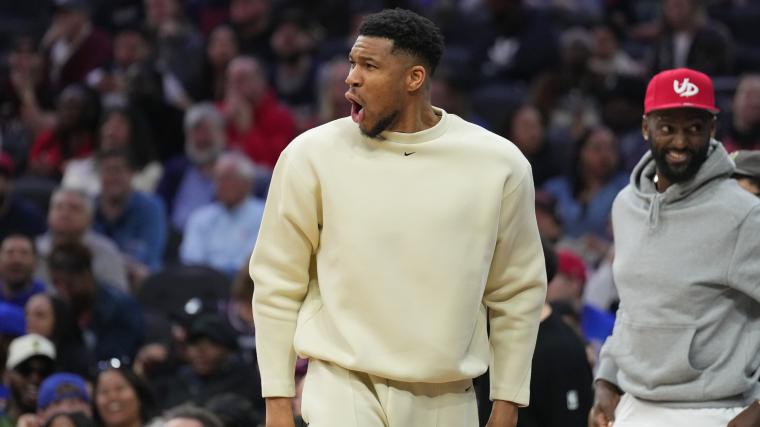
Hoops Diplomacy: Giannis Antetokounmpo’s Next Move, A Study in Global Athlete Power
POLICY WIRE — Boston, USA — When an athlete with the gravity of Giannis Antetokounmpo makes a decision, it isn’t merely about basketball. It’s a full-blown economic negotiation, a global brand...

POLICY WIRE — Boston, USA — When an athlete with the gravity of Giannis Antetokounmpo makes a decision, it isn’t merely about basketball. It’s a full-blown economic negotiation, a global brand pivot, and for those who follow these multi-million-dollar sagas, a strategic political play in microcosm. And make no mistake, Boston’s recent resurgence in the “Giannis Sweepstakes” isn’t about newfound talent for courting; it’s a cold, hard reassessment of market dynamics.
For months, the Miami Heat seemed poised, almost preordained, to secure the “Greek Freak.” Pundits had practically etched it in stone. But the whispers emanating from within Antetokounmpo’s orbit—namely, that he’s a little less enchanted by the idea of Miami gutting its already competitive roster just to acquire him—have altered the prevailing narrative. He apparently thinks losing crucial depth to gain a single superstar, even one of his caliber, might just hobble a contender rather than bolster it. That’s a sophisticated, almost cynical calculation from an athlete, isn’t it?
Because ultimately, players like Giannis don’t just want championships; they want legacy. They want control. And in this evolving landscape of professional sports, control has become the ultimate currency, often overshadowing even direct monetary compensation. You see, the leverage these generational talents now wield isn’t just about their salary—it’s about influencing the very composition and strategic direction of entire franchises. One insider, speaking off the record, summarized it: “This isn’t about loyalty; it’s about market share and championship equity. Every decision reverberates, setting new precedents for athlete leverage.”
Suddenly, the Celtics—who tried, failed, and tried again to snag him previously—look much more appealing. They possess a genuinely desirable trade asset in Jaylen Brown. Brown isn’t just a “good” player; he’s an All-Star who could headline a Milwaukee Bucks rebuild if they indeed choose to part ways with their franchise cornerstone. More importantly, trading Brown for Antetokounmpo would leave the Celtics with Jayson Tatum, another legitimate superstar, ensuring they’d still have a formidable duo ready to contend for a title.
It’s an attractive proposition for Giannis, offering him a path to a championship without the team around him resembling a skeleton crew. It offers what one would call “championship insulation.” A senior Celtics executive, perhaps reflecting on years of near-misses, remarked, “We’re not just buying a player; we’re investing in a narrative. And right now, Boston offers a particularly compelling chapter.” Such pronouncements speak volumes about the evolving perception of star players not as employees, but as brand architects.
📄 POLICY WIRE WHITEPAPER PUBLISHED: PAKISTAN'S NATIONAL SECURITY POLICY PRIORITIES
👉 READ BY CLICKING HEREThe impact of such transactions extends far beyond North American arenas. These deals, valued in the hundreds of millions for player contracts and billions for franchise valuations—the average NBA franchise valuation crossed the $3 billion mark in 2023, according to Forbes—resonate globally. Consider the fervent fan bases from Karachi to Cairo. They don’t just consume NBA highlights; they absorb the narratives, the power struggles, the very ethos of American ambition and corporate sportsmanship. For countless aspiring athletes and entrepreneurs in places like Pakistan, whose exposure to top-tier sports often comes via these global broadcasts, Antetokounmpo’s journey—from humble beginnings to stratospheric heights—isn’t just inspirational; it’s a testament to the brutal, globalized calculus of talent and finance. His choice, whichever way it leans, will be dissected with equal fervor on every continent.
What This Means
This evolving saga isn’t just another NBA trade rumor; it’s a policy discussion in disguise. It highlights the growing influence of individual labor — what we call “athlete power” — in a hyper-capitalized global sports market. Giannis isn’t simply choosing a team; he’s performing an intricate market analysis, weighing roster depth against his personal legacy, understanding implicitly the opportunity cost of every decision. This sort of savvy, once the purview of agents and front-office executives, now squarely sits with the top-tier talent themselves. It points to a broader trend where celebrity-driven economies grant unprecedented sway to their most charismatic and effective individuals. The Miami Heat’s presumed financial strength suddenly seems less potent when confronted with a star’s shrewd demand for a truly competitive ecosystem. It reflects a growing impatience for immediate, proven success, rather than the promise of future glory forged through roster sacrifices. Policy Wire’s earlier piece, “The Brutal Calculus of ‘What If’: NBA’s High Stakes Echoes in Global Fragility,” explored how these high-stakes sporting decisions often mirror larger geopolitical tensions — every move carrying diplomatic and economic reverberations. This isn’t just basketball, folks. This is a bellwether for the future of talent leverage, corporate strategy, and brand sovereignty, played out under the bright lights of professional sport. And don’t forget the international implications, because these players are global figures, watched and revered in every corner of the world where policy, too, finds its champions.