

From Octagon to Oval Office: Trump’s Pen Diplomacy and the Soft Power Play
POLICY WIRE — Washington D.C. — It wasn’t the heavyweight title belt or the roaring crowd that snagged headlines last week; it was a handful of cheap pens. Yeah, pens. They’re usually...

POLICY WIRE — Washington D.C. — It wasn’t the heavyweight title belt or the roaring crowd that snagged headlines last week; it was a handful of cheap pens. Yeah, pens. They’re usually just office fodder, right? But these weren’t just any pens. They were emblazoned with the Presidential Seal, doled out by none other than Donald Trump himself, landing in the grateful mitts of UFC featherweight champion Ilia Topuria. And that, dear reader, isn’t just a quirky anecdote—it’s a textbook case of political soft power in action, stripped down to its most bare-knuckle essentials. Call it transactional diplomacy, if you like, but it worked.
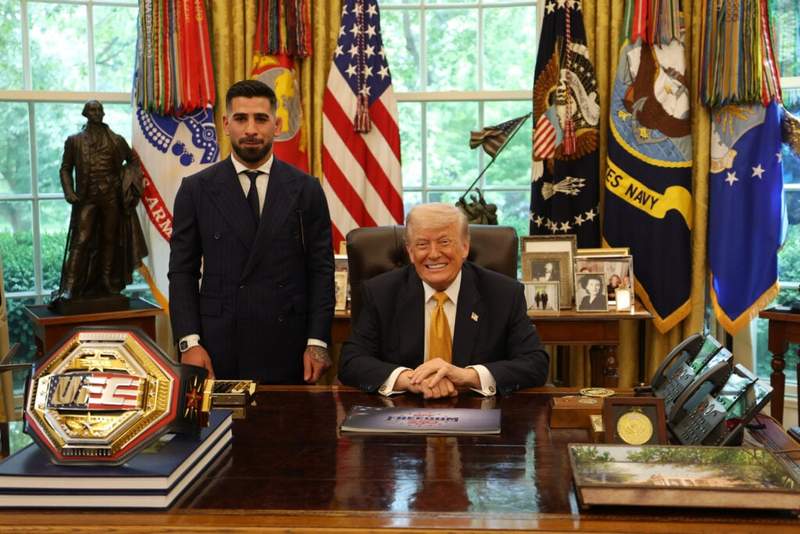
Topuria, the Spanish-Georgian ‘El Matador,’ had joined a scrum of mixed martial arts luminaries—think Alex Pereira and Justin Gaethje—for a White House photo op, part of the lead-up to the much-hyped UFC Freedom 250 card. His initial take? “It’s just work, not a political stance.” A sensible enough position for an athlete whose brand relies on universal appeal, not partisan squabbles. But White House visits, particularly when Mr. Trump is involved, rarely stay purely professional. There’s always a script, — and he usually rewrites it on the fly. The old maxim still holds: when you play in this arena, you’re always playing a political game, whether you intend to or not. It’s simply the nature of the beast.
Footage from the encounter tells the real story. During the visit, amidst the pomp — and circumstance, Topuria noticed a cluster of White House pens scattered about. Nobody else—not the brawlers, not their handlers, certainly not the Secret Service agents whose job it isn’t to ask for souvenirs—seemed willing to break protocol. So, Topuria did. “Can you give me a pair of pens?” he reportedly asked. And Trump, never one to miss an easy win, obliged. Gave him a ‘bunch,’ actually, according to Topuria. The champion walked out with signed, White House-branded pens. A small exchange, yes, but its ripples spread further than any octagon canvas. Because sometimes, a seemingly trivial interaction holds disproportionate weight.
It’s that casual generosity—or calculated move, depending on your perspective—that flips a skeptical athlete into an admiring fan. Topuria later conceded that he hadn’t expected Trump to be “so kind.” This sentiment echoes countless others who’ve met the former president face-to-face. After the meeting, he was spotted nodding vigorously with UFC President Dana White, concurring that Trump was, indeed, a “great guy.” This narrative arc, from “just business” to “great guy,” isn’t an accident. It’s precisely what such appearances are engineered to achieve. “These engagements aren’t about policy briefings; they’re about personal connection and perception,” explained Marcus Thorne, a veteran political communications strategist and former RNC aide. “They’re low-cost, high-return opportunities to turn celebrity goodwill into cultural cachet, bypassing traditional media filters altogether.”
Trump, a former reality TV star, understands better than most that politics, like entertainment, is often about personality and perceived authenticity. It’s a transaction. You give him a platform, he gives you some memorabilia—maybe even a nickname—and everyone walks away feeling like a winner. For Topuria, this might seem harmless. But for Trump, it reinforces an image: accessible, chummy with titans of sport, a man of the people who’s also friends with champions. In a deeply polarized political landscape, every friendly face counts, especially when they’re popular. This approach is strikingly similar to how certain diplomatic overtures function, cultivating relationships outside the official channels. It’s something many nations, particularly those navigating complex global alignments like Pakistan, understand deeply—the art of using cultural figures or informal gestures to build bridges, or at least soften perceptions, when formal avenues are strained. This ‘pen diplomacy’ resonates with similar subtle plays in various theaters, from celebrity envoys to impromptu meetings designed to project a desired image globally.
The impact of celebrity endorsements in US elections, for instance, isn’t always statistically overwhelming but can consolidate a base. A 2020 study by the University of Southern California found that while direct voting shifts are modest, high-profile endorsements significantly boost volunteer engagement and fundraising for a candidate, translating to an average of an extra $2,000 to $5,000 per endorser in campaign donations. That’s real money, not just feel-good moments. So, those pens? They might just be worth more than their weight in gold.
📄 POLICY WIRE WHITEPAPER PUBLISHED: PAKISTAN'S NATIONAL SECURITY POLICY PRIORITIES
👉 READ BY CLICKING HEREBut does this personal magnetism genuinely sway policy? Unlikely, directly. What it does, however, is contribute to a broader atmosphere. It normalizes interaction with a polarizing figure, softening edges for some — and affirming convictions for others. In a world awash with manufactured outrage, a simple act of asking for, and receiving, a souvenir can surprisingly humanize a figure—especially one often painted as anything but.
And that, really, is the essence of it. Trump knows what he’s doing. Always has. Because for him, every interaction is a campaign stop, every gesture a carefully aimed broadside. Whether it’s golfing with foreign dignitaries or handing out inscribed pens to muscular champions, it’s all part of the act. “Look, nobody likes a cold, distant leader,” Mr. Trump reportedly told an aide recently, emphasizing his belief in personal rapport over formal protocol. “You’ve gotta be able to look people in the eye, make ’em feel important. That’s how you win hearts. That’s how you get things done.”
The image of ‘El Matador’ clutching his Oval Office bounty—signed, presidential pens—doesn’t just signify a change of heart for him. It’s a snapshot of modern political persuasion. It’s an unspoken declaration about the symbiotic dance between celebrity, power, and perception, playing out one tiny, personalized trinket at a time.
What This Means
This whole pen saga isn’t just about a fighter getting cool stationery. It underscores a crucial element of contemporary politics: the erosion of traditional political boundaries. Athletes, entertainers, and influencers now find themselves not just reflecting cultural trends but actively shaping political narratives, sometimes unwittingly. For a figure like Donald Trump, leveraging the star power of UFC athletes isn’t just about appealing to a specific demographic; it’s about projecting an image of strength, relatability, and unconventional charm that cuts through established media filters. He’s building an alternative influence network, where personal rapport and celebrity validation outweigh detailed policy debates. It’s less about substance and more about sentiment, less about the legislative agenda and more about the cultural footprint. This isn’t just campaigning; it’s cultural infiltration. The visit also highlights how increasingly porous the lines between sports, entertainment, and politics have become globally, often for commercial gain, but always with geopolitical ripples. We’re seeing it in places far afield, too, where global athletes inadvertently become pawns—or powerful assets—in national branding efforts. The consequences for athletes, especially those with international appeal in diverse regions like South Asia, can be immense; aligning too closely with one political ideology can alienate significant portions of their global fanbase. Ghost of Geopolitics? The Hondius Exodus and South Asia’s Quiet Diplomacy delves into how soft power is deployed, reminding us these aren’t isolated incidents. For political strategists, it’s a lesson in direct-to-consumer political marketing, sidestepping the filter of the establishment and speaking straight to an eager audience. Forget the policy papers—just hand out some pens. They tell a clearer story, don’t they?