


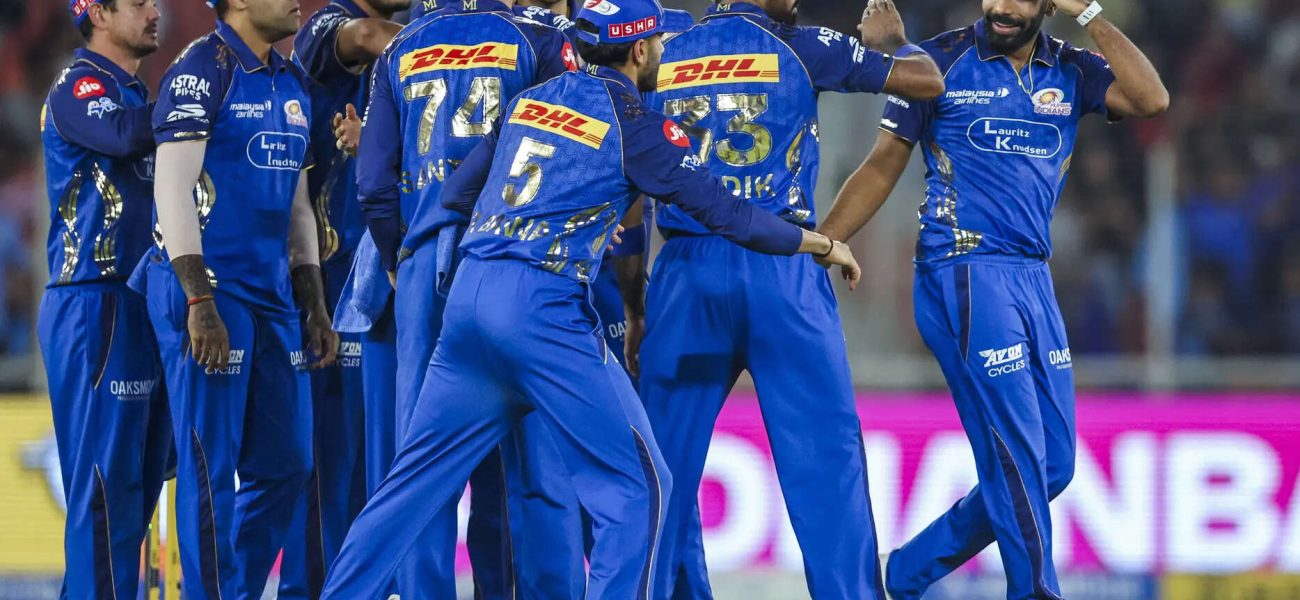
Fallen Titans: Mumbai Indians’ Unsettling Descent Signals Shifting Tides in Cricket’s Grand League
POLICY WIRE — Mumbai, India — The cracks weren’t just showing; they’d become a chasm. Not in some remote geopolitical dispute, but on the brightly lit fields where India’s — and arguably the...

POLICY WIRE — Mumbai, India — The cracks weren’t just showing; they’d become a chasm. Not in some remote geopolitical dispute, but on the brightly lit fields where India’s — and arguably the world’s — most lucrative cricket league plays out its high-stakes drama. This isn’t just about a sporting slump; it’s a corporate brand faltering, a dynasty in doubt, and a sobering lesson for any institution too comfortable atop its perch. Mumbai Indians, the storied franchise, has tumbled from grace with an uncharacteristic meekness that’s got everyone from Mumbai to Lahore talking.
It wasn’t supposed to be this way. Not for a team built on star power, deep pockets, — and a winning culture that seemed ingrained. But here we’re, watching a former champion limp out of contention early, their postseason hopes evaporated after a tepid performance against Royal Challengers Bengaluru. It was a whimper, not a bang. And for fans accustomed to their customary swagger, it feels less like a temporary dip — and more like a systemic rot.
Veteran off-spinner Harbhajan Singh, an integral part of Mumbai’s glittering past, didn’t mince words. Speaking after their elimination, his concern wasn’t just for a lost season. “I’ve never seen Mumbai Indians like this before,” he remarked on JioStar, a sentiment that cuts deeper than any statistic. Because it’s not just about losing; it’s about how you lose, and the fight you bring—or don’t bring. He’s seen plenty of ups and downs, even that rough patch when they dropped five in a row, but “the body language was never flat,” he says. That resilience? It’s gone. It’s missing.
Much of the public scrutiny, perhaps unfairly, has centered on pace spearhead Jasprit Bumrah. He’s a global phenomenon, make no mistake. But even a world-class talent struggles when the burden is almost unbearable. He managed a meager three wickets across 11 matches during IPL 2026, an unusual lull for someone usually delivering fire. His economy rate, however, remained respectable at 8.51, showcasing his ongoing control despite the lack of support, according to league statistical data. “Jasprit Bumrah is the kind of bowler who can change a match at any moment,” Singh explained, “But relying too heavily on him is not the right thing to do.” He’s not wrong. It’s an indictment of the rest of the attack.
But it’s not just the reliance on Bumrah; it’s a glaring collective deficiency. Singh pointed to Trent Boult, Deepak Chahar, and even all-rounder Hardik Pandya — big names, mind you — all operating, in his estimation, “low on confidence.” How do you even fix that? It’s a locker room issue, an organizational challenge far more complex than just tweaking a batting order. And where have all the quality local spinners gone? That, Singh stressed, was a “major gap.” They just don’t have them anymore. Because building a truly dominant squad takes more than just buying marquee international players; it requires developing home-grown talent and fostering a cohesive unit—something even European football giants sometimes forget when chasing glory.
“Look, Mumbai’s strategy has often revolved around Bumrah’s brilliance. But what happens when that single pillar starts showing cracks because others aren’t shoring it up?” commented Dr. Raza Hasan, a Karachi-based sports analyst and avid IPL follower, whose remarks reflect a broader regional concern over team reliance. “It’s like asking one general to win a war alone. The entire squad needs to contribute, particularly the bowling depth. This slump resonates deeply across the cricketing diaspora, from Islamabad to Dhaka, because it hits at the core idea of team spirit.” The echoes of this decline travel far, a ripple across the Subcontinent’s impassioned cricketing faithful, who often pick their IPL allegiances with as much fervor as their national teams.
📄 POLICY WIRE WHITEPAPER PUBLISHED: PAKISTAN'S NATIONAL SECURITY POLICY PRIORITIES
👉 READ BY CLICKING HEREAnd where’s the leadership? That’s what Singh is really talking about when he mentions the missing “confidence” — and the lack of a fighting spirit. “Somebody needs to lead the way — and say, ‘Whatever has happened is in the past. How we change things from here will depend on how we react on the field’,” he urged. It’s an old truism: culture beats strategy, every time. Right now, Mumbai’s culture looks… thin.
What This Means
Mumbai Indians’ precipitous decline isn’t merely a blip on the cricketing radar; it signals a potential paradigm shift in the IPL’s financial and cultural landscape. For sponsors, particularly those linked to South Asia’s booming consumer markets, a weakened brand equity in Mumbai could translate into reconsidered investments. This franchise, a commercial behemoth, losing its shine can rattle boardrooms as much as dressing rooms. Economically, the ‘IPL effect’ in India, and its reach into neighboring countries like Pakistan where the league is clandestinely yet avidly followed, means that a dominant, aspirational team like MI losing its luster might dampen overall fan engagement—and by extension, related advertising and media revenue. It’s a stark reminder that even the biggest brands in sport aren’t immune to poor form — and leadership vacuum. Fan loyalty, after all, can be fickle when the wins dry up. You’ve gotta give ’em something to cheer about. You just have to. The stakes, it turns out, are much higher than just what happens on the pitch.