Bobblehead Blues: Snell’s Stumbles Expose MLB’s High-Stakes Calculus
POLICY WIRE — Los Angeles, United States — It was supposed to be a night of plastic smiles and miniature commemorative trophies. Bobblehead Night. Instead, for Los Angeles Dodgers ace Blake Snell, it...

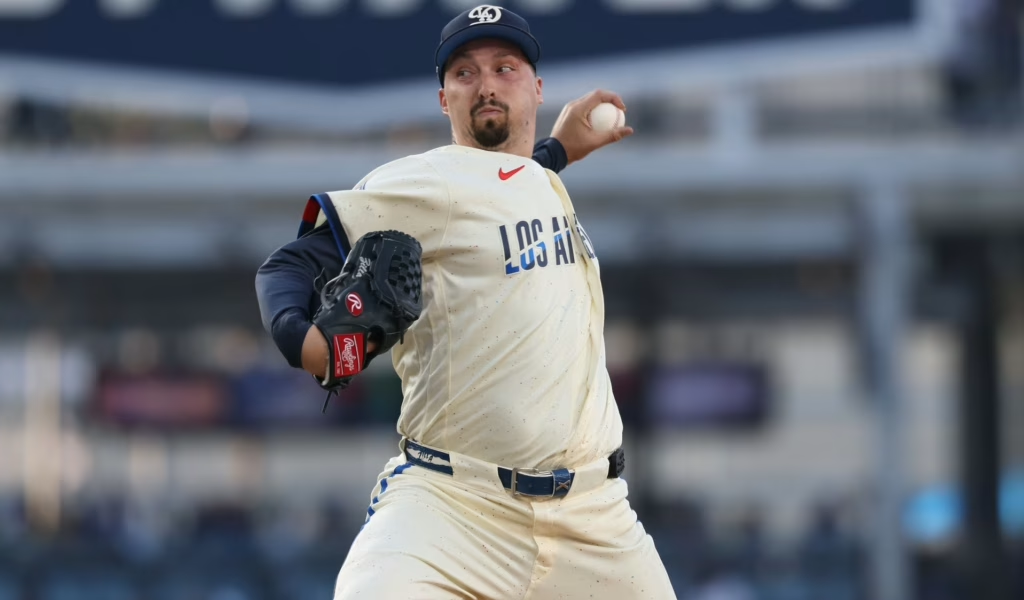
POLICY WIRE — Los Angeles, United States — It was supposed to be a night of plastic smiles and miniature commemorative trophies. Bobblehead Night. Instead, for Los Angeles Dodgers ace Blake Snell, it became a public dissection under the Dodger Stadium lights, a stark reminder that even multi-million dollar arms aren’t immune to gravity, or, more accurately, velocity. Rushed back from the injured list far earlier than initially charted, Snell’s abbreviated season debut Saturday wasn’t just a tough outing; it was a clinical study in modern sports economics meeting the harsh realities of physical recovery.
The original blueprint had Snell easing back with a single-A rehab start. But, as often happens in the pressurized world of elite sports, blueprints crumple fast. A tweak to fellow starter Tyler Glasnow’s back on Friday forced the Dodgers’ hand. And suddenly, Snell—a pitcher with a reported average annual salary of $31 million, per Spotrac, an immense investment for the franchise—was thrown to the Atlanta Braves just hours before his own figurine bobbed on concession stands. The decision felt less like a strategic chess move — and more like a high-stakes poker bluff.
Manager Dave Roberts, ever the diplomat, put a positive spin on it pre-game. “We approached Blake about shifting his rehab start to a big-league mound,” Roberts explained. “He’s a competitor; you expect him to say yes. We need him, plain — and simple, and he knows it. It’s part of the contract, isn’t it?” His voice, however, carried a subtle note of managerial calculation. And Snell did, indeed, toe the rubber.
It didn’t go well. The southpaw, fresh off a groin issue, lasted all of three innings. He fired 77 pitches—enough for some, but not nearly enough for a deep dive into a ballgame—giving up six hits and four earned runs. Two walks, five strikeouts. He looked, to be generous, rusty. “Look, I was gassed, okay? My rhythm wasn’t there,” Snell admitted post-game, sounding a touch exasperated. “But you take the ball when your team needs it. You just do. Next time, it’ll be different. I owe the bullpen more than three innings.” His candor, a refreshing departure from typical athlete boilerplate, barely concealed the frustration.
Because ultimately, this wasn’t just about a game. It’s about optics, about roster management, and about the precarious balance between a multi-billion dollar enterprise and the fragile human body at its core. The Dodgers eventually dropped the game 7-2. The loss itself isn’t catastrophic; it’s a long season. But the circumstances—the quick turnaround, the underwhelming performance on his own bobblehead night—they’re certainly fodder for the sports-page critics.
For franchises like the Dodgers, whose business model relies heavily on consistent on-field excellence and marketable stars, the dilemma is perennial. You sign top talent, like any global corporation acquires resources, then pray those resources stay healthy. But when injuries inevitably strike, the pressure to get them back—to justify those massive contracts and maintain fan engagement—is immense. It’s a constant gamble, a push — and pull between the ideal and the immediately necessary.
What This Means
Snell’s hurried return and less-than-stellar outing isn’t just a baseball footnote; it’s a window into the systemic pressures of modern professional sports, often mirroring broader economic and political calculations. When a pitcher like Snell, earning tens of millions, is rushed back, it highlights the perceived indispensability of key assets and the immense financial incentives to deploy them, even at potential risk.
The political parallel isn’t far-fetched. Think about governments, say, in South Asia—take Pakistan’s often desperate gambles with economic reforms or national security strategies. Just like a top athlete rushed into action before full readiness, policy initiatives pushed prematurely often lead to suboptimal results, or worse, exacerbate underlying instabilities. The short-term fix, the immediate response to a crisis, frequently trumps long-term, sustainable development. It’s a leadership gamble on borrowed time, hoping the public spectacle distracts from the shaky foundation.
Economically, the impact is obvious. A compromised star lessens return on investment. If Snell’s arm troubles persist, the Dodgers aren’t just losing games; they’re risking future revenue, merchandise sales, and even their playoff chances—all tied to a player’s health. It’s a high-stakes venture, where a single body part, if mishandled, can destabilize an entire financial ecosystem. This isn’t just about throwing a ball; it’s about safeguarding assets in an increasingly ruthless global sports market.