
Borderlines Bleed: Hezbollah Strikes Fuel Escalation Fears as Lebanon Suffers, Region Holds Breath
POLICY WIRE — Beirut, Lebanon — The usual silence along the ‘Blue Line’ is long gone. Instead, the southern Lebanese border rumbles, incessantly. It’s not the first time, of course,...

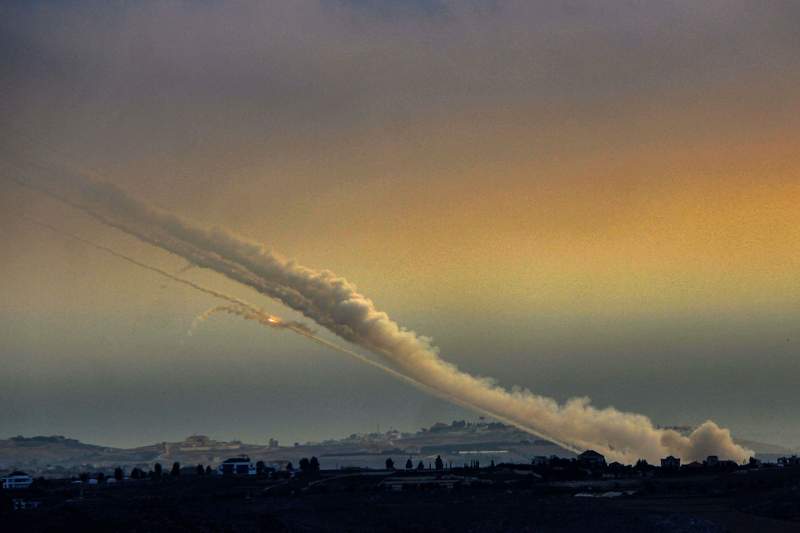
POLICY WIRE — Beirut, Lebanon — The usual silence along the ‘Blue Line’ is long gone. Instead, the southern Lebanese border rumbles, incessantly. It’s not the first time, of course, — and certainly won’t be the last. Another flurry of rockets. Another official pronouncement. Another round of dread for those just trying to live. Hezbollah, the Shi’ite militant group, says it’s striking back, targeting Israeli positions after Israeli actions killed—they claim—members inside Lebanese territory. But here’s the rub: Lebanon keeps paying the price, bleeding both human lives and whatever shred of stability it once had.
It’s a grim arithmetic, isn’t it? Missile exchanges aren’t some new sport up here. They’re just the latest chapter in a very, very old book. This latest flare-up saw Israeli artillery answering with a thundering retort, reportedly hitting targets deep within Lebanon. News filters out: several dead, including civilians, sources claim. We’re talking families, businesses, lives put on hold, or worse—ended. Because the big boys, the powers that be, are duking it out over dusty plots of land — and age-old grievances. And ordinary folk? They’re just collateral damage. Always.
Israeli Prime Minister Benjamin Netanyahu, no stranger to a firm stance, quickly broadcast his government’s resolve. “Israel’s defensive shield isn’t a suggestion; it’s an absolute,” he declared from Jerusalem, his voice predictably stern. “Anyone who tries to test our borders, who believes they can harm our citizens without consequence, will find themselves severely mistaken.” You see, for him, it’s about deterrence. Pure and simple. But for folks sheltering in basements? That message might sound a touch hollow.
Across the divide, Hassan Nasrallah, Hezbollah’s secretary-general, might very well echo similar sentiments to his constituents, though with a different villain. “Our resistance is unwavering. We won’t allow our land to be desecrated, nor our people to be bullied,” a hypothetical statement from his media office might read, consistent with past rhetoric. It’s always about resistance for them, about sovereignty (or what’s left of it). But let’s be honest: does anyone truly win these rounds?
And because these things never exist in a vacuum, the ripple effect extends far beyond the immediate blast radius. Think about Pakistan, a nation with its own complicated dance of faith, geopolitics, — and internal squabbles. How do its leaders view such actions? Islamabad often walks a tightrope, expressing solidarity with fellow Muslim nations, yet carefully managing its own regional equations. For a population often deeply sympathetic to Palestinian—and by extension, broader Lebanese and Syrian—struggles against perceived Western and Israeli hegemony, each rocket launch out of Lebanon isn’t just news. It’s a moment for renewed prayer, renewed political posturing. But the practicalities of governing a sprawling, nuclear-armed state often dictate a cautious, measured official response, rather than direct intervention.
Consider the economic pain, for instance. Lebanon’s economy? It’s been on life support for ages. Years of political infighting, corruption, — and financial mismanagement have pretty much done it in. Now, you add a regular exchange of fire on its southern flank, what then? Tourism, already crippled, vanishes completely. Investment? Don’t make me laugh. According to the United Nations High Commissioner for Refugees (UNHCR), over 90,000 Lebanese civilians have been displaced from border villages since the last major escalation began, with thousands of homes damaged or destroyed. That’s a quarter of the south’s population uprooted. A devastating, chilling statistic. And where do they go? To other parts of a country already buckling under its own weight. It’s a tragedy, really, — and one entirely preventable, if only certain players weren’t so set on their scripts.
📄 POLICY WIRE WHITEPAPER PUBLISHED: PAKISTAN'S NATIONAL SECURITY POLICY PRIORITIES
👉 READ BY CLICKING HEREWhat This Means
This latest tit-for-tat isn’t just local dust-up. It’s an ominous whisper that another major conflagration could break loose, destabilizing an already shaky Levant. The frequency — and intensity of these exchanges suggest a lowering of the escalation threshold. For Israel, these strikes are about establishing clear red lines, ensuring that what’s happening just across its northern border doesn’t get out of hand. They’re playing a defensive game, yes, but one that inherently involves projection of force.
For Hezbollah, it’s about projecting strength to its internal Lebanese constituency, flexing muscles against a historic enemy, and maintaining its bona fides within the broader ‘Axis of Resistance’ led by Iran. This ongoing friction allows them to solidify their domestic standing—such as it’s—and remind folks who really holds the cards in Lebanon’s fractured political landscape. And, you know, for the average Lebanese citizen, especially in the south, it just means more uncertainty, more destruction, and a deepening despair. They’re stuck between a rock and a hard place—literally. Their economic prospects? Gone. Their hope for normal life? Deferred. Yet again. It’s a sad, predictable outcome, playing out in agonizing slow motion. It doesn’t make things any better for anyone. It only grinds everyone down.
The wider international community? They’ll issue statements, express concern, call for de-escalation—the usual script. But until some fundamental shifts in regional power dynamics or domestic Lebanese politics occur, expect these violent ballets to continue. The world watches, sometimes aghast, sometimes with weary resignation, as another chapter of the long, painful story unfolds.