


Ghost of Geopolitics? The Hondius Exodus and South Asia’s Quiet Diplomacy
POLICY WIRE — Amsterdam, Netherlands — You wouldn’t think the movement of a few dozen cruise ship passengers could echo much beyond their immediate relief, but when it’s the final cohort from...

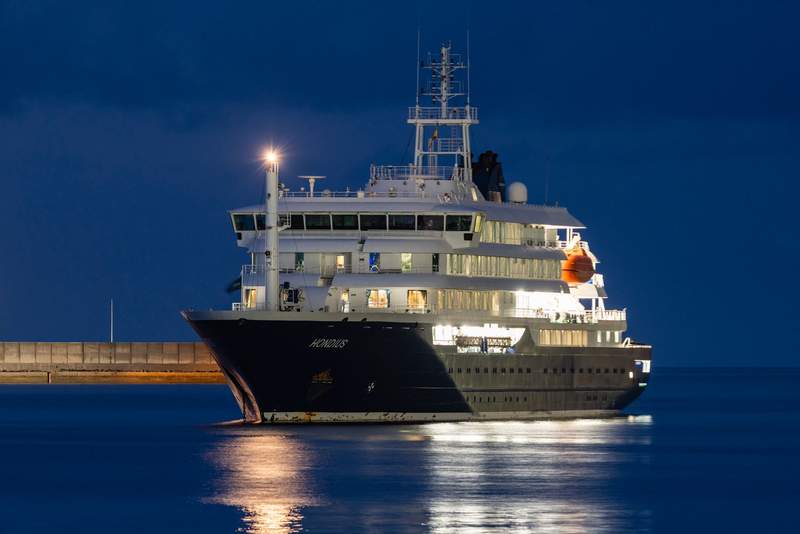
POLICY WIRE — Amsterdam, Netherlands — You wouldn’t think the movement of a few dozen cruise ship passengers could echo much beyond their immediate relief, but when it’s the final cohort from the *Hondius* — a vessel entangled in an international kerfuffle weeks ago — flying home to the Netherlands, well, that’s a different story. These aren’t just vacationers heading back; they’re the last physical tokens of a tense, if largely understated, diplomatic scramble that played out in the unforgiving waters bordering the Arabian Sea and the very nuanced shores of South Asia. The Monday evening flight didn’t just carry people; it carried the residue of quiet diplomacy.
It began not with a bang, but with a shudder. The ice-strengthened expedition ship, known for its Antarctic ventures, found itself inadvertently anchored near Pakistan’s coast — a result, we’re told, of an unscheduled divert due to some rather vague ‘operational challenges’ coupled with escalating regional maritime tensions. These ‘challenges’ often translate, in diplomatic speak, to: "Things were getting dicey, and we didn’t want a larger headache." Imagine, if you will, the serene Antarctic landscape abruptly traded for the geopolitical complexities of the Makran Coast. Doesn’t quite scan, does it?
For weeks, roughly 120 passengers — a mix of Europeans, North Americans, and a smattering of others — had been patiently waiting for onward travel, after what was meant to be a leisurely voyage got truncated. Pakistani authorities, demonstrating a surprising and quietly efficient humanitarian hand, facilitated their temporary stay and eventual transit. But it wasn’t just a logistical exercise. It became an unexpected, albeit low-key, exercise in international relations, navigating the choppy waters of national sensitivities and travel advisories.
And let’s be honest, repatriation missions aren’t always pretty. They’re often messy, expensive, — and a bureaucratic nightmare. "Our primary concern is always the welfare of our citizens abroad, regardless of the circumstances that bring them home," stated Netherlands Foreign Affairs Minister Wopke Hoekstra, in a teleconference with journalists. "The cooperation with Pakistani officials was productive, allowing us to manage a complex situation without further distress to those involved." It’s the sort of statement that sounds mundane but speaks volumes about the backroom deals and hushed phone calls that smooth these things over.
But the true story here isn’t just the smooth departure; it’s the fragile international cooperation it represents. Because when geopolitical waves break, even a seemingly innocuous tourist vessel can become a pawn, or at least a significant logistical problem. Around 85% of global trade travels by sea, according to the UN Conference on Trade and Development (UNCTAD), making maritime security a continuous, high-stakes game. And when that security gets shaky, human movements inevitably become impacted. You just know that some weary souls, after finally stepping off that relief flight, would be perfectly happy never seeing another ship again. Or perhaps, quite the opposite, craving the ocean’s unpredictable embrace.
But how does Pakistan, a nation often grappling with its own internal and external pressures, fit into this quiet diplomatic victory? Its involvement highlights a crucial, sometimes overlooked, aspect of regional power dynamics: the capacity, and often the willingness, to act as a humanitarian bridge even amidst broader political chilliness. It demonstrates an evolving posture, perhaps one seeking to project stability and capability, a contrast to narratives that often dominate international headlines. Consider the sheer absurdity of panic that can ensue during travel disruptions, as people cling to the familiar even when circumstances demand flexibility. That patience — and cooperation from both sides was vital.
📄 POLICY WIRE WHITEPAPER PUBLISHED: PAKISTAN'S NATIONAL SECURITY POLICY PRIORITIES
👉 READ BY CLICKING HERESenior official from Pakistan’s Ministry of Foreign Affairs, Aisha Saleem, put it rather succinctly in Islamabad, "Pakistan has always upheld its international obligations and its humanitarian responsibilities. Facilitating safe passage and assistance for travelers of any nationality reflects our commitment to regional stability and good relations. It’s simply what we do." Her understated confidence didn’t miss the mark. They’re telling the world, without shouting, that they’re a player. An important one, when it counts.
It’s easy to dismiss these kinds of incidents as minor inconveniences in a world brimming with grander crises. But they offer a microscopic view into the elaborate plumbing of global governance, where nation-states, for all their bluster and ideological differences, must eventually engage in mundane, often thankless, tasks to keep the wheels of international movement — and indeed, decency — turning. So, Monday’s flight wasn’t just a departure; it was a delicate diplomatic arrival of sorts. Back on stable ground, in familiar territory. Finally.
What This Means
The quiet resolution of the *Hondius* saga carries subtle, yet significant, implications. Politically, it showcases the necessity of discreet, pragmatic diplomacy between nations that may not always align on major issues. The Netherlands’ ability to secure Pakistani cooperation suggests existing channels, or a rapid establishment of them, for citizen welfare. For Pakistan, facilitating this — particularly in a region often portrayed as volatile — enhances its standing as a responsible actor on the international stage, possibly fostering goodwill that could prove beneficial in future geopolitical discussions or trade agreements. It’s an investment, really, in its soft power, a counter-narrative to harder-edged policy points. Economically, prolonged maritime disruptions can dent consumer confidence in the cruise industry and global travel, but a smooth repatriation helps mitigate that. Incidents like these, even small ones, highlight the often-invisible costs—logistical, diplomatic, and human—that accrue when maritime security is compromised, underscoring that global movements, even leisure ones, are never truly apolitical.