
From Data to Dignity: Rethinking Disability Policy in Pakistan
An estimated 1.3 billion people, about 16% of the global population, currently experience significant disability (World Health Organization, 2024). When one in every six people on the planet lives...
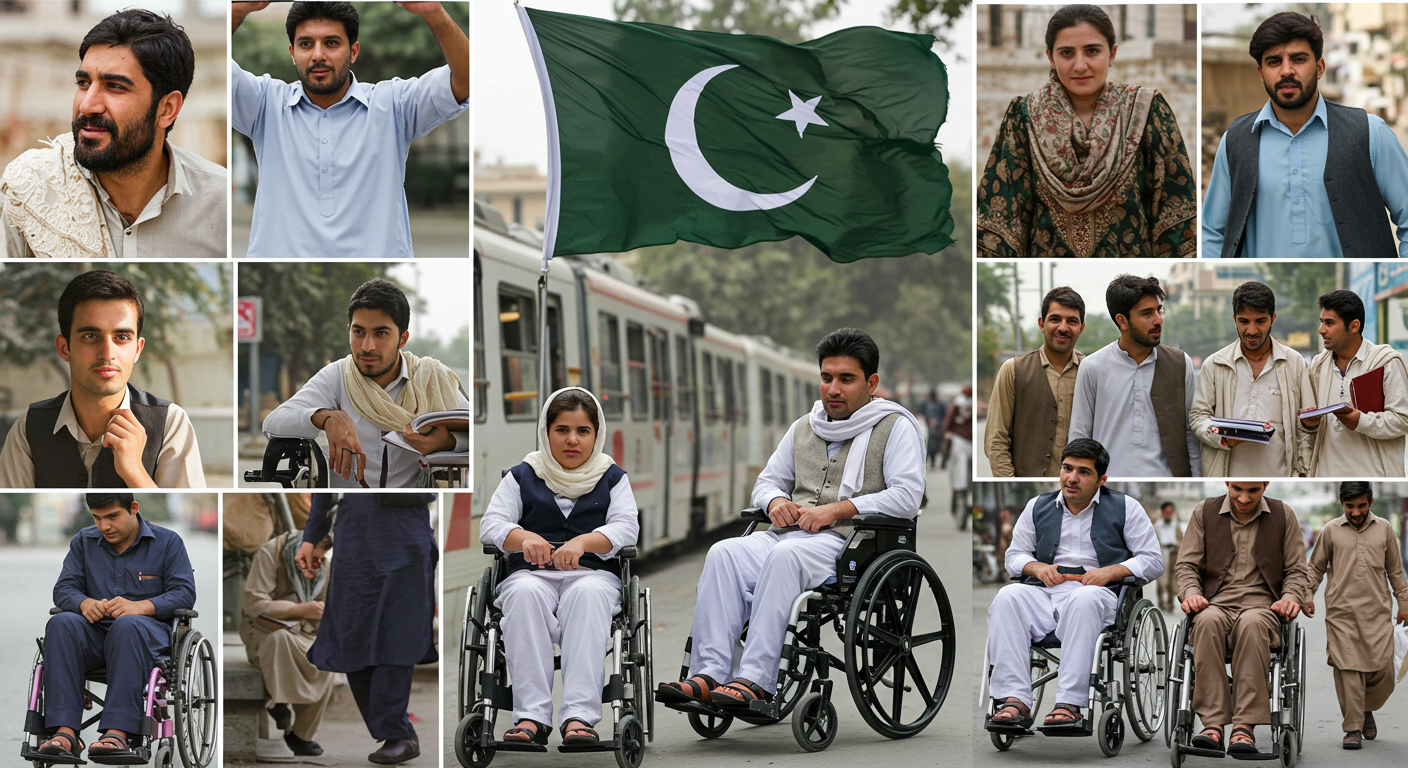
An estimated 1.3 billion people, about 16% of the global population, currently experience significant disability (World Health Organization, 2024). When one in every six people on the planet lives with a significant disability, invisibility should be impossible, yet in Pakistan, it remains the norm.
As a disabled woman navigating both public spaces and policy systems, I have felt firsthand what that invisibility looks like: a wheelchair ramp left off the blueprint, a sign-language window missing from televised lessons, and job applications closing before accommodations are even considered. Without robust data, these barriers are not just oversights, they become systemic exclusions. Numbers may feel impersonal, but for the 1.3 billion of us who experience disability worldwide, they are the first step from exclusion to dignity.
Pakistan cannot afford to treat disability policy as a charitable afterthought. We must recognise it as a central pillar of justice, development, and human dignity. To get there, we must move from a fragmented, compliance-based model to a rights-based, inclusive approach, rooted in evidence, co-created with those most affected, and tied to clear accountability.
- We Do Not Know Enough: Build a Disability Data Infrastructure
The most pressing issue is also the most basic: we do not actually know how many disabled people live in Pakistan, or how they live. Our national datasets, including the Population and Housing Census and the Pakistan Social and Living Standards Measurement Survey (PSLM), either exclude or severely undercount people with disabilities due to outdated, binary definitions. THE 2017 census shows that only 0.48 per cent of Pakistanis are persons with disability, an implausibly low figure that erases millions (Bari & Kamran, 2019).
We urgently need to adopt the WHO/World Bank Model Disability Survey (MDS). Unlike crude yes/no checkboxes, the MDS captures the full spectrum of functional difficulties across physical, sensory, intellectual, and psychosocial domains (World Health Organization, 2017). Countries like Chile, Afghanistan, and the Philippines have already integrated it to reveal not only who is disabled, but also where barriers exist in daily life (Sabariego et al., 2022). Embedding the MDS short module into the next PSLM or Census could finally give us the data to see, and then serve, this population.
- Outdated Laws, Vague Rights: Update the Legal Framework
Pakistan’s core disability legislation, the Disabled Persons (Employment & Rehabilitation) Ordinance of 1981, was a visionary step four decades ago. But today, it falls dramatically short of the UN Convention on the Rights of Persons with Disabilities (CRPD), which Pakistan ratified in 2011 (The Economist Intelligence Unit Limited, 2014). Our current law treats disability as a welfare issue, not a rights issue. It lacks enforceable standards, modern definitions, timelines, or penalties for noncompliance.
The solution is clear: we need a new or amended law that directly aligns with the CRPD. This must include rights-based language, measurable targets, and enforceable obligations for both public and private sectors. Provincial legislation, especially in Punjab, Sindh, and Khyber Pakhtunkhwa, also needs harmonisation. A modern law should make dignity and inclusion non-negotiable.
- Education Excludes by Design: Prioritise Inclusive Learning
Digital education in Pakistan has taken off, yet most of it still excludes students with disabilities. India’s PM eVidya initiative, for example, rapidly expanded remote learning during the pandemic but failed to ensure screen-reader compatibility, sign language interpretation, or captioning across most lessons (Bhavya Jain, 2025). The result: millions were connected, but many were left behind.
Pakistan is heading in the same direction unless we act now. All EdTech platforms, including those supported by the state, must be WCAG-compliant (Web Content Accessibility Guidelines) (Gokulnath B, 2025). Accessibility cannot be an afterthought or add-on; it must be part of the design from day one. This also means involving disabled students in the co-design of educational tools and content. Offline schools must follow suit by offering multiple formats of instruction and providing teacher training in inclusive pedagogy.
- Employment Quotas ≠ Inclusion: Improve Workplace Accessibility
The 2% public-sector employment quota for persons with disabilities looks good on paper, but it is rarely enforced (GOVERNMENT OF PAKISTAN, 2022). Even when met, it often leads to tokenism, not real inclusion. Private sector incentives are vague, and most workplaces lack even basic accessibility or accommodations.
We need a reimagined framework where employment is meaningful, supported, and monitored. This includes regular accessibility audits of public-sector departments, tax incentives for inclusive private employers, and the creation of independent enforcement bodies at both the federal and provincial levels. Annual scorecards on inclusion can also help drive competition, and progress, within ministries and departments.
- Policy Is Top-Down: Involve Disabled People as Co-Creators
The global disability rights movement has long said, “Nothing about us without us” (Bath & Willson, 2025). In Pakistan, however, most disability policies are drafted without disabled voices at the table. Advisory boards often lack representation, and public consultations are inaccessible or perfunctory. It is time to make participatory policy-making a legal requirement. Persons with disabilities must be institutionally represented on all policy, planning, and monitoring bodies related to health, education, transport, digital inclusion, and beyond. Their lived expertise is indispensable, and their absence leads to blind spots that cost lives and livelihoods. Australia’s NDIS shows how person-centred funding can bundle health, education and employment supports under one plan (NDIS, 2021). Meanwhile, the EU Disability Strategy 2021–2030 ties rights to mandatory accessibility standards and cross-country monitoring, setting a powerful example for countries like Pakistan that must move beyond fragmented efforts toward integrated, rights-based frameworks (European Commission, 2023).
A Vision Grounded in Rights, Not Charity
Disability policy cannot be an afterthought tucked into a footnote of health or education plans. For Pakistan to truly honor the dignity and potential of all its citizens, it must stop treating disability as a side issue, and start treating it as central to development, equity, and justice. As someone who has lived this invisibility, I know that change does not begin with charity. It begins with counting every life, designing every policy like it matters, and holding systems accountable when they do not. Because dignity is not optional, it is the most basic right we all deserve.
References
Bari, F., & Kamran, S. (2019, October 18). No data on disability. DAWN.COM. https://www.dawn.com/news/1511509
Bath , R., & Willson, M. (2025, May 27). Understanding “Nothing About Us Without Us” | Canadian Council on Rehabilitation and Work. Canadian Council on Rehabilitation and Work. https://ccrw.org/understanding-nothing-about-us-without-us/
Bhavya Jain. (2025, May 30). PM E-Vidya: Digital Education For Inclusive Learning 2020 – IMPRI Impact And Policy Research Institute. IMPRI Impact and Policy Research Institute. https://www.impriindia.com/insights/pm-e-vidya-digital-education-for-2020/
European Commission. (2023). Union of equality: Strategy for the Rights of Persons with Disabilities 2021-2030. European Commission. https://commission.europa.eu/strategy-and-policy/policies/justice-and-fundamental-rights/disability/union-equality-strategy-rights-persons-disabilities-2021-2030_en
Gokulnath B. (2025, April 17). Why WCAG & 508 Compliance Are Essential for eLearning. Digital Engineering & Technology | Elearning Solutions | Digital Content Solutions. https://www.hurix.com/blogs/why-is-508-compliance-necessary-for-accessible-edtech-content/
GOVERNMENT OF PAKISTAN. (2022). MOST IMMEDIATE GOVERNMENT OF PAKISTAN CABINET SECRETARIAT ESTABLISHMENT DIVISION OO. https://www.establishment.gov.pk/SiteImage/Misc/files/Disability%20Quota%20(2).pdf
NDIS. (2021, August 11). Supports in employment | NDIS. Www.ndis.gov.au. https://www.ndis.gov.au/understanding/supports-funded-ndis/supports-employment
Sabariego, C., Fellinghauer, C., Lee, L., Kamenov, K., Posarac, A., Bickenbach, J., Kostanjsek, N., Chatterji, S., & Cieza, A. (2022). Generating comprehensive functioning and disability data worldwide: development process, data analyses strategy and reliability of the WHO and World Bank Model Disability Survey. Archives of Public Health, 80(1). https://doi.org/10.1186/s13690-021-00769-z
The Economist Intelligence Unit Limited. (2014). Moving from the margins Mainstreaming persons with disabilities in Pakistan. https://www.britishcouncil.pk/sites/default/files/moving_from_the_margins_final.pdf
World Health Organization. (2024). Disability. World Health Organization. https://www.who.int/health-topics/disability#tab=tab_1
World Health Organization 2017. (2017). Model Disability Survey (MDS) SURVEY MANUAL World Health Organization 2017. https://iris.who.int/bitstream/handle/10665/258513/9789241512862-eng.pdf
Author