

The Ghost of Viral Misinformation: Old Horrors Weaponized in Africa’s Digital Trenches
POLICY WIRE — Washington D.C., USA — It started, as these things often do, with a flicker on a screen. An old picture. Not just any picture, mind you, but one soaked in the kind of visceral anguish...

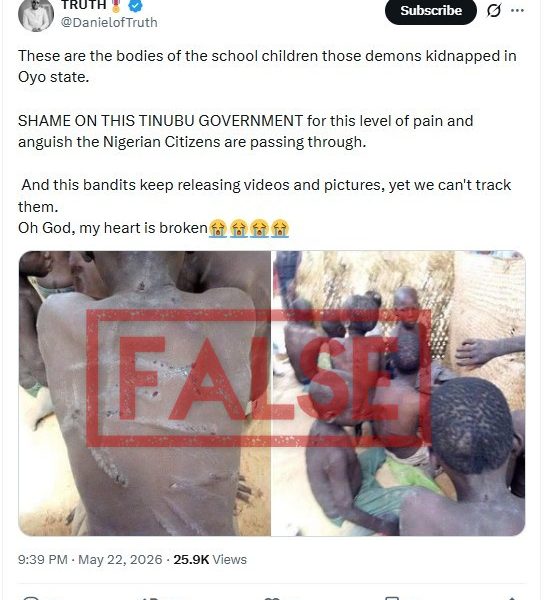
POLICY WIRE — Washington D.C., USA — It started, as these things often do, with a flicker on a screen. An old picture. Not just any picture, mind you, but one soaked in the kind of visceral anguish that’d curdle your blood—children, clearly suffering, enduring unspeakable abuses. But then, as these things *also* often do, the flicker became a wildfire. And that fire? It spread. But the destination it claimed? All wrong. So tragically, recklessly wrong.
It’s a story we’ve heard before, sadly, across the globe. Some digital necromancer, or perhaps just a profoundly careless algorithm, resurrects haunting evidence of a past tragedy. Then, a quick-fire click, a copy-paste job, and suddenly, the anguish of children abused in Niger years ago—let that sink in, years ago, in an entirely different nation—is rebranded. It’s now presented, falsely, as a chilling, real-time dispatch of mass abductions from Nigerian schools. One atrocity replaced with another, distinct — and current. It’s enough to make you pound a desk. It distorts genuine suffering — and hijacks legitimate outrage, funneling it down a rabbit hole of pure fiction.
For policymakers, for humanitarian workers on the ground, for any poor soul just trying to separate fact from digital scrap, it’s a nightmare. “This sort of deliberate deception doesn’t just mislead the international community; it erodes the public’s ability to trust any information, even when real tragedies unfold,” stated Ambassador Amina Kaba, a senior Nigerian diplomat who’s spent years grappling with regional instability. “It’s an insidious poison. It makes our work incredibly difficult, trying to address actual, immediate threats while simultaneously batting away ghosts.” She’s right, isn’t she? Because if you cry wolf over false images of child abduction, how loud is your voice when the *real* wolves are at the door?
But the true damage goes beyond mere confusion. Misinformation isn’t just a nuisance; it’s a strategic weapon. When global attention is misdirected to a fabricated crisis, it distracts from very real, immediate threats, from systemic corruption that starves services, or—yes—from the actual kidnappings that periodically plague regions like northern Nigeria. You’d think people would learn. But history tells us they often don’t.
This particular episode involved images, verifiable as originating from an abuse case in Niger from quite some time ago, being repurposed to generate alarm over fictitious school abductions in Nigeria. Why? Maybe to sow discord. Maybe to undermine local authorities. Or maybe just because it generates clicks, — and clicks, for some, are their own grim currency. One estimate from the Global Disinformation Index indicated that a staggering 87% of false news articles online are shared without any critical evaluation by users—that’s how easy it’s to become an unwitting accomplice. And this sort of reckless information environment, it isn’t restricted to West Africa; you see it mirrored in digital skirmishes across South Asia, for instance, where misinformation around resource disputes or human rights concerns frequently inflames public opinion and impedes diplomatic efforts.
It creates a perception, particularly among those unfamiliar with the region, that the entirety of Sub-Saharan Africa—or indeed, the wider Muslim world, given Nigeria’s significant Muslim population—is a homogenous zone of perpetual chaos, making it harder for aid to flow or investment to arrive where it’s actually needed. Aid groups face a constant battle not just against hardship, but against bad PR. “We dedicate immense resources to building trust in vulnerable communities, to ensure our operations are transparent and effective,” explained Dr. Tariq Al-Hassan, Regional Director for a Gulf-funded international relief agency. “But when these manipulated narratives emerge, fueled by malice or ignorance, it throws sand in the gears of crucial life-saving efforts. It forces us to spend valuable time — and resources debunking fabrications rather than delivering food or medicine. We simply can’t afford that, can we?” His frustration, you can just about feel it, hanging in the air. The whole thing just screams a deeper malaise—the pervasive erosion of shared truth.
What This Means
The strategic deployment of recycled, manipulated images doesn’t merely confuse the populace; it’s a dangerous erosion of our collective understanding of reality. For Nigeria, this misdirection of global focus can lead to diminished international support for genuine security challenges, aid initiatives, and the broader fight against violent extremism. When the world is chasing phantoms, real threats fester, often unnoticed or undervalued. Politically, it undermines confidence in governing bodies, locally and nationally, irrespective of their actual effectiveness in addressing crises. Economically, the perception of unrelenting chaos, perpetuated by these narratives, can deter foreign investment, disrupt trade, and further marginalize already fragile economies. It traps nations in a cycle of perceived instability, whether merited or not.
And then there’s the chilling ripple effect across humanitarian aid—a sector already straining at the seams. When people’s empathy fatigue sets in due to constant exposure to unverifiable trauma, it can diminish donations, volunteerism, and political will to intervene effectively. Because they’re so frequently called to attention by manufactured crises, the true urgency of crises like the precarious returns of displaced populations gets lost. It’s a bitter truth, isn’t it, that the attention economy values outrage above accuracy? That’s what we’re up against now. And frankly, we’re not doing a bang-up job fighting back.