


Germany’s Tightrope Act: ‘Ulm 5’ Trial Challenges Dissent Amidst Geopolitical Jitters
POLICY WIRE — Ulm, Germany — A crisp autumn morning, rather than marking a new season of Oktoberfest celebrations or placid riverside strolls, now serves as the backdrop for a rather sharp test of...

POLICY WIRE — Ulm, Germany — A crisp autumn morning, rather than marking a new season of Oktoberfest celebrations or placid riverside strolls, now serves as the backdrop for a rather sharp test of Germany’s civic fabric. Forget the headline-grabbing energy debates; this is about something deeper, something quieter, yet profoundly more resonant: the right to raise hell, albeit with a spray can, when principles clash with state interests. And believe me, it’s quite the clash.
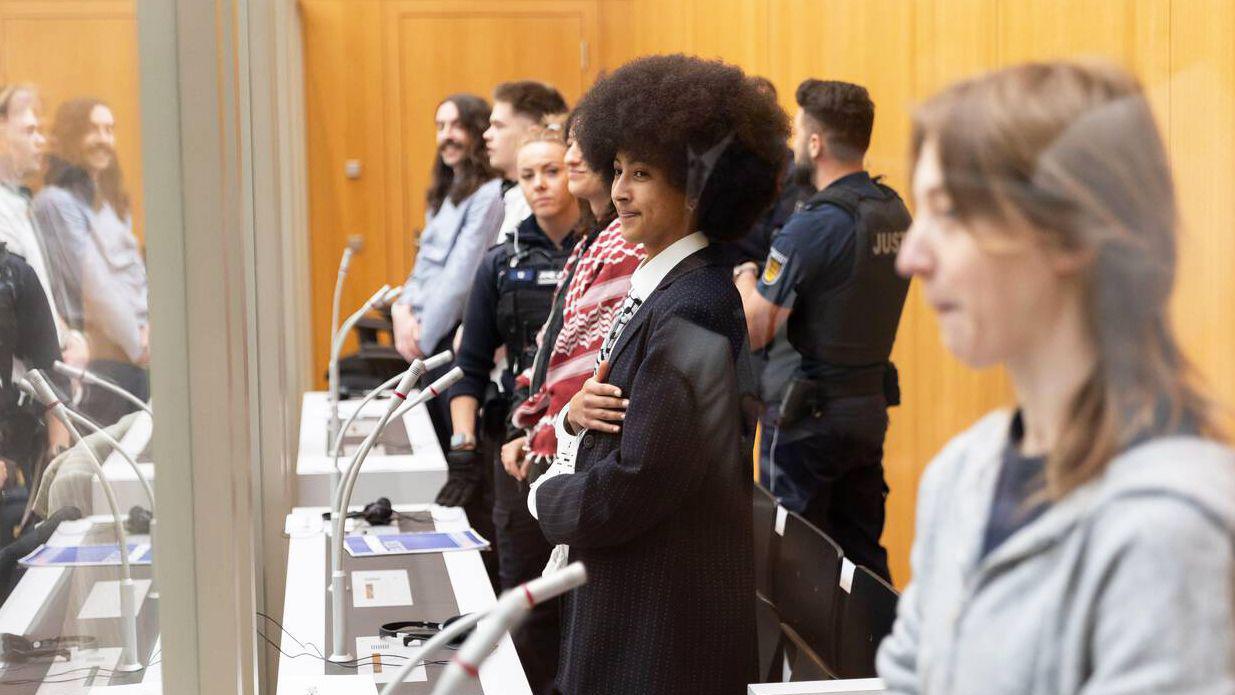
Down in Ulm, a sleepy city not typically known for political fireworks, a courtroom drama is unfurling. It concerns the ‘Ulm 5,’ a quintet of activists whose actions—allegedly splashing red paint across an Airbus facility—have managed to shine a blinding spotlight on the uncomfortable corners of German foreign policy and the burgeoning global frustration it sometimes ignites. It’s not just a few cans of paint, is it? It’s about what that paint represents: a smear on the perceived moral neutrality of a nation still grappling with its past, even as it maneuvers an increasingly complex present.
These five individuals, supporters of Palestine Action, aren’t just your garden-variety protestors. They’re part of a larger, coordinated push, one that seems intent on disrupting the comfortable hum of commerce that, to many, fuels distant conflicts. But the trial itself—now underway—isn’t merely weighing property damage. It’s an exercise in judicial introspection, examining how far the line of legitimate protest stretches before it snaps under the pressure of maintaining international trade relationships.
And let’s be blunt: Germany isn’t unique in its discomfort here. Nations across Europe, and indeed, around the world, are constantly trying to balance free speech with perceived security interests. This specific incident, however, taps into an especially charged vein given the historical weight Germany carries—and its staunch commitment to certain geopolitical alliances. For the defendants, this isn’t simply a case of vandalism; it’s an act of conscience. Their argument, [QUOTE_PLACEHOLDER], positions them squarely in the path of the state’s apparatus.
The global ripple effects are already being felt. From Islamabad to Istanbul, observers in the Muslim world are watching closely. Pakistan, for instance, a nation grappling with its own complex relationships between religious identity and secular governance, often views such European trials through a lens shaped by its diaspora communities. These communities, often sizable and politically engaged, interpret these events as barometers of Western democratic sincerity. So, what Germany decides in Ulm won’t just stay in Ulm.
It’s important to note too that this isn’t just an abstract concern for human rights advocates. These protests often involve accusations related to the export of weaponry, even components. And a recent report from the Stockholm International Peace Research Institute (SIPRI) indicated that Germany’s arms exports actually rose by 21% between 2018-2022 compared to the previous five-year period, making it the fifth-largest arms exporter globally. That’s a cold, hard statistic illustrating the sheer scale of the industry these activists are targeting. It’s big business, obviously. And those protesting it are putting themselves directly in its path.
But the stakes here transcend mere legalities; they brush against the very nature of democratic expression. Are acts of civil disobedience, especially when targeting industries connected to conflict, to be treated solely as criminal offenses? Or does society, particularly one that prides itself on Enlightenment values, accommodate a wider interpretation of dissent? It’s not a simple question, I’ll tell ya.
The activists involved, they’ve claimed their actions were intended to halt what they consider complicity in human rights abuses, specifically citing Airbus’s alleged provision of components that end up in military equipment used by contentious regimes. Airbus, for its part, maintains [QUOTE_PLACEHOLDER]. They say they operate within the strict confines of international — and national regulations. We’ve heard that before, haven’t we? Such statements often dance around the actual implications of their supply chains.
And then there’s the broader issue of perception. In countries like Pakistan, the German state’s handling of these activists often fuels narratives—some legitimate, some not—about a perceived double standard. Free speech in Europe, many argue, seems to have its limits when it challenges certain deeply entrenched economic or geopolitical arrangements. This is especially true when the criticism is leveled at allies or profitable ventures. This sentiment can destabilize relations and foster distrust, something the West, including Germany, can ill afford given current global instabilities.
Ultimately, this isn’t just about five individuals. It’s about the kind of Germany that’s emerging in the 21st century. Will it be a Germany where industrial might always trumps public outcry, or one where genuine ethical concerns, however disruptive, can effectively challenge the status quo?
What This Means
The ‘Ulm 5’ trial carries significant weight, extending far beyond the immediate verdict. Politically, a harsh judgment could establish a precedent that further criminalizes direct action in Germany, effectively narrowing the scope for peaceful—if disruptive—protest. This would, without a doubt, concern civil liberties groups — and potentially spark wider demonstrations across Europe. Such a move might be interpreted as prioritizing corporate interests and geopolitical stability over fundamental freedoms, sending a chilling message to budding activist movements.
Economically, the outcome won’t derail Airbus’s global operations, of course. But it does highlight the increasing pressure on multinational corporations to demonstrate ethical supply chain management. This sort of protest, particularly when it garners international attention, creates reputational risks that can impact investor confidence and consumer perception over the long haul. Firms like Airbus—and really, any company with a global footprint—are realizing they can’t just operate in a vacuum anymore. Their every transaction is subject to intense public scrutiny, particularly in an era of heightened digital diplomacy. The broader implication is that governments, seeking to protect their industrial bases, may feel compelled to enact stricter anti-protest laws, further intensifying the friction between state power and citizen movements. For nations with burgeoning industrial bases in South Asia, for instance, observing these European responses might influence their own approaches to dissent and corporate oversight. It’s a feedback loop, isn’t it, between policy and public outrage, that’s becoming increasingly loud.