

G7 Summit Tainted by Power Shifts and Moral Degradation
Before the G7 leaders made their presence felt in Canada’s Rocky Mountains, the world had already transitioned. The great powers can still convene, but the time for Western leadership is...
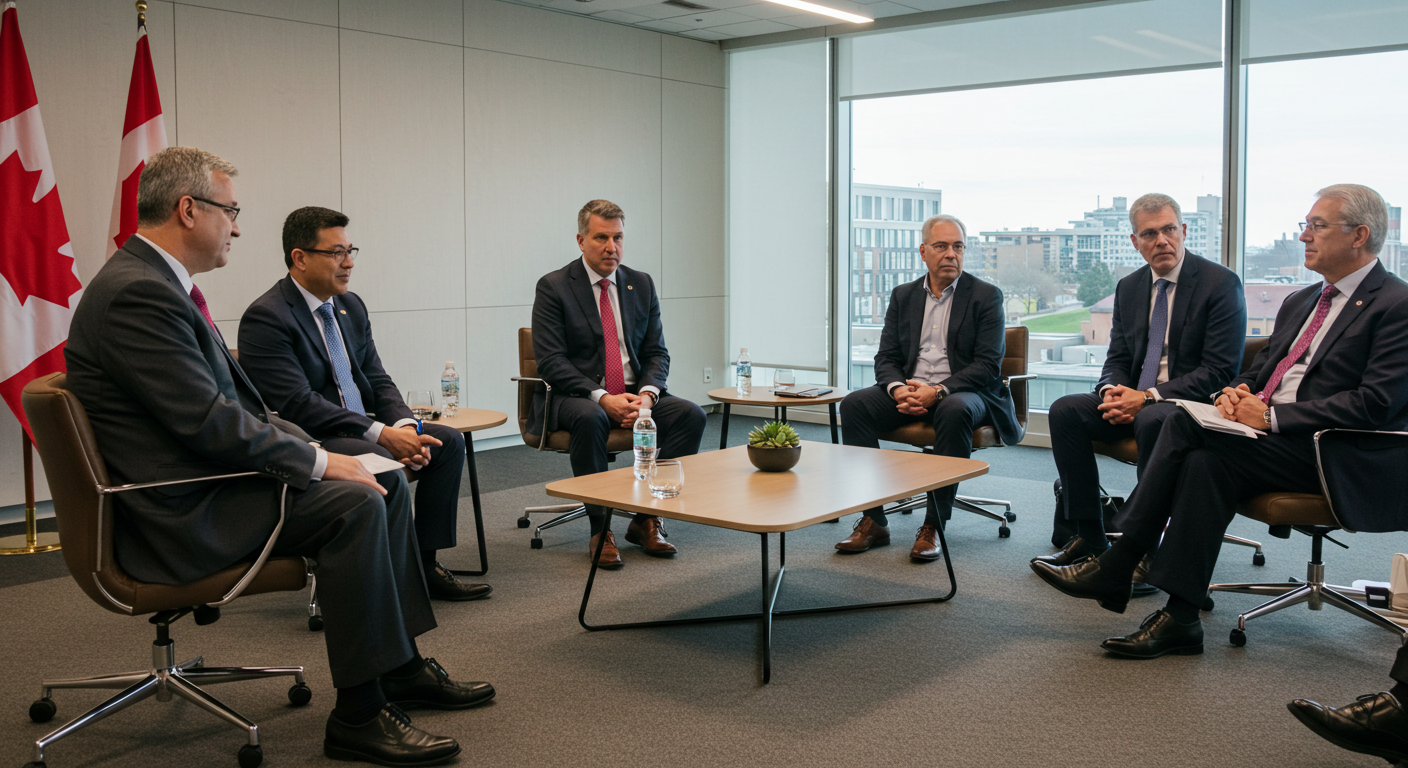
Before the G7 leaders made their presence felt in Canada’s Rocky Mountains, the world had already transitioned. The great powers can still convene, but the time for Western leadership is passing. Not in a blaze, but through a quiet erosion of credibility, clout, and moral gravity. The summit this year, instead of projecting strength, represents an agglomeration trying to remain relevant in a world that no longer takes its leadership for granted.
For most of the post-Cold War era, the G7 Summit acted as the executive committee of the liberal world order. Its economic weight, military influence, and institutional reach shaped everything from global trade norms to diplomatic conventions. But that legacy is now under serious contest. The challenge does not only come from China or Russia, but increasingly from the Global South, where voices are growing louder in questioning the G7’s legitimacy, representativeness, and moral consistency. Pakistan is among the countries expressing this discontent, not confrontationally, but through thoughtful reorientation and ethical diplomacy.
Nowhere is the G7’s declining credibility more visible than in its response to current global crises. While the war in Ukraine dominates the agenda, other catastrophes are being sidelined. In Gaza, over 35,000 civilians have been killed, infrastructure has been demolished, and humanitarian aid remains blocked. Despite these atrocities, the major G7 powers have avoided even the mildest condemnations. There is no real diplomatic urgency, no credible push for accountability, and certainly no threat of sanctions. If the G7 still claims to uphold human rights and international law, this selective silence exposes the hollowness of that claim.
Pakistan has taken a clear and principled stance: an immediate ceasefire in Gaza, unimpeded humanitarian access, and a credible international mechanism to investigate war crimes are urgently needed. This is not just about Palestine. It concerns the very fabric of international norms. A system that applies legal principles based on political convenience cannot be sustained indefinitely.
The G7’s outdated worldview also affects its stance on the Israel-Iran tensions. By emphasizing deterrence over diplomacy, it fails to acknowledge the deeper roots of regional instability — decades of occupation, inequity, and unchecked aggression. Such an approach risks fueling escalation rather than preventing it. Pakistan, in contrast, has consistently advocated for restraint, dialogue, and peaceful resolution. These are the values that must define the new global architecture if it is to be just and sustainable.
The summit’s shortcomings are not confined to geopolitics. Even in trade, the G7 has shifted from the architect of globalization to a defensive posture. Protectionism, sanctions, and “reshoring” have become the new normal, largely influenced by the looming return of Donald Trump. His prior confrontations with G7 allies and his unpredictable diplomatic style have left scars. The mere possibility of his re-election has already destabilized the transatlantic consensus. His indecisiveness about attending future global forums such as the G20 only reinforces the view that Western-led multilateralism no longer commands the center of gravity.
For Pakistan and much of the Global South, the G7’s decline presents both risks and prospects. The risk lies in the absence of an effective collective response to global challenges like pandemics, climate change, disrupted supply chains, and regional conflicts. These require inclusive mechanisms, not exclusive clubs. Yet, there is also an opening. Pakistan is actively pursuing diversified diplomacy through platforms like the Shanghai Cooperation Organization, enhancing South-South ties, and supporting a multipolar world order grounded in sovereignty, mutual respect, and non-alignment.
Pakistan’s foreign policy continues to rest on the pillar of strategic autonomy. It is not interested in bloc politics or ideological camps. Islamabad seeks constructive engagement with all major powers- the United States, China, Russia, and the European Unio- while promoting regional harmony, economic integration, and global institutional reform. This is not indecision. It is realism guided by consistent principles.
The G7 must recognize this changing global temperament. The age of uncontested Western dominance has ended. In today’s world, influence is no longer tied to GDP figures alone. It is now equally measured by moral integrity, inclusivity, and a willingness to listen. If the G7 aspires to lead, it must first rediscover humility. That means confronting its own blind spots- from Gaza to Kashmir- and moving beyond rhetorical declarations toward actionable commitments on justice and human rights.
The summit in Canada could have marked a new chapter. Instead, it risks being remembered as another missed opportunity. A meeting that recycled yesterday’s slogans while the world moved forward. For nations like Pakistan, the message is clear. The future belongs not to those clinging to obsolete hierarchies, but to those who embrace complexity, fairness, and meaningful dialogue. The G7 can still matter. But only if it transforms. That transformation begins not with bold leadership statements, but with genuine acts of solidarity.
Author