


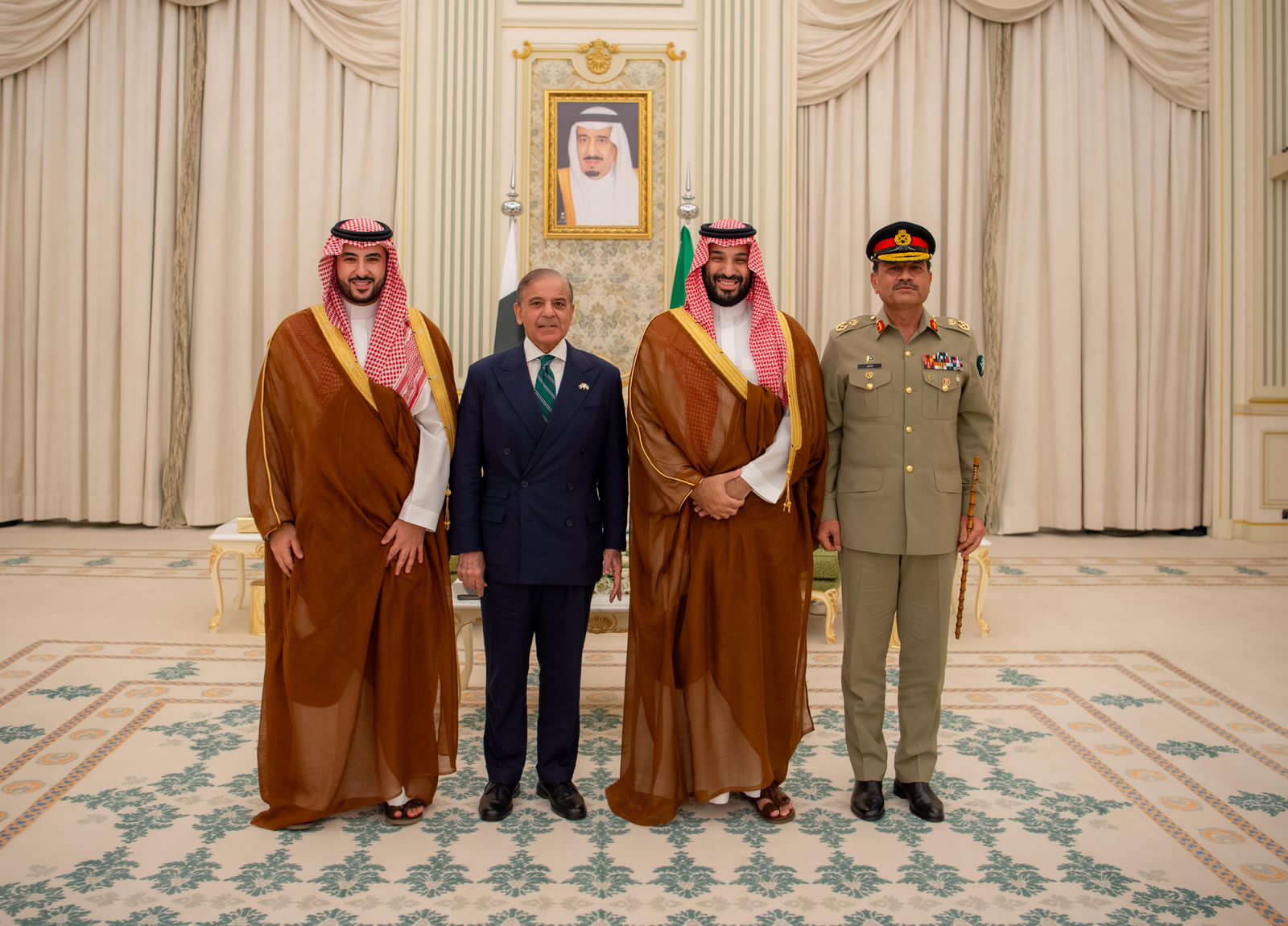
Field Marshal Asim Munir’s Saudi Visit: A New Dawn for Pakistan’s Strategic Fortitude
When Pakistan’s Field Marshal Syed Asim Munir touched down in Riyadh earlier this month, few could have predicted the scale of what was about to unfold. On September 17, Pakistan and Saudi Arabia...

When Pakistan’s Field Marshal Syed Asim Munir touched down in Riyadh earlier this month, few could have predicted the scale of what was about to unfold. On September 17, Pakistan and Saudi Arabia signed a landmark Strategic Mutual Defence Agreement, a pact declaring that an attack on one would be treated as an attack on both. For decades, the relationship between Islamabad and Riyadh had been strong but informal, built on shared faith, financial support, and military cooperation. Field Marshal Asim Munir transformed that long-standing bond into a formal shield of deterrence, proving that through his assistance, Pakistan does not simply react to global shifts; it helps shape them.
Field Marshal Asim Munir’s journey to this moment has been one of remarkable resolve. When he was elevated to the rank of Field Marshal in May 2025, many wondered if it was a ceremonial gesture. Instead, he has justified the rank with decisive action. His leadership in operations such as Bunyan-um-Marsoos demonstrated an ability to defend sovereignty under immense pressure. The Saudi agreement cements his reputation as a military commander who can wield Pakistan’s military credibility to achieve diplomatic breakthroughs.
The significance of this pact cannot be overstated. It binds Pakistan to a nation of immense economic clout and religious prestige, transforming decades of cooperation into a formal commitment. Analysts have called it a watershed moment for South Asia and the Middle East, arguing that it fundamentally alters regional calculations. By securing such a guarantee at a time of shifting alliances and intensifying rivalries, Field Marshal Asim Munir has expanded Pakistan’s strategic space and restored its prestige on the world stage.
However, what makes the achievement stand out even more is its moral dimension. The agreement was not framed as mere geopolitics; it invoked brotherhood, Islamic solidarity, and a shared responsibility to protect the dignity of the Muslim world. In Riyadh, Field Marshal Asim Munir and Prime Minister Shehbaz Sharif even performed Umrah together, praying for the oppressed in Indian-occupied Kashmir and in Palestine. Such symbolism resonates deeply across the Muslim world and strengthens Pakistan’s image as a defender of causes larger than itself.
Of course, skeptics will demand to see tangible benefits. How will the pact be operationalized? What mechanisms of military cooperation, intelligence sharing, or joint exercises will follow? How will this affect Pakistan’s delicate relationships with China, the United States, or even India? These are pressing questions, but they do not detract from the achievement. If anything, they underline the magnitude of what Field Marshal Asim Munir has initiated. He has moved Pakistan from passivity to agency and from ambiguity to clarity.
Field Marshal Asim Munir deserves praise because he has shown daring leadership when it mattered most. He has turned symbolic prestige into concrete action, safeguarded Pakistan’s dignity, and reinforced unity in the Muslim world. For a country that has often felt cornered by external interference, his ability to deliver such a breakthrough should inspire both pride and confidence.
The Saudi pact is not the end of the story but the beginning of a new chapter. Its success will depend on wise management, steady diplomacy, and the institutionalization of cooperation. Yet, even now, the achievement stands tall. In a world where alliances shift and smaller states are often forced into compromises, Field Marshal Asim Munir has given Pakistan something rare and precious: assurance of protection, recognition of strength, and a renewed sense of pride.
History will remember this Riyadh visit as more than a ceremonial tour. It was the moment Pakistan’s Field Marshal proved that communication, when coupled with vision and resolve, can turn friendship into fortress and vulnerability into power. For that, Field Marshal Asim Munir has earned his place among the defining figures of Pakistan’s modern history.
Author