


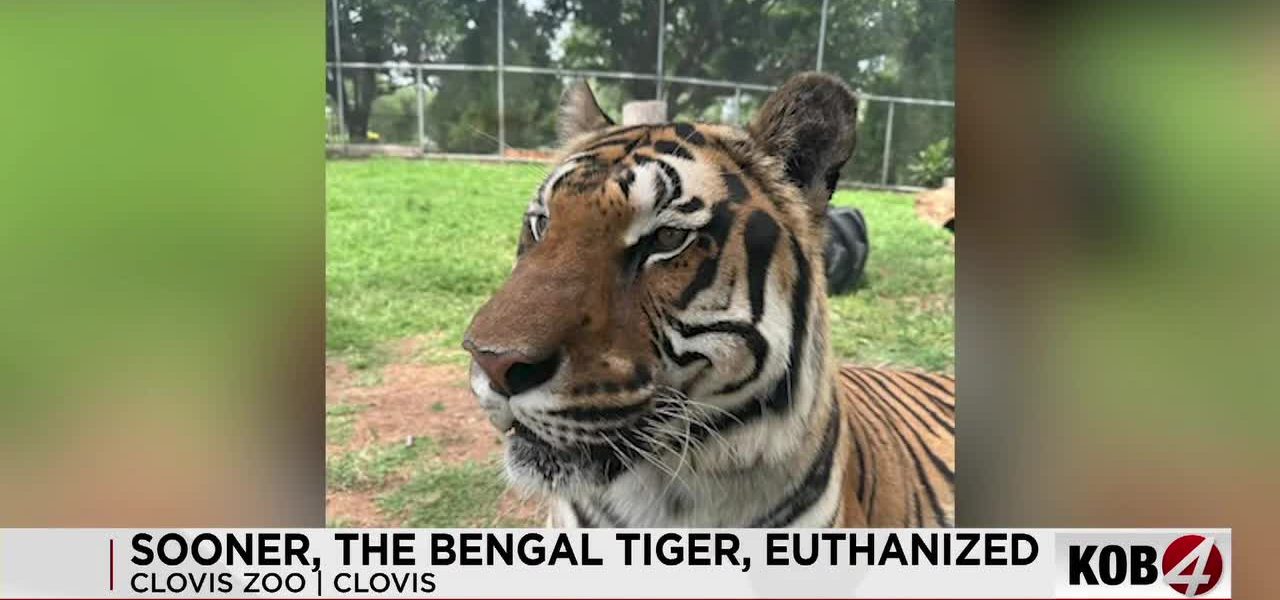
End of an Era: Clovis Zoo Grapples with Loss, Wild Echoes Fade for Captive King
POLICY WIRE — Clovis, New Mexico — It isn’t just an animal dying, it’s a chapter closing. A king, even one held captive, succumbs to the inevitable. For nearly sixteen years, Sooner, the...

POLICY WIRE — Clovis, New Mexico — It isn’t just an animal dying, it’s a chapter closing. A king, even one held captive, succumbs to the inevitable. For nearly sixteen years, Sooner, the Bengal tiger, lorded over his New Mexico enclosure at the Clovis Zoo. Now, that realm is empty. His passing this week, attributed to chronic kidney failure necessitating euthanasia, marks more than just the end of a crowd-pleaser’s run; it pokes at the uneasy intersection of entertainment, conservation, and the harsh realities of age, even for creatures of immense power.
Sooner wasn’t some wild beast captured in a desperate sprint through dense jungle. He was born into institutional care, a fate shared by the vast majority of captive big cats in America. And for a brief period earlier this year, his advanced age granted him an unusual distinction: he became one of the country’s few tigers to receive CBD treatment, an unconventional, yet telling, effort to manage his arthritis. It’s a testament, perhaps, to how far humanity will go for its ailing mascots, but also to the artificiality of their extended lives.
“We don’t just see these animals as exhibits; they’re family, each with a personality and a story,” explained Zoo Director Eleanor Vance, her voice tinged with genuine sorrow during a brief, carefully worded statement to local media. “But our primary commitment is to their welfare. When the quality of life diminishes, making that last, difficult decision becomes our painful responsibility. It’s an agonizing moment for every single staff member who’s cared for Sooner since he was a cub.” She didn’t mince words, though she likely didn’t elaborate on the budget lines attached to such intensive, palliative care.
This event isn’t an isolated incident. Zoos everywhere face these dilemmas regularly. They’re tasked with providing a semblance of a natural habitat while managing geriatric conditions typically unheard of in the wild. Where a tiger in the Sunderbans might simply vanish or be taken by an opportunistic rival when its health fails, a captive cat receives advanced veterinary care—until, of course, the care no longer provides comfort.
But the story of a zoo tiger in New Mexico resonates far beyond state lines, nudging the global discourse on exotic animals and the ethics of their incarceration. “Every loss like Sooner’s, whether in a sterile zoo or a struggling national park, reminds us of the precarious future of his wild counterparts,” remarked Dr. Asifa Kamal, a conservation biologist — and advisor to several NGOs working on wildlife protection across South Asia. “We simply can’t lose sight of the 5,574 (as of a 2023 WWF estimate) tigers believed to be left in the wild, struggling against habitat loss and poaching from India to Malaysia.” She emphasized the dual role zoos must play, not just in housing individual animals, but actively funding and participating in efforts to preserve their species in natural environments.
And that’s where the policy questions truly hit. Because while a CBD-laced future for a beloved Clovis tiger might sound quaint, it ignores the bigger, hotter issues of climate change, deforestation, and human encroachment that literally incinerate the wild homes of his cousins. The West is grappling with its own “Inferno’s Whispers”, from unprecedented wildfires to prolonged droughts. A changing planet affects all creatures, regardless of their zip code, or lack thereof. And for many conservationists, the debate over zoo funding vs. direct wild protection is never far from mind.
📄 POLICY WIRE WHITEPAPER PUBLISHED: PAKISTAN'S NATIONAL SECURITY POLICY PRIORITIES
👉 READ BY CLICKING HEREWhat This Means
The quiet passing of a single animal in a small New Mexico zoo might not trigger immediate geopolitical ripples, but it’s an uncomfortable bellwether for several interlocking policy areas. Economically, the cost of specialized veterinary care for exotic species—especially when factoring in novel treatments like CBD—places an ongoing strain on municipal or privately funded institutions. These expenditures are often pitted against other public services, creating difficult budget conversations, particularly in less affluent areas. Are taxpayers comfortable underwriting experimental arthritis treatments for an aging predator when local schools might be underfunded? It’s not an easy pitch.
Politically, the role of zoos has shifted from mere entertainment to educational — and conservation mandates. This evolving mission requires continuous public relations management and careful articulation of their scientific contributions, especially when losses occur. Local politicians, who often champion these institutions, must now reconcile public sentiment (and the inherent emotional connection to animals like Sooner) with the sober economics of maintaining them. The loss could prompt discussions on regulatory oversight for exotic animal welfare or, perhaps, calls for greater transparency in how zoos allocate resources between captive care and wild conservation efforts. the broader discussion about wildlife conservation, particularly for iconic species like the Bengal tiger, frequently ties into international diplomacy and aid packages to countries in South Asia, where these animals naturally roam. The choices we make about captive animal care, inadvertently or not, become a quiet echo of our commitments to wildlife everywhere.