
Secrets, Lies, and Litigation: New Mexico Court Unveils Public School’s Past
POLICY WIRE — Albuquerque, N.M. — A secretive financial arrangement, a vanished superintendent, and over a decade of bureaucratic stonewalling — sometimes the most intense battles...

POLICY WIRE — Albuquerque, N.M. — A secretive financial arrangement, a vanished superintendent, and over a decade of bureaucratic stonewalling — sometimes the most intense battles for public transparency aren’t waged against distant authoritarian regimes, but right in America’s own backyard. And when that fight racks up an astronomical bill, the story morphs from simple curiosity to an indictment of institutional opacity.
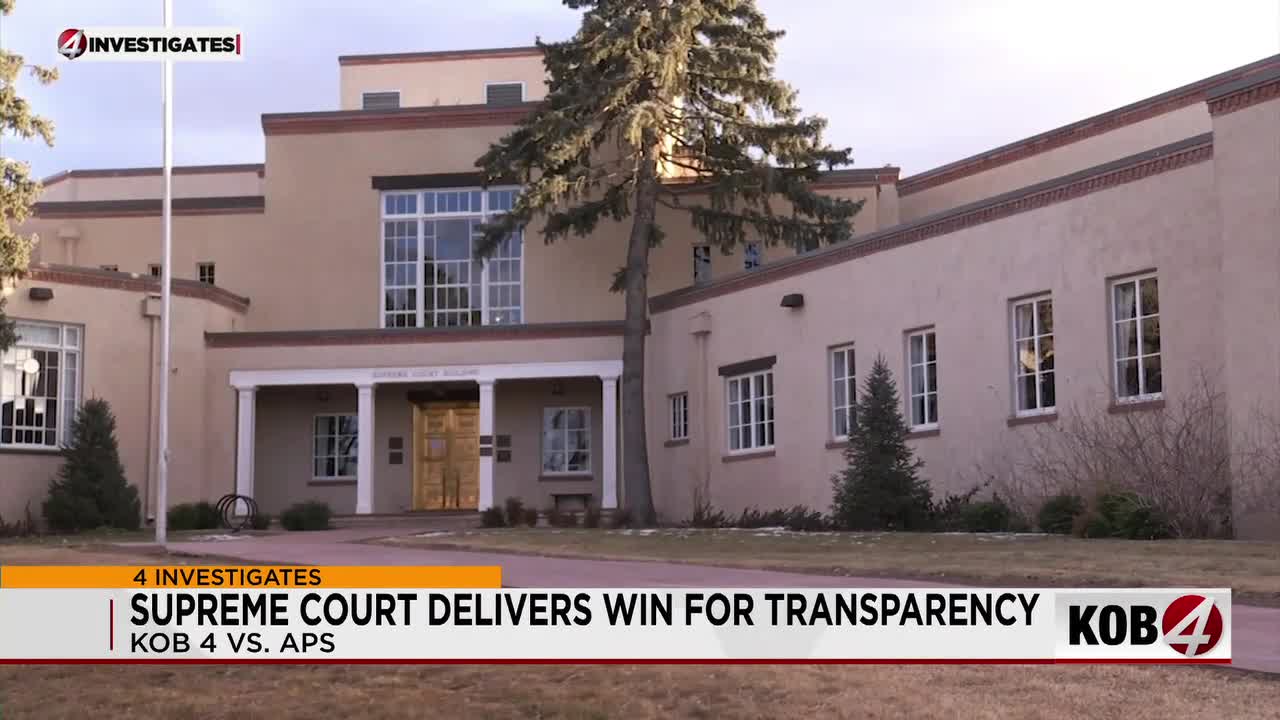
It’s taken 12 long years, a determined media, and the intervention of New Mexico’s Supreme Court to pry loose a 12-page investigative report related to former Albuquerque Public Schools (APS) Superintendent Winston Brooks. His abrupt departure in 2014 — following a hefty $350,000 taxpayer-funded payout — has been shrouded in mystery. For twelve years, the district successfully argued the so-called Padilla report was beyond public reach. But Thursday, the state’s highest court finally said: Enough. They’ve gotta release it. [QUOTE_PLACEHOLDER]
The saga began when KOB 4 and the Albuquerque Journal filed suit after APS flat-out refused to spill the beans on records linked to Brooks’ exit. Because, naturally, a $350,000 public payment shouldn’t just vanish into the ether, unaccounted for. And who, you ask, paid for this drawn-out dance of obfuscation? You guessed it — the public.
At the heart of the legal tussle was the Padilla report, described by the court as including a description of allegations, witnesses, exhibits and evidence and a conclusion. APS maintained that the report — the very thing that ostensibly explained the whole affair — was protected. Protected by attorney-client privilege. Protected under an exemption for letters or memoranda that are matters of opinion in personnel files. One might wonder, what were they trying to hide so badly?
But the unanimous opinion from New Mexico’s Supreme Court shredded those arguments. The judges warned that allowing government agencies to withhold entire investigative files because they contain limited opinion material would undermine New Mexico’s public records laws and invite abuse by agencies seeking to shield records from scrutiny. Justice C. Shannon Bacon Zamora didn’t pull any punches, stating that, as this case demonstrates, exempting an entire record because it may contain trace matter of opinion would invite abuse and frustrate both the fundamental right to inspect public records. Factual material within investigations, the court stressed, doesn’t get a pass simply because it’s bundled in a personnel document. Makes sense, doesn’t it?
This ruling, you can bet, ripples far beyond Albuquerque’s city limits. Attorney Greg Williams put it bluntly: We anticipate that government agencies will read this opinion and realize that they’ve to be a lot more transparent in how they review IPRA requests. They’re going to have to provide a lot more information about discipline of public employees than they’ve in the past. It’s a victory for accountability, a reminder that taxpayer money comes with an implicit demand for openness. It’s a demand not dissimilar to those heard in bustling Karachi, where citizens often grapple with opaque government expenditures and bureaucratic inertia — though the avenues for redress can be far less clear.
Michelle Donaldson, KOB 4’s general manager and news director when Winston’s payout occurred, just can’t fathom it. I can’t tell you what was on their hearts’. Was it arrogance? Was it a cover-up? she asked, a question echoing across every instance of public stonewalling. I sincerely believe that they owed us information. They owed the public information. We were asking on the public’s behalf. They made a choice to keep that secret. It was an expensive choice. It was a wrong choice. And ‘expensive’ is no exaggeration: The district has already been ordered to pay more than $600,000 in legal fees and damages — an absurd figure to hide something that could’ve been explained years ago. And guess what? More costs are expected.
APS, in their post-ruling statement, naturally claims they support transparency and have always worked diligently to respond to requests for public records while trying to balance the confidentiality concerns of employees and students. One wonders how that diligent work manifested in a 12-year legal battle. The District also shares the concerns of local governments across New Mexico that this decision could make it harder to timely and accurately respond to records requests. Yeah, because releasing factual documents is *so* much harder than, say, a decade of appeals. While the District is disappointed with the outcome, APS plans to fully comply with the Court’s instructions. Good. Moving forward, APS looks forward to educating staff and families about what this decision means for them while also asking the Legislature to clarify and simplify the law. Maybe a clearer law wouldn’t hurt. But honestly? Common sense should’ve prevailed here years ago. Keeping secrets has consequences, Donaldson reiterated. This was a public payment — it was not a private secret. And sometimes, that’s the plainest truth there’s. Public funds, like those often under scrutiny in global infrastructure projects from Islamabad to Jakarta, demand transparency. Monumental Myths don’t stand up to prolonged scrutiny, after all.
What This Means
This Supreme Court decision isn’t just about a school superintendent in New Mexico; it’s a clear signal flare for governmental transparency nationwide. Agencies — from local school boards to state departments — can no longer bank on sweeping claims of privilege to shield factual information embedded within investigative reports, particularly when taxpayer money is involved. But there’s a subtle undertow: While APS will now comply, their immediate reaction to seek legislative “clarification” hints at a continued desire to constrain public records access. That’s a battle the public — and watchdog organizations will need to watch carefully.
Economically, the $600,000-plus spent on legal fees demonstrates the profound cost of governmental obstinance. This isn’t an isolated incident; similar legal fees accrue nationwide when public entities fight transparency. It’s public money that could otherwise be allocated to education, infrastructure, or critical social services, instead flowing into legal battles meant to keep citizens in the dark. For elected officials, this ruling serves as a stark reminder: hiding information can be far more expensive than simply being forthright from the start. The political implications are equally heavy. Erosion of public trust, particularly in institutions as foundational as public schools, takes years to repair. Transparency isn’t merely a legal obligation; it’s the cornerstone of democratic legitimacy, fostering the trust necessary for effective governance. When public servants are perceived as operating behind an unnecessary veil, it breeds cynicism — a sentiment that, once deeply rooted, is incredibly difficult to dislodge.