

Delhi’s Cricket Conundrum: Can Money Buy Momentum, or Just Misery?
POLICY WIRE — New Delhi, India — In a subcontinent where cricket isn’t merely a sport but a fervent religion, its modern avatars — like the Indian Premier League — often feel less like athletic...

POLICY WIRE — New Delhi, India — In a subcontinent where cricket isn’t merely a sport but a fervent religion, its modern avatars — like the Indian Premier League — often feel less like athletic contests and more like intricate, high-stakes financial spectacles. The roar of the crowd, the neon blur of the boundaries, the colossal sums exchanging hands for player contracts and broadcast rights—it’s all part of the dazzling, occasionally brutal, machine. For the Delhi Capitals, the glitzy facade is currently doing little to mask a grim reality: they’re staring down the barrel of elimination.
It’s Sunday, the last home game for Delhi at the Arun Jaitley Stadium, — and the weight is palpable. They aren’t just playing Rajasthan Royals; they’re playing their playoff dreams, the accumulated hopes of a sprawling fanbase, and frankly, a whole lot of investor expectation. A single victory from six home matches this season, as per official league records, paints a bleak picture of a side that, on paper, has no business faltering this badly. They need two wins. Then they need other teams to collapse like poorly stacked dominoes. It’s a long shot. A very, very long shot.
Because that’s how this beast works. You don’t just participate; you perform. And you’d better perform at home, in front of your most ardent, least forgiving supporters. Captain Axar Patel, whose leadership shoulders much of this local disappointment, didn’t mince words recently: “Look, you play for your city, you play for these fans. They’ve been through a lot with us this season—it’s on us to deliver. No excuses, not now. We simply have to find a way.” A pragmatic, weary sentiment for a team battling a crisis of confidence.
The Rajasthan Royals, on the other hand, glide into Delhi with the languid assurance of a team holding most of the cards. They’ve notched 12 points from 11 games, comfortably placed, and just finished an eight-day hiatus—a luxury Delhi couldn’t dream of. One could argue this break might dull their edge, but more likely, it’s been a strategic reset. Their young captain, Yashasvi Jaiswal, sounded measured, almost serene, discussing the match: “We respect every opponent, of course. Every game’s a final, really. But we’re focused. We’ve had a break, yes, but we’ve used it to get sharper. It’s a long tournament, you know? You ride the waves.” This is the language of a team expecting to win, a sharp contrast to Delhi’s desperation.
But the pitch, lately, has thrown its own curveball. Historically a batsman’s paradise, where bowlers merely served as targets for projectile leather, the Arun Jaitley wicket shifted dramatically during the last DC vs. CSK clash, playing slower, tackier. That’s a wrench in the gears for any pre-game strategy, introducing a chaotic element no analyst could reliably forecast. And chaos, for a team teetering on the edge, is a double-edged sword. It might be the unexpected catalyst they need; or it might be the final push into oblivion. The entire subcontinent, with its profound connection to India’s newest cricket messiahs and its ancient love for the game, watches closely. Even across borders, in places like Pakistan, where cricket is an equally foundational passion, eyes flicker to IPL scores — a subtle, undeniable bond that transcends official hostilities.
📄 POLICY WIRE WHITEPAPER PUBLISHED: PAKISTAN'S NATIONAL SECURITY POLICY PRIORITIES
👉 READ BY CLICKING HEREWhat This Means
Beyond the simple win-loss column, this fixture highlights the cutthroat economics underpinning the IPL. Each match isn’t just about athletic prowess; it’s a multi-million-dollar exhibition, an inflection point for brand valuations, broadcast revenues, and the very viability of the franchise. For a city like Delhi, an early playoff exit impacts not only fan morale but also local merchandise sales, hospitality, and the perception of corporate sponsors who’ve poured fortunes into associating with a winning narrative. It’s a microcosmic look at how global capital navigates sporting fortunes.
The psychological toll on players, many of whom carry the weight of entire families and endorsement deals, can’t be overstated. And the ripple effect? A strong IPL showing can dictate national team selections, subsequent earnings, — and the player’s future market value. But for every Jaiswal poised for glory, there’s an Axar Patel wrestling with the grim arithmetic of a season gone sour. This isn’t just a game. It’s an economy, an emotion, and sometimes, a brutal education in professional failure, all played out under the searing Delhi sun, for billions to watch.
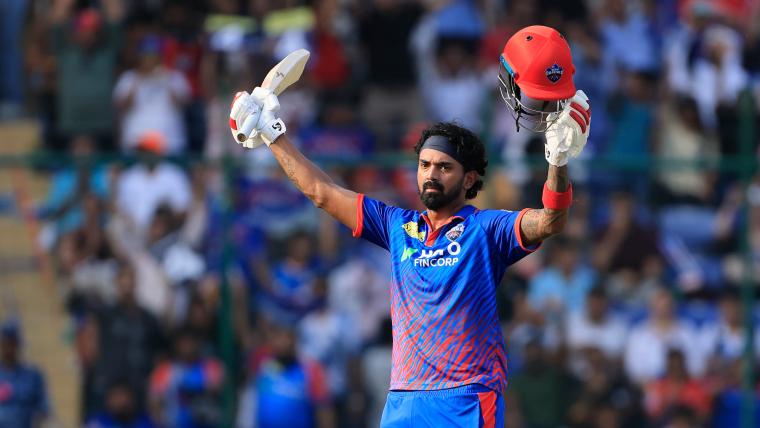
Policy Wire staff predicted batting line-ups suggest DC will go with the familiar combination of KL Rahul and Prithvi Shaw at the top, buttressed by Tristan Stubbs and David Miller, with Axar Patel leading from the front. For Rajasthan, Yashasvi Jaiswal is expected to open with V Suryavanshi, followed by DC Jurel — and Shimron Hetmyer. The smart money’s on RR. Delhi, it seems, needs a miracle. Or at least, a lot less uncharacteristic slowness from that pitch.