


India’s Newest Cricket Messiah: Another Idol for the Machine?
POLICY WIRE — New Delhi, India — There’s a particular kind of collective fever that grips India, something beyond mere adoration. It’s an almost ritualistic anointment of individual talent onto...

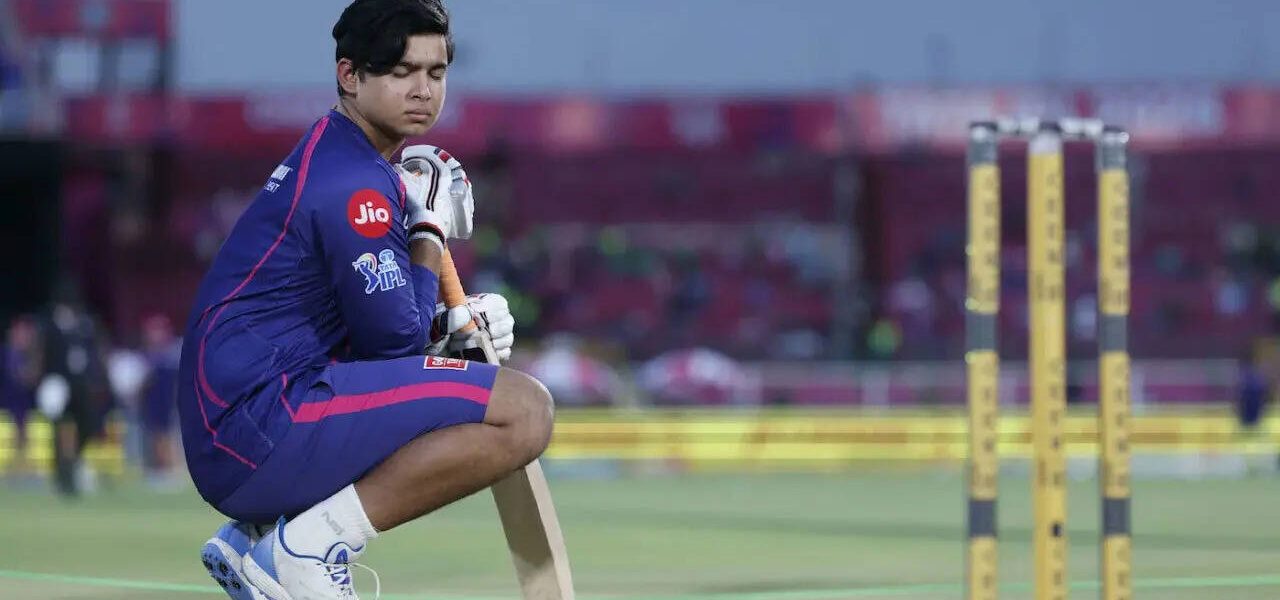
POLICY WIRE — New Delhi, India — There’s a particular kind of collective fever that grips India, something beyond mere adoration. It’s an almost ritualistic anointment of individual talent onto a national altar, a process both exhilarating and brutal. And it often begins in the swirling, monetized chaos of the Indian Premier League. The country, fresh from worshipping deities of old, quickly fashions new ones, molding young shoulders to carry the weight of billions in expectation and several more billions in branding. Vaibhav Sooryavanshi, a scarcely believable 15-year-old, appears to be the latest, a flash-in-the-pan prodigy—or perhaps, a manufactured dream.
It’s not often a teenager elbows his way onto primetime cricket, especially in a league where grizzled professionals and international giants ply their trade for eye-watering sums. But then, it’s not often a 15-year-old strikes a cricket ball with the controlled aggression of a man twice his age. He’s been drawing crowds, a real spectacle, an honest-to-god box office draw. Kids like Rajiv Yadav, a Manesar local, aren’t just looking for an autograph; they’re trying to sneak into practice sessions, just for a glimpse. “Bhaiyya, can I go inside?” he pleaded with a stadium guard the other night, desperate. The answer was a polite but firm no.
Sooryavanshi isn’t playing cute or cautious. The boy bats like every ball is a personal affront, every delivery an opportunity to dismantle bowling figures. He practices similarly—a blur of kinetic energy in the nets, leather on willow, the thump audible even from behind closed gates. There’s no defensive stroke to be found in his playbook, not yet anyway. He’s all about power, about seeing it — and hitting it, hard and far.
This aggressive ethos translates directly to the scoreboard. He’s piled up 440 runs across 11 games, sure. But it’s his stupefying strike rate, an astronomical 236.55, which isn’t just good; it’s the best among the top 10 run-getters this season. He’s also lofted a staggering 40 sixes, an almost obscene display of adolescent muscle — and bravado. That’s a record.
But the powers-that-be, those custodians of commercial viability and fragile youth, are sounding notes of caution, or at least attempting to. Rajasthan Royals head coach Kumar Sangakkara, the elegant Sri Lankan maestro, understands the delicate balancing act. “The key for Vaibhav is to enjoy every moment,” Sangakkara explained, with the measured calm of someone who’s seen a hundred young hopes rise and fall. “The worst thing we can do is clutter his mind. He’s a smart little kid. Sometimes the best thing is to let Vaibhav be Vaibhav.”
Sangakkara’s pragmatism isn’t just about the here — and now. He’s looking down the line, predicting the inevitable adjustments bowlers will make, the strategic attacks designed to break this youthful phenomenon. “As he starts playing more international cricket, bowlers will try to plan against him,” he observed. “The one thing he should never lose is his enjoyment of batting. He isn’t a special project for us, but a special player.” But how long can pure enjoyment survive the grinder of international expectation?
And it’s not just the Royals. Even competitors are recognizing the unique raw material. Ian Bell, assistant coach for Delhi Capitals and an English batting stalwart from a previous era, articulated it bluntly: “The challenge for any young player is that you’ve to keep evolving, but he’s a scary talent.” That evolution, especially under such a fierce spotlight, can be punishing. Because in South Asia, particularly in cricket-obsessed India, the transition from prodigy to permanent star is often paved with emotional landmines and media sensationalism.
📄 POLICY WIRE WHITEPAPER PUBLISHED: PAKISTAN'S NATIONAL SECURITY POLICY PRIORITIES
👉 READ BY CLICKING HEREThis entire phenomenon doesn’t stop at India’s borders. The IPL’s gravitational pull extends across the subcontinent and into the broader Muslim world, a sporting juggernaut attracting eyeballs and aspirational dreams. Pakistani cricket fans, for instance, despite political friction preventing their participation in the IPL, keenly follow the league. Young hopefuls from Karachi to Dhaka dream of a similar platform, a commercial machine that elevates talent to god-like status and astronomical paychecks. This isn’t just cricket; it’s an economic force, shaping identities and—at times—altering the trajectory of national aspirations.
With an incredible strike rate of 236.55 this IPL season, which is publicly available on all major cricket analytics platforms, Sooryavanshi isn’t just breaking records; he’s setting a new benchmark for youthful aggression and effectiveness. He’s also pushing a wider narrative about sports, economics, and national pride, a potent brew that India, and the IPL, has mastered the art of selling.
What This Means
This adolescent surge of talent isn’t just a sports story; it’s an economic — and socio-political one. The IPL, by unearthing and showcasing figures like Sooryavanshi, deepens its commercial footprint across Asia and beyond. For India, it’s a constant re-affirmation of its sporting supremacy in cricket, an important piece of its soft power projection. But it also creates immense pressure. Imagine carrying the hopes of a franchise, let alone a nation, at 15. The system needs to evolve as rapidly as the talent it nurtures, perhaps building better psychological safeguards against burnout or the inevitable public scrutiny.
Economically, these ‘discoveries’ are goldmines. They attract sponsorship, drive viewership figures, and ensure the IPL’s continued dominance in the global sports entertainment market. For neighboring countries, watching from the sidelines due to subcontinental realpolitik, it amplifies a sense of both admiration and competitive yearning. It fuels their own national academies, desperately trying to replicate the success, but often lacking the same financial firepower. The cultivation of such raw talent, then, becomes a reflection of national infrastructure and strategic investment, an investment that for some nations in the region remains an elusive dream. It’s a game, sure, but it’s also big business, high stakes, — and for a teenager like Vaibhav, it’s just getting started. God help him.