

The Ballast of Billions: Milan Owner’s Pitchside Stance as Global Capital Confronts Faltering Fortunes
POLICY WIRE — Genoa, Italy — The drizzle was just beginning to speckle the stands at Stadio Luigi Ferraris, but it was the icy tension hanging heavy over AC Milan’s embattled squad that really...

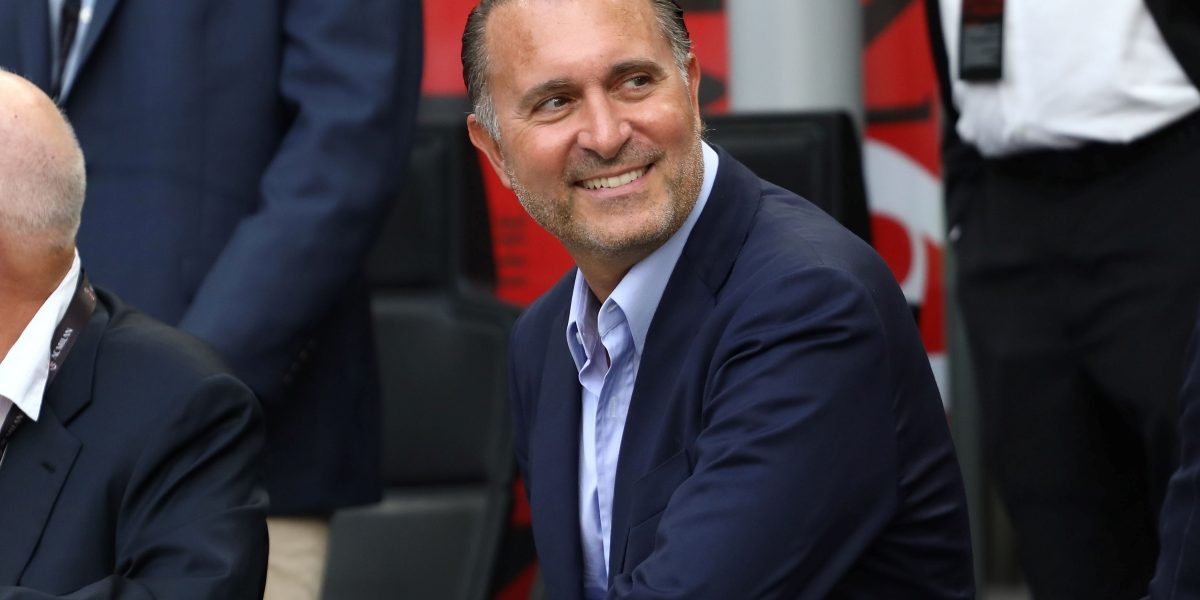
POLICY WIRE — Genoa, Italy — The drizzle was just beginning to speckle the stands at Stadio Luigi Ferraris, but it was the icy tension hanging heavy over AC Milan’s embattled squad that really threatened to dampen the evening. Not the kind of grand arrival befitting a titan of industry, but rather a quiet descent: Gerry Cardinale, the American financier whose RedBird Capital holds the keys to one of European football’s storied franchises, slipped almost unnoticed into the arena an hour before kickoff. His visit wasn’t for the scenic views—Marassi’s a tough stadium, famous for its ardent support and often, its mud—it was for damage control. A very public, very pointed inspection tour, disguised as moral support.
It’s an age-old dance, this one: money meets the muddy field. But today, the stakes are higher than ever, and the dance partner, increasingly, isn’t a local magnate with ancestral ties to the club, but a cold, calculating machine of global capital. Cardinale’s presence, ostensibly to cheer on his Rossoneri as they grappled with a resurgent Genoa, spoke volumes more about shareholder anxieties and brand value than about tactical formations. Because when RedBird plonks an estimated €1.2 billion for a majority stake in a football club, every disappointing result registers as a tiny tremor in a balance sheet, not just a heartbreak for the tifosi.
“We’re not here to be philanthropists; we’re here to build a sustainable, winning enterprise that generates value,” Cardinale reportedly conveyed in private discussions, according to a source familiar with RedBird’s internal philosophy. “Sometimes that means tough decisions. That’s business.” His candid (if thinly veiled) public remarks earlier this week to the Italian press, expressing ‘concerns’ about the team’s ‘poor form,’ felt less like a worried owner and more like an investor flagging a troubled asset. It wasn’t merely the optics of a man seeing his expensive toy misfire; it was the sharp realization that the financial model underpinning modern football is as precarious as a last-minute penalty shootout. You’ve got to win, sure, but more importantly, you’ve got to ensure the enterprise keeps kicking, globally speaking.
But the numbers don’t lie. Milan entered this critical match sharing 67 points with fifth-placed Roma. A defeat here, compounded by their struggle without key players like Rafael Leao and Alexis Saelemaekers, and you’re not just looking at a dip in morale. You’re facing a potential blow to Champions League qualification—which, let’s be blunt, is where the serious money is made. It’s the difference between prime broadcast revenues and scraping by, a chasm of tens of millions that can alter a club’s trajectory for years. And you don’t need a Wall Street MBA to understand that kind of impact.
And so, as Cardinale settled into his seat, perhaps even taking a perfunctory glance towards the dressing rooms, the theatre of football continued its global expansion. For fans in Karachi or Lahore, where the red and black stripes of Milan are as familiar as any local team jersey, this game wasn’t just about the Serie A standings. It was another thread in the vast, interconnected network of European football’s international appeal. These aren’t mere games; they’re cultural exports, influencing and captivating hundreds of millions beyond Italy’s borders. The English Premier League, for example, garnered approximately an estimated 1.1 billion cumulative viewers globally in its 2021-2022 season, per Deloitte’s ‘Annual Review of Football Finance,’ demonstrating the colossal reach that clubs like Milan strive for, and RedBird clearly eyes.
For decades, European football clubs, even the massive ones, operated as community institutions, run by local families or members’ associations. That’s a romantic notion that went out with cassette tapes. Nowadays, clubs like Milan are often investment vehicles, global brands, commodities even, traded and managed with the ruthless efficiency of a hedge fund. That American private equity firms are increasingly snatching up these historic European footballing assets isn’t surprising. They see undervalued brands, untapped commercial potential, and the soft power that comes with owning cultural touchstones.
📄 POLICY WIRE WHITEPAPER PUBLISHED: PAKISTAN'S NATIONAL SECURITY POLICY PRIORITIES
👉 READ BY CLICKING HERE“The modern game demands global thinking, from the boardroom to the pitch,” commented Giorgio Furlani, CEO of AC Milan, presenting a calm front amidst the owner’s looming presence. “Mr. Cardinale’s commitment, his personal visits—they demonstrate our collective resolve to navigate these competitive waters and continue our upward trajectory. We’ve built a solid project, and that’s what matters.” It’s a practiced message, designed to soothe shareholders and fans alike, assuring them that despite the bumps, the vision remains unclouded. But still, the whispers persist; that this season’s stumble feels a little more like a trip, threatening to spoil a very expensive, carefully constructed venture.
But can a strictly financial approach truly capture the essence of a club like AC Milan, a team deeply embedded in Italian culture and whose history breathes an almost spiritual devotion? Investors like Cardinale must perform a delicate tightrope walk, balancing hard financial realities with the passionate, often irrational, expectations of millions of supporters worldwide. They’re managing an asset, yes, but one that evokes tears and joy and a generational loyalty that can’t easily be quantified on an earnings report.
The situation at Milan reflects a broader phenomenon: the globalization of sports ownership, where Middle Eastern sovereign wealth funds, Russian oligarchs, and American private equity firms increasingly dictate the fortunes of venerable European institutions. It’s not just football; it’s geopolitical theater by other means. These acquisitions aren’t simply about trophy cabinets; they’re about extending influence, burnishing national images, and deploying capital into what are increasingly perceived as stable, if somewhat volatile, alternative assets.
What This Means
Cardinale’s visible ‘concern’ — and immediate presence in Genoa weren’t just about Milan’s on-pitch struggles. His visit signaled a heightened scrutiny from the financial guardians behind European football’s grand old dames. When owners accustomed to the rigorous, quantifiable world of investment banking suddenly turn up pitchside, it’s rarely for purely sentimental reasons. It indicates the convergence of global finance and sporting passion, where every loss impacts potential revenue streams, shareholder confidence, and indeed, future valuation. For clubs across Serie A and indeed all of Europe’s top leagues, this shift implies a relentless pressure to perform, not just for pride, but for dividends. The traditional notion of patient investment, allowing cycles of rebuilding, is increasingly an unaffordable luxury. Investors like RedBird are looking for quicker returns, leaner operations, and a robust global brand that can withstand market fluctuations. It’s a ruthless ecosystem, making no allowances for sentimentality, even when a club as iconic as AC Milan grapples with an inconvenient dip in form. And that relentless financial logic, always lurking just beneath the surface, is what really governs the game now.