


Darts’ New Maverick: Beau Greaves Smashes Barriers, Exposing Gender Fault Lines in Professional Sports
POLICY WIRE — London, UK — Forget the glamour shots, the slow-motion replays, and the stadium roar for a moment. Instead, picture the quiet, unyielding grind in fluorescent-lit practice rooms, where...

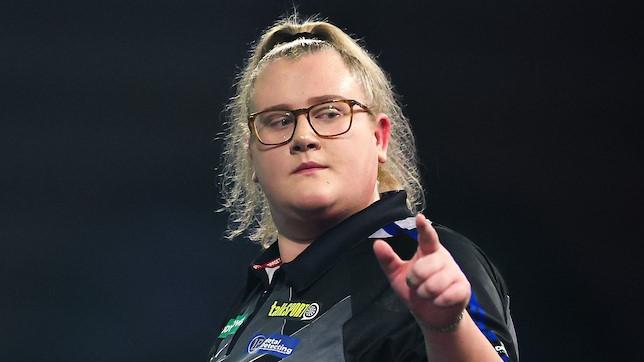
POLICY WIRE — London, UK — Forget the glamour shots, the slow-motion replays, and the stadium roar for a moment. Instead, picture the quiet, unyielding grind in fluorescent-lit practice rooms, where professional darts players forge their livelihoods, often against odds more formidable than any bullseye. It’s a world that rarely breaches the sophisticated chatter of policy circles, yet, an unexpected crack has just appeared, courtesy of a young woman named Beau Greaves. Her recent double qualification for two European Tour darts events on Wednesday isn’t just a win; it’s a blunt instrument exposing the entrenched financial and structural fault lines within professional sports, challenging an entire industry to redefine merit.
It wasn’t a sudden explosion of talent, mind you. This wasn’t some Cinderella story plucked from thin air. Greaves, already a decorated name in the women’s circuit, battled her way through two brutally competitive qualification stages, one after another, on the very same day. Beat Andy Boulton, Charlie Manby, Arno Merk, Tom Bissell for the Hungarian Darts Trophy (ET 11) slot. Then, hours later—exhaustion surely setting in—she took down Wesley Plaisier, Cor Dekker, and Lukas Wenig to secure her spot in the Czech Darts Open (ET 12). Think about that for a second. Two elite events, two separate gauntlets, conquered in one fell swoop. She threw two averages over 100 in just one of those qualifiers. She simply isn’t messing around.
Her achievement isn’t merely statistical; it’s symbolic. She’s not just participating; she’s kicking down a very heavy, very old door, becoming the first woman to ever qualify for a PDC European Tour event. But here’s the rub, and it’s a deep one: the pathway to real financial sustainability in darts remains vastly different for men and women. The PDC—Professional Darts Corporation—has done much to elevate the sport, but a look under the hood reveals disparities. Because Greaves still faces a considerable uphill climb in the unforgiving landscape of prize money.
Matt Porter, CEO of the Professional Darts Corporation, didn’t shy away from the broader implications. “Beau’s achievement isn’t just a win for her; it’s a testament to the untapped potential we know exists. We’re actively working to foster an environment where talent, regardless of gender, can thrive, and these kinds of breakthroughs are essential fuel for that work.” And that’s important to hear, coming from the top. But growth isn’t always smooth.
Her professional income, for instance, remains heavily skewed toward less prestigious events. A whopping 96.1% of her prize money stems from what are known as PC (ProTour) events, which, while competitive, offer smaller purses and less visibility than the majors. That figure itself speaks volumes about the ecosystem she operates in. Greaves is currently £8,250 out of a qualifying spot on the ProTour Order of Merit for something like the World Grand Prix—a formidable deficit, frankly. Industry analytics consistently highlight these financial gulfs across various sports, underscoring the uphill battles many female athletes face. Even small gains at the European Tour events, perhaps one or two match wins, could give her a crucial boost towards securing a spot in those coveted major tournaments, where the real money, and the global spotlight, reside.
Because ultimately, Greaves’s story isn’t just about throwing arrows. It’s about representation, economics, — and the slow, often grudging, evolution of tradition-bound institutions. From the bustling sports leagues of Europe to the more nascent, and sometimes embattled, athletic communities across the Muslim world—where female athletes in cricket, boxing, or even competitive gaming often wrestle with social conservatism and chronic underfunding—Greaves’s precise, powerful ascent sends a message. It’s a message of defiance against expectation, a quiet insurgency demonstrating that talent, when nurtured, knows no gendered bounds.
📄 POLICY WIRE WHITEPAPER PUBLISHED: PAKISTAN'S NATIONAL SECURITY POLICY PRIORITIES
👉 READ BY CLICKING HERESporting analyst Anya Sharma noted, “It’s a stark reminder that even in sports like darts, where the precision is paramount, the path to financial stability, particularly for women, remains a gauntlet. Her performance isn’t just exceptional; it’s an urgent economic indicator.” They’ve got to earn it twice over, or so it seems. Her next opportunities, another pair of PC events in a few weeks, will offer more chances to chip away at that deficit, but it’s a taxing journey.
What This Means
Greaves’s trailblazing journey highlights a recurring narrative in global sports: the often-protracted struggle for gender parity. This isn’t just about feel-good stories; it has tangible economic — and social policy implications. For the PDC, her success is both an opportunity — and a challenge. It pushes them, and similar sporting bodies, to reassess prize money structures, sponsorship allocations, and the pipeline for female talent. An increased focus on equitable reward systems and higher visibility events for women could unlock significant new revenue streams and fan bases—a smart play for any forward-thinking organization. But it also means confronting uncomfortable truths about historical underinvestment.
her breakthrough carries political weight. It echoes broader societal conversations about women in traditionally male-dominated fields. When a sport often seen as a pub pastime (erroneously, of course; it’s a fiercely competitive, mentally taxing pursuit) sees such a high-profile, glass-ceiling-shattering moment, it offers a microcosm of larger battles for equality. It fuels narratives that can empower women in business, science, and public life, suggesting that sustained excellence will eventually—sometimes violently—dismantle even the most resilient old boys’ clubs. The Golden Handcuffs of financial disparity are real across sports, but athletes like Greaves are, quite literally, aiming for their release.