
Hoops, Humiliation, and the Specter of Power: A Night of Courtside Politics
POLICY WIRE — New York, United States — The hum isn’t just from the crowd, it’s in the air. A barely perceptible thrumming of expectation, sure, but also a deeper, more...

POLICY WIRE — New York, United States — The hum isn’t just from the crowd, it’s in the air. A barely perceptible thrumming of expectation, sure, but also a deeper, more insistent vibration — one born of Kevlar, coordinated patrols, and the unspoken weight of executive protection. It’s the kind of subtle atmospheric shift only a very specific kind of guest can induce at a major sporting event. Madison Square Garden, a venue no stranger to spectacle, played host not just to the thunder of the NBA Finals Game 3, but also to a concentrated display of political theater, veiled by the casual pretense of a sports fan enjoying the game.
For those tuned into the frequencies of power, the game itself sometimes felt secondary. There was increased security
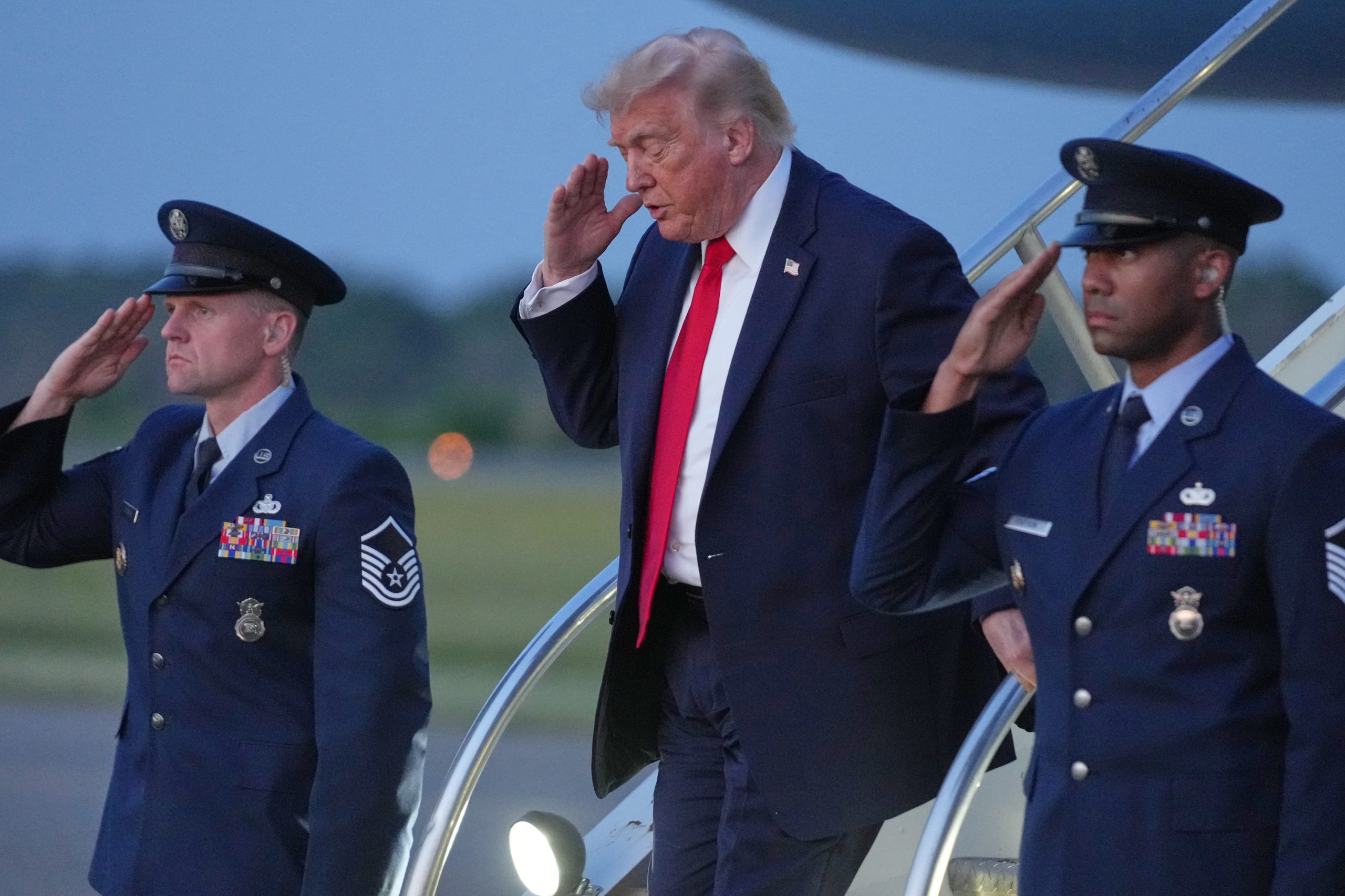
everywhere, a visible — and invisible blanket cast over the venue. It wasn’t merely the usual heightened alertness that accompanies a championship clash; this was different. This was the logistical chess game played whenever a former commander-in-chief — especially one as polarizing — steps into a public space. One couldn’t help but notice the extra eyes, the subtle earpieces, the methodical scanning of the crowd. It wasn’t about securing a basketball game; it’s about securing a potent symbol, draped in the trappings of Americana. [QUOTE_PLACEHOLDER]
But whose game is it, really? A question often posed by cynical observers of US politics, where campaign trails sometimes veer perilously close to reality television. Attending a marquee event — NBA Finals Game 3 between Knicks and Spurs
— isn’t just about catching some hoops. It’s about capturing a moment, commandeering a narrative, even if for just a few precious hours. It’s a calculated intrusion, a way to occupy the public consciousness outside the stuffy confines of political rallies or televised speeches. And honestly, it works like a charm. Who’s not going to talk about it?
Consider the sheer resource allocation for such an appearance. The U.S. Secret Service, tasked with protecting former presidents, spent roughly $2.6 billion in fiscal year 2022, according to the Department of Homeland Security’s budget documents. That colossal sum encompasses a complex ballet of agents, intelligence, and logistical planning that extends far beyond the perimeter of an arena. It’s an operational behemoth, often overlooked, that makes these public forays possible. It’s expensive, complicated, and utterly necessary for someone of that stature, even long after they’ve left the Oval Office.
This confluence of celebrity, sport, and the unspoken jostling for influence isn’t exclusive to American shores, of course. Think of the near-mythic security details surrounding heads of state in South Asia — prime ministers, generals, often navigating public spaces that, despite their security, carry a much heavier sense of underlying threat. In countries like Pakistan, for instance, a public appearance by a major political figure isn’t just a PR opportunity; it’s a profound strategic decision, a public gamble weighed against credible, often violent, threats. The stakes there feel existentially different, don’t they? The layers of protection are visible, part of the landscape. Here, at MSG, it was perhaps more subtly integrated, a soft power play disguised as fan enthusiasm.
The Garden — where so many empires have been built and broken on the hardwood — once again became a canvas for something more than just points and rebounds. It’s a political spectacle unto itself. One couldn’t help but observe the silent choreography between protection detail — and public performance. Every nod, every wave, every scowl was magnified, projected onto screens large — and small. It’s a different kind of electioneering, trading the handshake lines for a coveted courtside seat. It’s raw, it’s visceral, and it bypasses the traditional filters of cable news. You just know a lot of people will see it, for better or worse.
And because the American political landscape is forever intertwined with its entertainment, these moments matter. They aren’t mere distractions; they’re deliberate strategic deployments in the ongoing battle for attention, loyalty, and, ultimately, power. Whether it generates applause or outrage is almost irrelevant. The goal isn’t universal approval, it’s amplification. A candidate doesn’t need to win over every fan; they just need to remain utterly unforgettable.
What This Means
This seemingly innocuous courtside appearance offers a sharper lens on the contemporary American political ecosystem. Politically, it represents the increasingly blurred lines between entertainment — and governance. For a former president — especially one mulling future electoral bids — these high-profile appearances function as informal campaign stops, delivering free, prime-time exposure far more impactful than a traditional rally speech. They project an image of approachability and relatability to a mass audience, bypassing critical media scrutiny that might accompany a formal political event. The ‘man of the people’ narrative, however fragile, gets a momentary boost. It’s a power move, pure — and simple. The sheer attention garnered reinforces a candidate’s perceived omnipresence, which can demoralize opponents and energize a base.
Economically, such appearances introduce a fascinating cost-benefit analysis. The financial burden of increased security
, as outlined by the Secret Service expenditures, falls squarely on the taxpayer. While necessary for VIP protection, these costs accumulate, especially if such outings become routine. For the venue — and the NBA, it’s a double-edged sword. There’s an undeniable publicity bump, a boost in visibility that’s difficult to quantify but valuable. Yet, there’s also the disruption, the logistical hurdles, and the potential for a polarizing figure to shift the focus away from the sporting event itself. There’s no escaping the gravitational pull of a politician of this caliber — the cameras will find him, and his presence becomes part of the economic value proposition of the entire broadcast. It’s hard to tell if the benefit outweighs the underlying strain, but it’s clear these aren’t just casual outings; they’re highly impactful, highly visible assertions of continued influence and a savvy understanding of modern media consumption.