


Cricket’s Costly Conundrum: When Lost Balls Sparked a Star’s Frustration and Policy Questions
POLICY WIRE — Lahore, Pakistan — In the glittering, high-octane spectacle that’s the Pakistan Super League, where boundaries are currency and sixes are celebrated with pyrotechnics,...

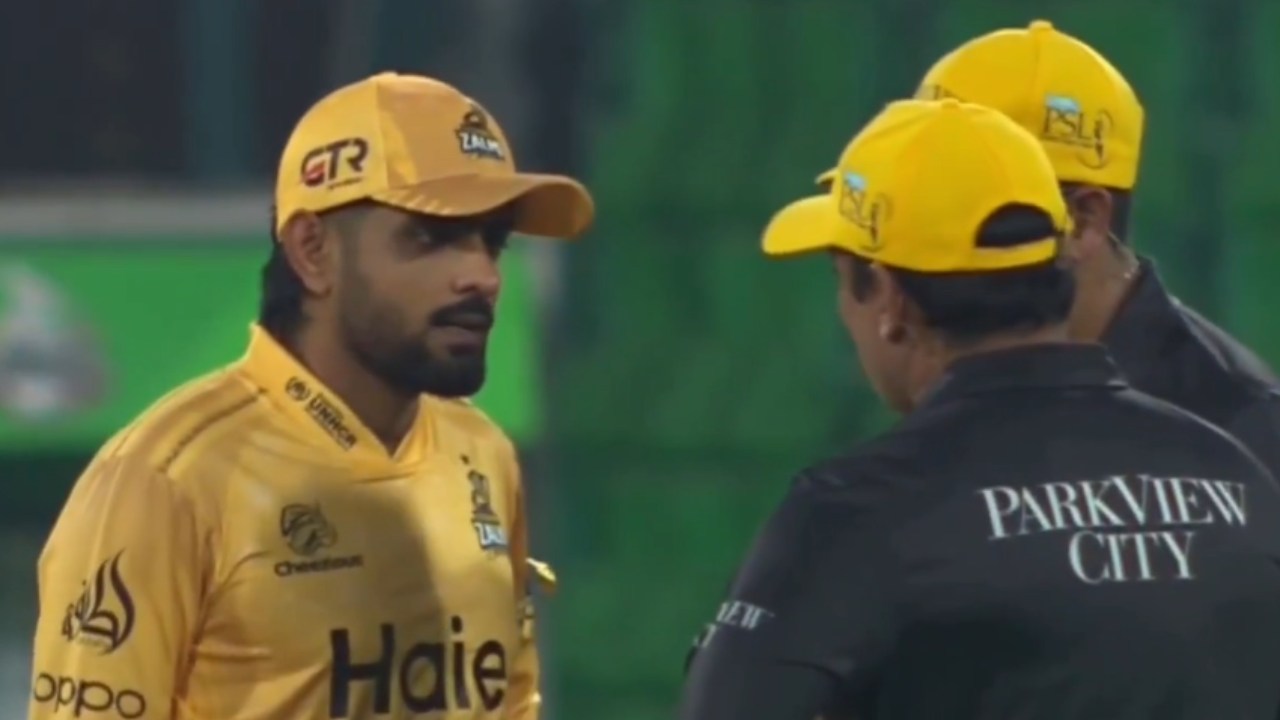
POLICY WIRE — Lahore, Pakistan — In the glittering, high-octane spectacle that’s the Pakistan Super League, where boundaries are currency and sixes are celebrated with pyrotechnics, even the mundane can trigger a moment of revealing absurdity. It wasn’t the searing pace of a fast bowler or a spectacular diving catch that momentarily eclipsed the thrill of a run chase recently; it was, rather, the rather ignominious disappearance of not one, but two perfectly good cricket balls into the Lahore night. A minor logistical hiccup, one might contend, but for Babar Azam, the revered skipper of Peshawar Zalmi, it represented a tangible crack in the veneer of sporting perfection — and he wasn’t shy about articulating his displeasure.
The scene unfolded early in a crucial fixture against the Lahore Qalandars at the iconic Gaddafi Stadium. Lahore, renowned for its vibrant cricketing culture, had filled the stands, eager for a high-scoring thriller. And they got one, just not in the way many anticipated. Just 11 balls into the Qalandars’ chase of Zalmi’s imposing 199/4, a well-struck shot by Mohammad Naeem sailed over square leg, disappearing into the anonymous throng beyond the ropes. A replacement was promptly summoned. Then, a mere five deliveries later, Naeem — seemingly in a spree of ball-losing efficiency — launched another short delivery over deep mid-wicket. Again, the ball vanished.
At its core, this wasn’t merely about a few lost pieces of leather. Each Kookaburra or SG test ball, meticulously crafted for elite competition, carries a not-insignificant price tag, often ranging upwards of $70 USD. Multiply that across a league season, across dozens of matches, and the cost of disappearing projectiles — not to mention the precious minutes lost to retrieval and replacement — becomes a subtle, yet persistent, drain on resources and momentum. Babar Azam, never one to suffer procedural ambiguities lightly, converged on the umpire, a visible and audible torrent of frustration escaping him. He questioned the necessity, the logic, perhaps even the cosmic unfairness of such rapid-fire ball replacements.
And who could blame him? In a format where every dot ball, every boundary, every second counts, such interruptions can disrupt a team’s rhythm, deflate a bowler’s confidence, or offer an unwanted respite to a struggling batter. These are the small, often overlooked, tactical battles fought within the larger war for supremacy. Yet, for officials, adherence to the laws is paramount. Speaking anonymously to Policy Wire, a senior official within the Pakistan Cricket Board — tasked with overseeing PSL operations — underscored the point: “Our primary responsibility is to ensure the integrity of the game and the safety of players. When a match ball is lost or damaged beyond use, its immediate replacement, as per ICC regulations, is non-negotiable, irrespective of a player’s displeasure. It’s about fair play — and consistent standards.”
Still, the animated exchange — a fleeting glimpse behind the stoic facade of professional sport — resonated with fans across Pakistan and the broader South Asian diaspora. Babar Azam isn’t just a cricketer; he’s a national icon, his every gesture scrutinized, his every emotion amplified. His frustration wasn’t just personal; it was, in a way, a collective sigh from a nation that lives and breathes cricket, often through the lens of its beloved stars.
Veteran sports commentator — and former international umpire, Wasim Raza, mused on the incident’s undercurrents. “Players like Babar carry immense pressure, not just to perform, but to manage the game’s flow,” Raza posited in a phone interview. “An umpire’s decision, even a perfectly correct one regarding a ball change, can feel like an affront when the stakes are so high. It’s a delicate balance — maintaining the spirit of the game while upholding its strict letter.” Indeed, the Qalandars, unperturbed by the ball-related drama, went on to chase down the formidable target of 199/4 in 19.3 overs, securing a thrilling six-wicket victory and keeping their playoff aspirations very much alive. Babar Azam had contributed a half-century, yet the match’s enduring image for many might well be his agitated confrontation.
What This Means
Behind the headlines of thrilling run chases and star performances, this seemingly trivial incident peels back layers of policy and economic considerations that underpin modern professional sports. For one, it highlights the continuous, often unquantified, operational costs associated with leagues like the PSL. Beyond player salaries and broadcast rights, the sheer volume of equipment — from bats that shatter to balls that vanish — represents a significant, recurring expense. It also begs the question of material durability: are balls truly designed for the rigors of T20 hitting, where maximum power often sends them into orbit, or is there an acceptable rate of attrition built into the manufacturing and procurement processes? (It’s a balance, after all, between cost — and performance.)
the exchange between player and umpire, while common in competitive arenas, subtly underscores the ongoing tension between raw athletic emotion and bureaucratic rule-setting. Governing bodies — whether the ICC or national boards — must navigate the fine line of empowering officials while acknowledging the immense pressure on players. Policies must be robust enough to maintain game integrity, yet flexible enough not to stifle the spontaneous passion that draws millions to the sport. As global cricket expands into lucrative franchise models, incidents like these — minor as they might seem — become data points in the larger conversation about efficiency, expenditure, and the enduring human element in a rapidly commercializing sport. It’s not just about a lost ball; it’s about the ever-present policy challenge of balancing spectacle with sustainability.