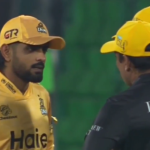



From Laventille’s Labyrinth to IPL’s Limelight: Hosein’s Strategic Dissection of Mumbai
POLICY WIRE — Mumbai, India — In the unforgiving concrete labyrinth of Laventille, a crime-scarred suburb of Port-of-Spain, Trinidad, Akeal Hosein didn’t just learn to survive; he cultivated a...

POLICY WIRE — Mumbai, India — In the unforgiving concrete labyrinth of Laventille, a crime-scarred suburb of Port-of-Spain, Trinidad, Akeal Hosein didn’t just learn to survive; he cultivated a different kind of strategic precision. It wasn’t about the brute force of a fast ball, but the cunning deception — and measured guile of a spinner’s craft. That formative experience—a crucible of calculated risks and sharp instinct—manifested itself acutely on Thursday evening at Mumbai’s Wankhede Stadium. There, under the incandescent glare of floodlights, Hosein, wearing the Chennai Super Kings’ colours, didn’t merely bowl; he orchestrated a tactical dismantling of the celebrated Mumbai Indians.
His left-arm orthodox deliveries, often subtle weapons, carved through the heart of MI’s formidable batting lineup. Former India spinner Venkatapathy Raju, a connoisseur of slow bowling, didn’t merely observe; he eulogized. “He isn’t just a bowler; he’s a strategist,” Raju told the Times of India, underscoring Hosein’s preternatural ability to command the powerplay. “With more than 250 wickets in this format, it’s never about brute force, is it? It’s about microscopic variations in pace — and a sagacious use of lengths that leave batters utterly flummoxed.”
The deceptive guile was patent from the outset. While batters typically anticipate Hosein’s arm ball early, the spinner, hailing from Trinidad’s nuanced cricketing landscape, inverted the script on a gripping Wankhede pitch. He decelerated his delivery, luring MI opener Danish Malewar into a tentative prod that found the outside edge. His real weapon, Raju further elucidated, “is the way he leverages the crease. From wide of it, he conjures drift, even with a nascent ball. This generates angles, bringing the ball in or taking it away, all without betraying the slightest change in action.”
This manipulation, a silent ballet of spin — and seam, utterly confounded MI’s No.3 Naman Dhir. Hosein initiated with an arm ball that narrowly missed Dhir’s stumps, followed by a slower delivery, then executed one that gripped and turned sharply at 90.6 kmph. Dhir, caught in a vortex of uncertainty, was beaten comprehensively. But Hosein wasn’t done. He then ensnared Tilak Varma with a scrambled seam variation, and Suryakumar Yadav, the prodigious talent, became the final, meticulously placed piece in his strategic mosaic. Throughout the evening, Mumbai’s formidable batters appeared locked in a psychological duel, perpetually second-guessing Hosein’s pace, length, and trajectory.
Indeed, his spell of 4 wickets for just 17 runs, an official match record for the night, wasn’t merely a statistical anomaly; it was a tactical masterclass (and a performance that significantly dented MI’s net run rate). Mr. Omar Hassan, head of the Trinidad & Tobago Cricket Board development program, underscored the deeper narrative. “Akeal’s story isn’t just about cricket; it’s a testament to raw talent honed in challenging conditions,” Hassan remarked in a Policy Wire interview. “He embodies the grit and street-smart intelligence that defines so many of our players, a quality the IPL now truly celebrates and rewards, particularly from regions like ours with a rich Muslim heritage in sports.”
Hosein, who turned 33 on Saturday, learned his cricketing intelligence growing up in Laventille. It’s a neighbourhood marked by gang wars, where survival itself demands thinking on one’s feet. Still, before he turned 16, Hosein debuted for Queen’s Park Cricket Club, an institution steeped in history, yet one once largely inaccessible to people from his background. It’s a journey that resonates deeply across the cricketing world, especially among aspirant players from South Asia to the wider Muslim diaspora, who see in his rise a tangible path to global recognition and economic upliftment.
What This Means
Beyond the immediate euphoria of a Super Kings victory, Hosein’s ascendance signals profound shifts within the IPL’s macroeconomic theatre. His journey, from a tough Caribbean locale to cricket’s most lucrative league, amplifies the global scouting network now underpinning franchise cricket. It’s a vivid illustration of how raw, unconventional talent, once perhaps overlooked by more traditional pathways, finds its stratospheric value on this global stage. The league, increasingly reliant on a diverse international talent pool, inadvertently becomes a conduit for socio-economic mobility. For players from developing cricketing nations, especially those in the Caribbean and parts of the Muslim world, stellar IPL performances aren’t just about winning matches; they’re about economic empowerment and national pride (often intertwined).
So, it’s why a spectacular individual performance like Hosein’s resonates far beyond the Wankhede, influencing player auctions, sponsorship deals, and the very narrative of cricketing meritocracy across South Asia and beyond. And this isn’t just about individual wealth; it’s about inspiring a generation back home, proving that the arduous path from modest beginnings can indeed lead to stratospheric heights. The IPL’s economic crucible, it seems, continues to forge unexpected champions from unexpected places, constantly redefining the contours of cricketing influence and opportunity.