

America’s Wild Edges on the Chopping Block: The Fight for Roadless Realms
POLICY WIRE — Washington D.C., USA — It’s a quiet American birthright, tucked away in forgotten corners of grand national forests: 45 million acres of untrammeled wilderness, largely unseen, often...

POLICY WIRE — Washington D.C., USA — It’s a quiet American birthright, tucked away in forgotten corners of grand national forests: 45 million acres of untrammeled wilderness, largely unseen, often untouched, but deeply held as a promise of solitude. Yet, that promise, enshrined in a two-decade-old federal decree, now faces a blunt instrument of change. Call it efficiency, call it deregulation—the Trump administration is gunning to undo the Roadless Area Conservation Rule, pushing America’s last remaining wild edges onto an economic chopping block.
It’s not just trees. It’s about water, wildlife, and, frankly, who gets to decide the fate of landscapes that underpin America’s ecological resilience. You’d think managing wildfires was the top concern here, wouldn’t you? Because the administration certainly says it’s, framing the Roadless Rule as a regulatory straitjacket that prevents smart forest management. They’ll tell you roads help firefighters get in faster. And it’s a compelling narrative, especially for those whose livelihoods tie directly into resource extraction. But then, isn’t everything a fire risk these days?
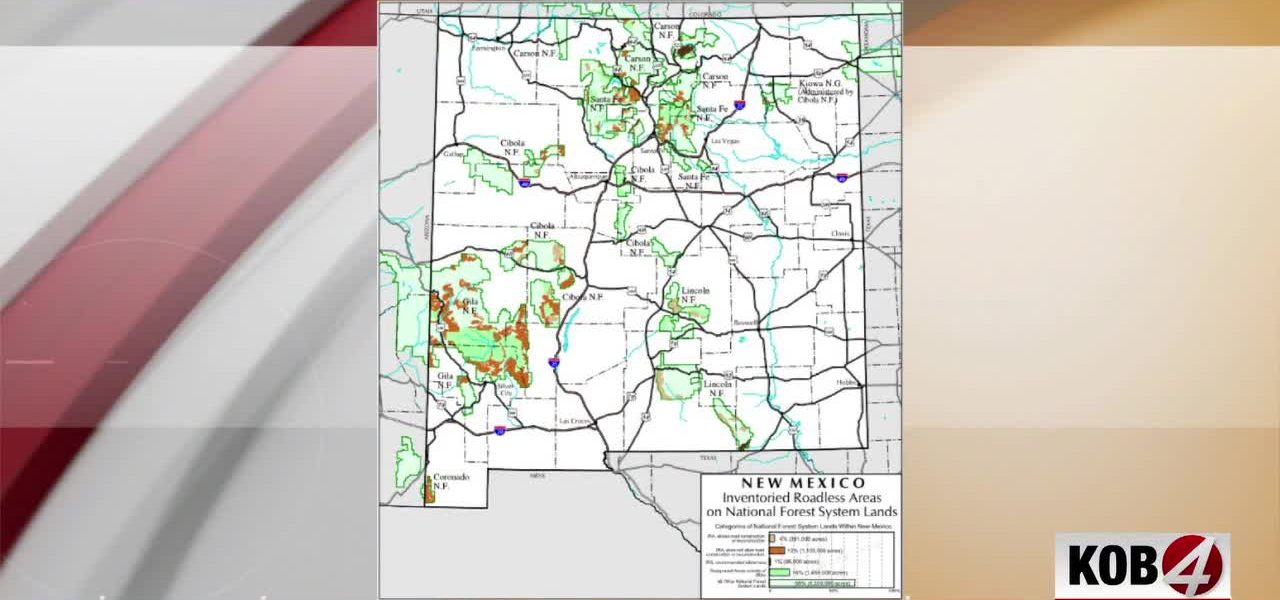
For New Mexico’s Congressional delegation, though, this isn’t some abstract argument happening in faraway Washington. This is about their own backyard, their rivers, their very way of life. Sen. Martin Heinrich didn’t mince words on the proposal. “These are the places that literally are the engine of our wildlife and our clean water,” he told reporters, his voice edged with urgency. “And in a state where the Rio Grande Watershed is under so much pressure, the Gila is under so much pressure, these are the places that matter.” He’s not wrong. They’ve watched their water disappear. They know the score. It’s a sentiment that rings true for many who’ve seen rapid changes to natural environments globally, from Pakistan’s increasingly strained Indus River Basin to the disappearing glaciers in the Himalayas—regions facing similar existential resource struggles, often compounded by policy missteps.
Enacted in 2001, the Roadless Rule simply bars new road construction and limits timber harvesting and other developments on designated sections of national forests and grasslands. It’s straightforward, you know? Its proponents consider it one of the U.S. Forest Service’s greatest conservation accomplishments. But, opponents, they don’t see it that way. Rep. Don Bacon (R-NE), speaking from a perspective common among those advocating for increased access, told Policy Wire, “We’re talking about sensible forest management, not environmental destruction. It’s a bureaucratic impediment that prevents us from properly managing timber resources and mitigating genuine wildfire threats. The federal government owns a lot of land, and we should be able to get in there to keep our forests healthy and productive.”
Healthy and productive—or accessible for logging? The lines often blur. And while the administration claims the rule is too restrictive and exacerbates wildfire risks, Heinrich’s office quickly pointed out that the Forest Service itself has already completed millions of acres of wildfire prevention treatments in these roadless areas, proving that management is possible without tearing through the pristine lands. It makes you wonder, doesn’t it, what the real motivations are?
📄 POLICY WIRE WHITEPAPER PUBLISHED: PAKISTAN'S NATIONAL SECURITY POLICY PRIORITIES
👉 READ BY CLICKING HEREThe cost of these blazes? It’s not insignificant. The Congressional Research Service reported that federal wildfire suppression costs have steadily risen, topping 3.1 billion dollars in 2018 alone, a statistic that provides context to the heated debate.
What This Means
Stripping away the Roadless Rule isn’t just about federal land policy; it’s a stark philosophical divergence over public resources. Politically, it signals a deeper embrace of resource extraction and a scaling back of environmental protections—a hallmark of recent administrations eager to unleash perceived economic potential. Economically, expect a boost in lobbying from timber, mining, and oil and gas industries, all keen to access newly opened territories. The short-term gains, they’re often loudly touted, yet the long-term ecological services—clean water, stable ecosystems, carbon sequestration, biodiversity—rarely receive an equally robust valuation in these policy discussions. But conservationists, they’ll argue, the natural capital here outweighs any quick profit. They’re usually shouting into the wind, though, aren’t they? On the international stage, particularly in places like the Muslim world and South Asia, where many nations grapple with deforestation, water scarcity, and climate change adaptation, the U.S.’s rollback on conservation can send a complicated message. It undercuts claims of global environmental leadership while simultaneously providing cover for other nations to loosen their own protections, justifying local environmental costs with a nod to American pragmatism.
Ultimately, this isn’t just about New Mexico, it’s about the very soul of American wilderness, its intrinsic value weighed against what some see as dormant economic opportunity. It’s a familiar story, one that echoes through legislative halls, whispered across boardrooms, and passionately argued on dusty trailheads.