

After Lobos’ Record Year: The Peril of Peak Expectation and a Policy Paradox
POLICY WIRE — Albuquerque, New Mexico — It’s a funny thing, success. Especially the fleeting, high-stakes kind that defines everything from regional football dynasties to international...

POLICY WIRE — Albuquerque, New Mexico — It’s a funny thing, success. Especially the fleeting, high-stakes kind that defines everything from regional football dynasties to international diplomacy. You win, or rather, you manage not to lose quite so badly, — and suddenly, everyone’s got an opinion, a prediction. Then comes the real work: figuring out how to live up to a future that, by all accounts, hasn’t happened yet. And New Mexico football finds itself, surprisingly, in this particular, uncomfortable spotlight.
After a year that saw the squad defy expectations—let’s be honest, those were pretty low—the UNM Lobos aren’t just back; they’re supposedly back. That’s a burden, pure and simple. The team achieved a statistical tie for first place in their conference, a fact reported by multiple sports outlets and etched into the public memory, no less. But a single record-setting season, even one that nearly captured the fabled Rate Bowl, doesn’t guarantee smooth sailing. Not in this sport, not in this state, — and certainly not in the broader, far more unpredictable arena of global policy.
The numbers don’t lie, though. The squad managed to set attendance records, drawing crowds back into the stadium, giving a small jolt of pride to a state that often feels overlooked. You could say it’s an economic indicator, a miniature boom driven by brute force — and a decent offensive line. Yet, the players are allegedly ignoring the hype. It’s a standard line, of course, from athletes, politicians, — and diplomats alike. Deny the external pressure, pretend the previous triumphs (or near-triumphs) mean nothing for what’s coming next. But it’s a tightrope act.
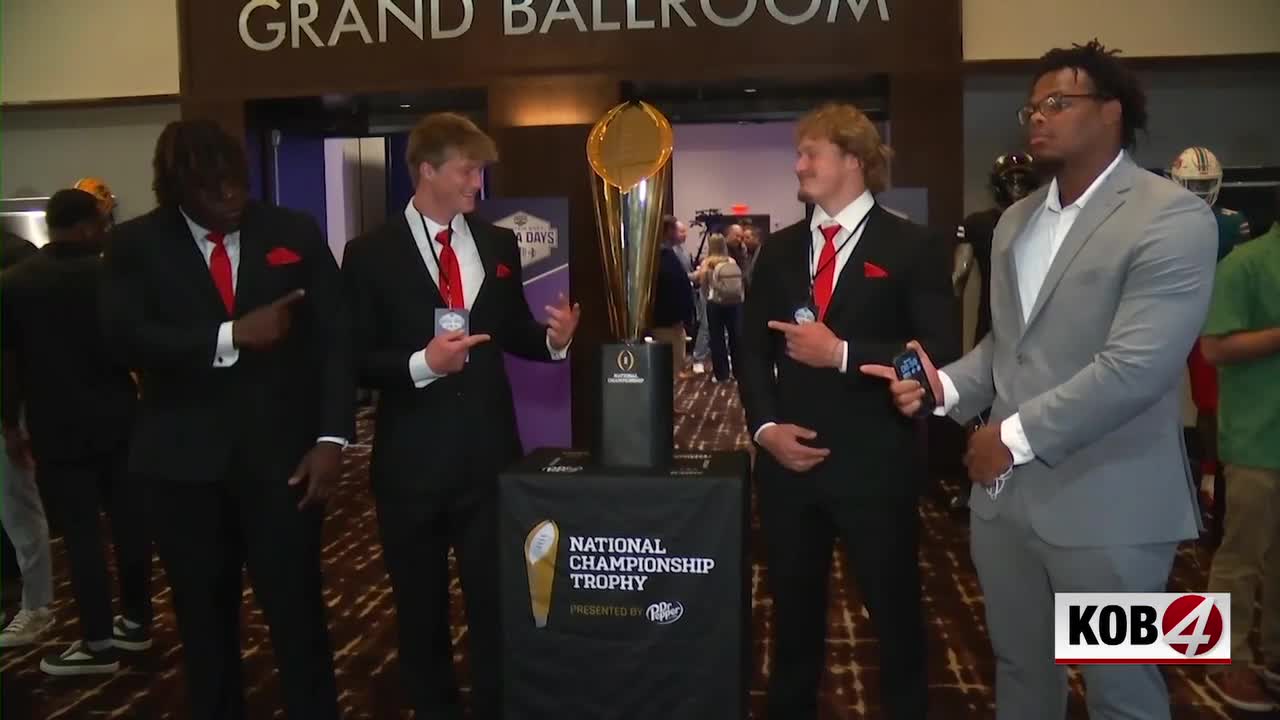
The Mountain West Conference held its football Media Day in Las Vegas, a glitzy stage for these kinds of performative declarations. You get the sense these events exist less for genuine insight — and more for managing the narrative. And managing narratives, my friends, that’s where the rubber meets the road, politically speaking. This isn’t just about young men in pads; it’s about the sociology of expectation. They’ve got five preseason all-conference picks, don’t forget. Those are shiny badges, pledges of future performance, not guarantees.
Think about the delicate political ballet in a country like Pakistan, for instance. A slight improvement in economic stability, a momentary lull in regional tensions—these aren’t just local headlines. They become international expectations, weighed by partners — and rivals, scrutinized by analysts. A fleeting success, perhaps in infrastructure or counter-terrorism, can lead to disproportionate hope, making the next inevitable stumble feel like a colossal failure. It’s a universal phenomenon, this tension between past achievement and future burden, whether you’re trying to unite a fractious political bloc or simply trying to win more football games than you lose.
That initial success, tying for first place, was a moment. A flicker. But the sustained burn, the ability to build on it without succumbing to the weight of increased scrutiny or external pressures, that’s what truly determines long-term viability. We’ve seen entire peace processes unravel because the hype outpaced the underlying reality, leaving nations—and, one supposes, football programs—struggling to justify the early accolades.
The UNM Lobos’ story, then, becomes a microcosm. It’s a lesson in the transient nature of public acclamation and the often-unacknowledged work required to maintain any semblance of forward momentum. They finished tied for first in the conference. What that means for next season is anybody’s guess, despite the predictions — and the glittering Vegas lights. Because really, it’s never just about the score on the board. It’s about how you manage the game in between the games.
What This Means
The narrative surrounding the UNM Lobos — that familiar refrain of [QUOTE_PLACEHOLDER] even after an unexpected season of success — carries broader implications for policy-makers and political actors. First off, economic. The increase in fan engagement, evident from attendance records, translates directly into local economic activity. More tickets, more concessions, more pre-game pub visits. For a state like New Mexico, which often grapples with economic challenges, any booster shot, even from a college football team, isn’t something to sneeze at. But this revenue stream, tied as it’s to on-field performance, is inherently volatile, mirroring how commodity prices or specific trade deals can unpredictably impact a nation’s GDP. No policymaker would bet the farm on one successful export crop, and no city should rely solely on a sports team’s momentary glory.
Politically, the handling of elevated expectations is a masterclass in risk management. Just as the Lobos players purportedly filter out the noise, political leaders often attempt to temper public exuberance after legislative victories or diplomatic breakthroughs. It’s a defense mechanism, yes, but also a pragmatic acknowledgment that the next challenge is always around the corner. A government celebrating a ‘record season’ of legislative wins might face an immediate backlash if the promises underpinning those wins don’t materialize quickly. For the Lobos, their challenge isn’t merely winning games but maintaining an illusion of unflappability, an essential trait for any political entity navigating public sentiment in an election cycle or a delicate geopolitical moment. And it’s not just about managing internal perceptions. The international gaze is also keenly focused on how entities sustain, or falter from, perceived success.
Ultimately, the story here isn’t just about a football team trying to run with the ball. It’s about how success, particularly the unexpected kind, morphs from a pleasant surprise into a crushing weight of public expectation, demanding a delicate balance between acknowledging achievement and remaining grounded in the arduous reality of future challenges. You can be tied for first in the conference, but tomorrow’s game? It’s always 0-0.