


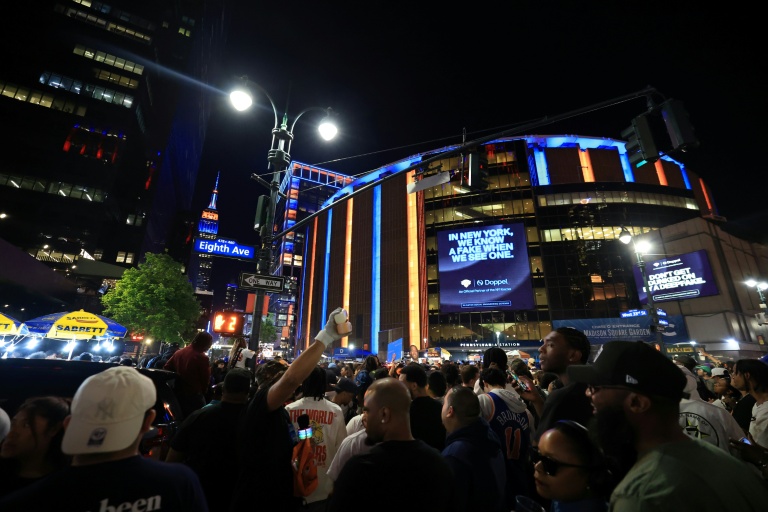
Penn Station’s Shadow Casts Glitz, Grit of NBA Finals at Madison Square Garden
POLICY WIRE — New York City, USA — Just beneath the glitz and high-stakes drama of the NBA Finals, a chilling reminder of urban vulnerability presented itself: a Sunday evening stabbing at Penn...

POLICY WIRE — New York City, USA — Just beneath the glitz and high-stakes drama of the NBA Finals, a chilling reminder of urban vulnerability presented itself: a Sunday evening stabbing at Penn Station left five wounded. This stark incident unfolded mere hours before the basketball world’s gaze shifted to Madison Square Garden, the iconic arena built directly atop the bustling transport hub. But hey, it’s New York, — and a little street-level chaos isn’t about to spoil a show that costs an arm and a leg.
No, neither the recent bloodshed nor the eye-watering ticket prices, which have seen a single seat on the resale market climb well north of $7,000 for Monday’s showdown, could dim the allure of the self-proclaimed “World’s Most Famous Arena.” You’d think such exclusivity would dampen spirits. But the faithful, plus a flock of A-listers and US President Donald Trump himself – for at least game three – ensured the Garden would, indeed, be packed to its venerable rafters. That’s New York, baby: always a spectacle, always a paradox.
The Knicks, on a surprising surge, hold a 2-0 lead over the San Antonio Spurs in this best-of-seven series, a situation that hasn’t materialized in ages for the franchise, chasing its first championship since 1973. Such moments, few and far between, aren’t to be trifled with, not even by the omnipresent security detail necessitated by a presidential visit. Because winning, especially in this city, has a way of sweeping everything else aside.
The Garden’s very atmosphere, an almost amber glow under those yellow-tinged lights, speaks volumes. You see the ghosts of champions, the echoes of rock legends. Vintage photos of Muhammad Ali and The Rolling Stones adorn the concourses, serving as silent witnesses to five-plus decades of cultural collisions. John Guercio, a sixty-something accountant — and lifelong Knicks fanatic, nails it. [QUOTE_PLACEHOLDER], he mused.
Bill Bradley, an NBA Hall of Famer who tasted championship champagne with the Knicks back in ’70 and ’73, has always attributed the Garden’s special vibe to its denizens. [QUOTE_PLACEHOLDER], he observed, describing a demanding, discerning public. And when they get into the game they can carry the team. And that’s not just a polite sports platitude, either. This is an audience that’ll let you know when you’re screwing up.
But, as Bradley knows first-hand, these adoring masses can flip. He endured their jeers and worse – spitting, tossed coins – early in his own career, a career where he’d been thrust into a role that was not his. He was embraced, he recalled, as soon as we started winning. That’s the simple, brutal truth of it. And you see that same feverish public sentiment, whether it’s over a sports hero in New York or a political figure garnering massive rallies across the Subcontinent. The passionate intensity of a fanbase can mirror the collective will — and volatility of a populace, turning on a dime.
The fans are just brutal here, Guercio affirmed, recalling a truly grim stretch in the 2000s, with six straight seasons without a sniff of the playoffs, and the infamous dirt chanting directed at coach Isiah Thomas. You come here, you’ve got to have tough skin, he added. That’s why players like playing here, because if you can win here, you can win anywhere.
Today’s Knicks seem to have cracked the code. They’ve captured hearts with a gritty style, earning them an Eastern Conference finals berth last season and a sizzling 13-game winning streak in these current playoffs. Superfan Anthony Donahue puts it simply: They’re likable, they’re easy to love, they’re easy to root for. This ain’t about the outsized personas of yesteryear – no Walt Frazier or Charles Oakley here. But they play hard, they never give up, Donahue noted. I don’t think they’re out partying. They’re not being stupid. They’re themselves. And New York has wrapped our arms around them.
Even with resale prices that would make a sovereign nation balk, Donahue dismisses the idea that MSG’s fundamental identity has eroded. He’s been at every playoff game this year, underscoring that season ticket holders often secure better deals. The Garden, the crowd’s still awesome, he insists. But it’s not just about cost. Rich Swann, a three-decade veteran of MSG attendance, draws a sharp line between the regular season and the current post-season vibe. During the regular season, you’ve got people who just come into games, it’s a thing to do. Tourists come in, Swann clarified. Playoff atmosphere has been different. Playoff atmosphere is real.
What This Means
This saga—the high-octane sport, the security scare, the presidential spectacle, the exorbitant costs—lays bare the intricate layers of a global city operating at full throttle. Economically, it showcases a bifurcated entertainment landscape: a platinum-plated experience for the few, fueled by those willing (or able) to drop thousands, contrasted with the broader, less affluent populace who nonetheless feed the demand through aspiration or shared cultural connection. The very infrastructure supporting such luxury—a world-famous arena above a major transport hub—also creates inherent vulnerabilities, demanding ever-escalating security protocols. The convergence of high-stakes events with political figures often transforms athletic contests into stages for broader public discourse, reflecting societal tensions from inequality to public safety. And, in a curious parallel, the intense, almost nationalistic fervor for a local sports team in New York echoes the impassioned loyalties seen in Pakistan during a cricket match or political rally. That communal surge, that fierce pride, and the quickness with which adulation can turn to ire are universal human characteristics, often magnified within such a ‘cauldron’.
The event also subtly highlights a governance challenge common to many densely populated urban centers, whether New York or Mumbai. Securing massive public gatherings isn’t merely about deterring crime; it’s about managing perception, ensuring flow, and responding to unforeseen crises. The financial mechanisms, meanwhile, tell us something about how modern capitalism commodifies experience, with pricing structures that filter access. While the soul of Madison Square Garden might indeed be enduring, its economic entry points speak volumes about who gets to witness that soul firsthand and who remains outside looking in. This isn’t just sports; it’s a policy dilemma dressed in basketball shorts. But one thing’s clear: when the stakes are high enough, people will pay—and endure—a whole lot.