


China’s Explosive Growth: Hunan Factory Blast Ignites Familiar Safety Scrutiny
POLICY WIRE — Changsha, China — The quiet of Hunan province was violently sundered this week, not by the celebratory crackle of its most famous export, but by a catastrophic detonation. An explosion,...

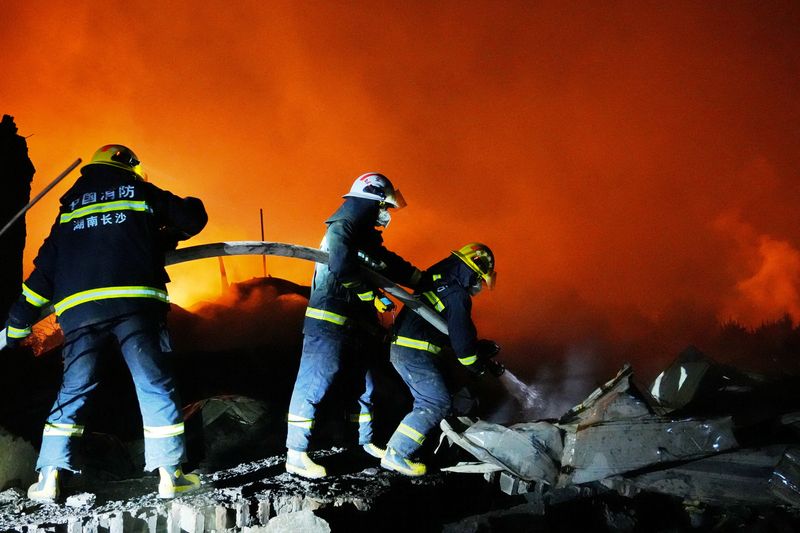
POLICY WIRE — Changsha, China — The quiet of Hunan province was violently sundered this week, not by the celebratory crackle of its most famous export, but by a catastrophic detonation. An explosion, ripping through a fireworks manufacturing plant, didn’t merely shatter windows; it pulverized the lives of twenty-one workers, reigniting a grim, familiar conversation about the true cost of China’s relentless industrial ascent. It’s a dialogue Beijing perpetually promises to address, yet one that seems to echo with tragic regularity across the nation’s sprawling industrial landscape.
This wasn’t some remote, unknown outfit. The facility, tucked away in the industrial heartland that feeds much of the world’s pyrotechnic demand, became a scene of utter devastation. Black smoke, thick and acrid, plumed skyward for hours—a stark, morbid monument to unchecked risks. First responders, their faces grimed with ash and exhaustion, combed through the smoldering debris, pulling out what remained. And still, questions loom larger than the towering inferno itself.
President Xi Jinping, in a swift, almost ritualistic response, demanded a “thorough investigation” into the blast, state media reported. He urged local authorities to prioritize worker safety and ensure accountability, a directive that’s become something of a boilerplate whenever these calamities strike. But for those on the ground, those whose loved ones simply vanished into the industrial maw, such pronouncements can feel rather thin, don’t they?
At its core, this tragedy underscores the persistent chasm between China’s grand economic ambitions and the granular realities of safety enforcement. The nation, a global manufacturing behemoth, continues to grapple with a lamentable record of industrial accidents. They’ve occurred in coal mines, chemical plants, construction sites, and, with chilling frequency, in the very factories that produce the fleeting beauty of fireworks. It’s a stark reminder that the glittering displays admired worldwide often conceal a darker, more dangerous genesis.
Liu Jian, a stoic spokesperson for China’s Ministry of Emergency Management, shot back at suggestions of systemic negligence. “We’re absolutely committed to a thorough, transparent investigation,” he declared in a rare public statement, his voice firm yet measured. “The safety of our workers is paramount, — and we will hold all responsible parties accountable. There will be no shortcuts.” His words, while intended to reassure, have been heard before, numerous times, following similar industrial infernos.
But many analysts remain unconvinced by assurances alone. Dr. Mei Ling, a labor safety analyst at the Hong Kong Policy Institute, didn’t mince words. “This isn’t an isolated incident; it’s a systemic failure rooted in a relentless pursuit of production,” she observed, her tone weary but resolute. “The pressure for quotas often overshadows fundamental safety protocols, particularly in provinces far from central government oversight. Until that changes, we’ll continue to see these preventable tragedies unfold.” Her assessment cuts straight to the bone of China’s industrial dilemma.
Behind the headlines, a more intricate economic calculus is always at play. Hunan province, particularly the city of Liuyang, is globally renowned as the “hometown of fireworks,” accounting for a significant chunk of the world’s supply. The industry, while vital for local economies, operates under unique pressures—seasonal demand surges, fierce competition, and the inherent dangers of handling volatile materials. These factors, critics contend, combine to create an environment where corners are sometimes cut, with devastating consequences. China, according to the National Bureau of Statistics, recorded approximately 25,000 workplace fatalities in 2021, a figure that labor advocates often argue is significantly underreported, but nevertheless points to a substantial challenge.
Still, the implications of such incidents ripple far beyond China’s borders. Nations across the developing world, from Southeast Asia to the burgeoning economies of the Middle East and North Africa, look to China’s growth model with a mixture of admiration and caution. Many Muslim-majority countries, for example, are major consumers of fireworks for festivals like Eid, often sourcing them from Chinese manufacturers. The lessons learned (or, more accurately, not learned) from Hunan’s latest tragedy are therefore not merely domestic concerns for Beijing; they’re vital blueprints—or cautionary tales—for global industrial development. They highlight the delicate balance between rapid industrialization and the fundamental right to safe working conditions, a challenge particularly acute in countries like Pakistan, which are also striving for rapid industrial growth and grappling with similar infrastructure and regulatory pressures.
This cycle of disaster, investigation, — and promise of reform has become distressingly familiar. One might argue it’s a recurring chapter in the broader narrative of China’s economic juggernaut, a narrative explored in Hunan’s Fiery Aftermath: Another Industrial Catastrophe Ignites Questions on China’s Growth Model. But how many more chapters must be written in blood before the script finally changes?
What This Means
The latest Hunan factory explosion, while localized, sends tremors through multiple layers of China’s socio-economic and political fabric. Politically, President Xi’s swift directive aims to project an image of decisive leadership and concern for the common citizen, but it also signals a renewed pressure on provincial authorities to tighten oversight – a task that’s historically proven easier said than done. The Communist Party, perpetually sensitive to social unrest, knows that such tragedies can erode public trust, particularly when they appear to be systemic. Economically, the incident may trigger temporary shutdowns or stricter inspections across the fireworks industry, potentially impacting global supply chains ahead of peak demand periods (think New Year’s Eve or other major celebrations worldwide). Long-term, however, the drive for economic output in such a lucrative sector often quickly overshadows renewed safety mandates. For foreign investors and trading partners, these recurrent incidents raise uncomfortable questions about ESG (Environmental, Social, and Governance) compliance and ethical sourcing, forcing a re-evaluation of the true ‘cost’ of competitively priced Chinese goods. Ultimately, it’s a grim reminder that China’s phenomenal growth hasn’t always prioritized human capital over industrial output, a paradox that continues to haunt its global standing.