


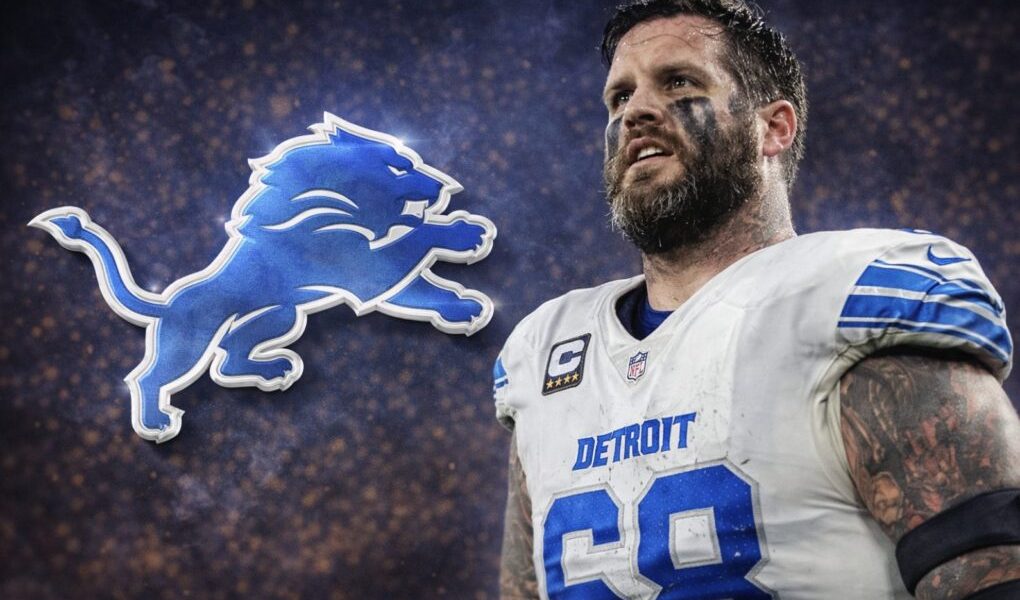
The End of an Era, or Just the Price of Loyalty? Decker’s Dolphins Destination Riles Rust Belt
POLICY WIRE — Detroit, Michigan — The gridiron, like a fractured political map, sees allegiances shift with alarming speed. Here, even deeply etched loyalties rarely survive the harsh winter of NFL...

POLICY WIRE — Detroit, Michigan — The gridiron, like a fractured political map, sees allegiances shift with alarming speed. Here, even deeply etched loyalties rarely survive the harsh winter of NFL free agency, replaced instead by the cold, calculating logic of the salary cap and roster reconstruction. And so, the latest tremors from this annual scramble ripple out, impacting more than just two football franchises, touching — if only tangentially — the increasingly globalized business of sport itself.
It’s no small matter when a foundational piece of a city’s sporting identity contemplates a move. Taylor Decker, for a decade the unyielding bulwark at left tackle for the Detroit Lions, finds himself the subject of such speculation. After ten seasons of anchoring Detroit’s offensive line, a recent analysis from ESPN, penned by NFL analyst Matt Bowen for the 2026 offseason, pegs Decker as an “ideal fit” for the Miami Dolphins. But what does ‘ideal fit’ truly mean when measured against years of sweat equity — and community attachment? It usually means money, a new opportunity, — and the relentless march of time.
Decker’s potential departure isn’t just about a player seeking new pastures; it’s a stark reminder that in professional football, no one’s irreplaceable. The Lions invested a first-round pick in the man back in 2016, and he responded by embodying the team’s gritty ethos during their long, often painful rebuild. He became a locker room lynchpin, the quiet strength as head coach Dan Campbell meticulously rewired the team’s identity. But professional sports, you see, it’s never about sentimentality for long.
“Look, Taylor was everything you want in a player here for a long, long time,” confided Brad Holmes, the Lions’ general manager, his tone tinged with a weariness that only NFL front offices understand. “You never want to see guys go. But this league, it’s a cold-blooded business. You have to make tough decisions for the long-term health of the organization. We’re always trying to build a contender, — and sometimes that means uncomfortable changes. We wish him nothing but the best, always.”
The Dolphins, for their part, appear to be a team looking to mend their own line vulnerabilities. Decker’s 2025 performance, according to ESPN’s Bowen, wasn’t his career best – his 89.3 percent pass block win rate that season was among the lower marks in his ten professional years, per data frequently cited by outlets like ESPN Stats & Information. But he still brings a veteran’s savvy, a brawler’s toughness, — and a leadership quality that money can’t quite quantify. Miami, struggling to stabilize its left tackle spot, eyes Decker as an immediate upgrade, a plug-and-play solution in a sport obsessed with instant gratification.
“We’re always assessing talent, always looking for guys who can elevate the locker room and contribute right away,” stated Mike McDaniel, head coach of the Dolphins, in a typically guarded fashion, alluding to the strategic calculus that drives such pursuits. “A player with that kind of experience, that kind of competitive spirit? They don’t just grow on trees. We’ll pursue what’s best for our team, — and for our fans.”
Because the beauty of the NFL, — and perhaps its insidious draw, is the narrative. If Decker lands in South Florida, the Lions’ scheduled trip to Miami on November 8th, 2026, transforms instantly. It becomes more than just another Week 9 fixture; it’s a reunion, a face-off between a departed hero and his former comrades. It’s the kind of storytelling the league excels at, building drama from the movement of million-dollar assets.
But this isn’t just an American drama. The commercial tentacles of the NFL stretch far wider now. From Lahore’s bustling bazaars to the tech hubs of Dubai, fans consume American football with increasing avidity, often waking in the dead of night to watch games broadcast live. The economics of player transfers, team strategies, and brand loyalty in the NFL are now discussed with as much earnestness in Pakistan and across the Muslim world as they’re in local sports bars — a silent auction playing out on a global stage.
What This Means
Decker’s anticipated move is less a single transaction and more a miniature case study in the modern political economy of professional sports. For the Lions, it signals a complete turn of the page, a full transition from the remnants of the old guard to the fresh faces driving their recent success. It means trusting their younger, cheaper talent and relying on a general manager’s shrewd eye in the draft rather than leaning on familiar veteran names. This is the cutthroat side of team building, a constant re-evaluation of human capital against financial constraints.
For Miami, it represents a short-term gamble on a seasoned performer whose best years may be in his rearview mirror but who still offers a tangible upgrade for a playoff-contending team. It’s an investment in stability where there’s been none, a move to shore up weaknesses before the competitive window snaps shut. And for the fans, both stateside and globally, it reinforces the transient nature of player allegiances in a league driven by blockbuster contracts and the ever-present specter of the Super Bowl. These aren’t just athletes; they’re valuable, movable commodities in an entertainment industrial complex where loyalty often takes a back seat to the bottom line. It’s not exactly a golden handshake in college sports, but the mercenary principles aren’t really different when the numbers are this high.
So, as the league gears up for another year, one thing remains clear: whether in Detroit, Miami, or any of the 30 other locales, the business of football continues its relentless, unsentimental churn.