


Celestial Folly? Grantham Warns of SpaceX ‘Madness’ as Market Soars into Orbit
POLICY WIRE — Boston, USA — When financial tides recede, it’s not always the grandest vessels that get left high and dry. Often, it’s the sleek, aspirational models, celebrated for their...

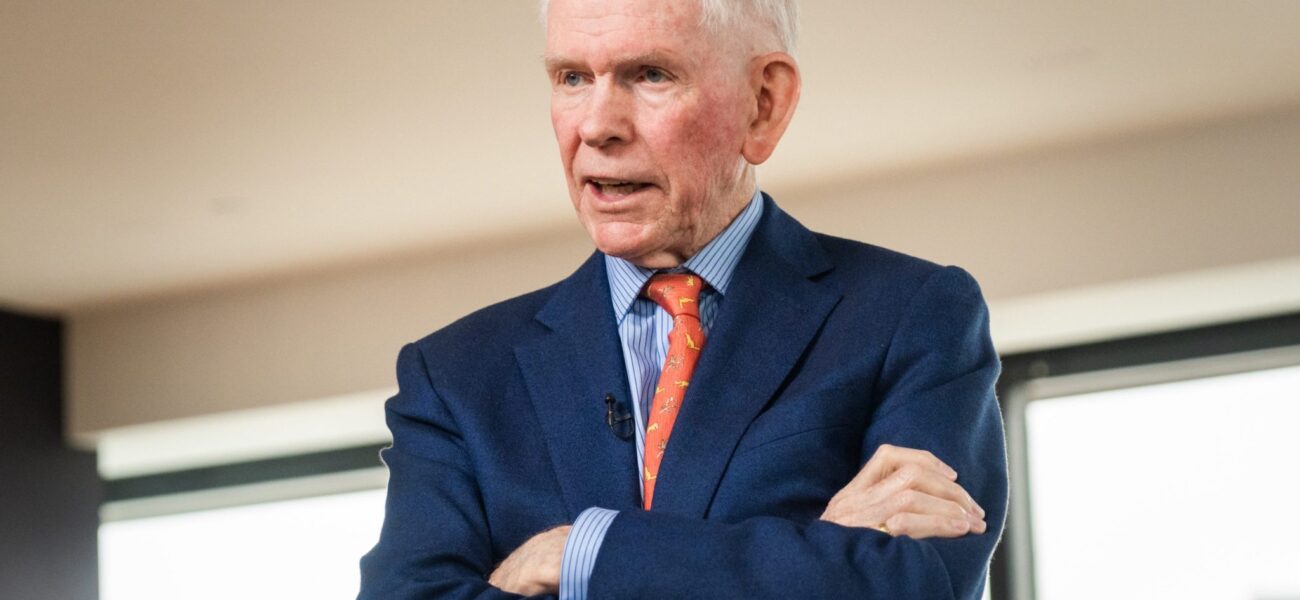
POLICY WIRE — Boston, USA — When financial tides recede, it’s not always the grandest vessels that get left high and dry. Often, it’s the sleek, aspirational models, celebrated for their speed and innovation, that discover gravity has a harsh, uncompromising grip. That’s precisely the grim calculus veteran investor Jeremy Grantham is applying to SpaceX, the privately held aerospace juggernaut whose recent ascension into the Nasdaq 100 has stoked both fervent adoration and stark dread on Wall Street.
Grantham, a name synonymous with calling market bubbles long before they burst, didn’t mince words. He’s dismissed the prospective SpaceX IPO—or any public valuation at current levels, for that matter—as the “craziest in the history of man.” Not just ambitious. Not just overvalued. But craziest. It’s the kind of pronouncement that makes seasoned money managers nervously check their portfolios, isn’t it?
But what really gets under his skin, and mine, is the almost religious zeal with which such stratospheric valuations are defended. We’re talking about a company that aims for Mars, yes, but whose current cash cow is satellite internet, and whose launch business, while dominant, operates in a highly capital-intensive realm. The narrative, however, has outstripped the underlying financials for many, including those who’ve pumped its valuation to over jaw-dropping levels. Private market transactions last year reportedly valued SpaceX north of $180 billion, according to sources privy to secondary sales. For context, that’s more than aerospace titans like Boeing and Lockheed Martin combined when you strip out legacy pensions and debt considerations—a truly staggering figure for a company that isn’t publicly trading its primary shares.
And because Grantham’s track record in identifying asset bubbles, from Japan’s property mania to the dot-com bust, is practically prophetic, dismissing his warnings feels like an exercise in willful ignorance. He’s got no personal vendetta against rocketry. His concern stems from historical patterns, from market froth, from a collective willingness to suspend disbelief when the siren song of disruptive tech grows loud enough.
“We’ve seen this before, of course, just under different guises,” Grantham recently quipped during an industry webcast, his dry humor barely masking the deep concern. “Tulips, railways, dot-coms—they all had their moment of perceived exceptionalism, their champions declaring ‘this time it’s different.’ But it rarely is.”
The company’s success, has been immense. SpaceX has redefined spaceflight, slashing costs — and dramatically increasing accessibility. They’ve built an astounding network of internet satellites, Starlink, offering service in remote areas. But does this warrant a valuation that suggests a guaranteed monopoly on interstellar commerce — and terraforming? Doesn’t feel like it to those who remember the wreckage of past speculative manias.
Consider the broader economic implications. While capital flows to Silicon Valley and orbital ventures, countries in the developing world often find themselves struggling for basic infrastructure investment. And if this current wave of tech-fueled exuberance eventually collapses, what will be the ripple effect on emerging markets like Pakistan, where foreign direct investment is often fickle, easily spooked by global financial tremors? A significant portion of Pakistan’s economy relies on remittances and external investment; any dramatic downturn in global markets stemming from, say, a major tech correction, could have devastating consequences. It’s not an isolated event. Markets, you know, aren’t insular.
📄 POLICY WIRE WHITEPAPER PUBLISHED: PAKISTAN'S NATIONAL SECURITY POLICY PRIORITIES
👉 READ BY CLICKING HERE“The enthusiasm for transformative technology is understandable,” acknowledged Dr. Aliyah Zahra, a prominent economic policy advisor in Islamabad, speaking recently on regional investment priorities. “But we must temper this excitement with a clear-eyed assessment of fundamentals. Capital is finite; its misallocation, driven by speculative frenzy in one corner of the globe, inevitably draws resources away from pressing developmental needs elsewhere.”
What This Means
Grantham’s stern warning, echoing through the bull market’s roar, can’t be brushed aside. His critique of SpaceX isn’t simply about one company’s balance sheet; it’s a symptom of a larger market pathology—an almost irrational conviction that technological innovation renders traditional financial metrics irrelevant. If Grantham is right, and history often proves him so, then a spectacular fall for such a high-profile entity could trigger a broader recalibration, a shudder across equities and a reevaluation of how much future promise we’re willing to pay for today. This has real-world consequences for every pension fund, every sovereign wealth manager, and ultimately, every taxpayer globally.
From a political economy standpoint, such a bust could fuel public distrust in the capitalist system itself, empowering critics who argue that financial markets have become disconnected from productive economic activity. Regulators, who seem to be taking a back seat to cheerleading in this particular boom, would face renewed pressure. There’d be cries for greater oversight, for stricter valuation rules, for an end to what some would brand as an irresponsible speculation festival. For nations already navigating economic headwinds, such as those in South Asia where stability is often tenuous, a major market correction could easily devolve into political instability. Governments would struggle to reassure citizens, already wary of external shocks, that their economies remain resilient. And let’s be frank: it won’t be easy to convince them. They’ve heard promises before.