


Silent Tally in Balochistan: A Nation’s Perpetual Agony Unfurls Again
POLICY WIRE — Islamabad, Pakistan — The rumble beneath Balochistan’s ancient, resource-rich earth rarely ceases. Sometimes, it’s a faint tremor; other times, a cataclysm that shakes the country’s...

POLICY WIRE — Islamabad, Pakistan — The rumble beneath Balochistan’s ancient, resource-rich earth rarely ceases. Sometimes, it’s a faint tremor; other times, a cataclysm that shakes the country’s brittle composure. We just witnessed another cataclysm. Another surge in the region’s long, brutal tale of unrest—a violence that, almost paradoxically, often slips from the mainstream headlines despite its profound human cost.
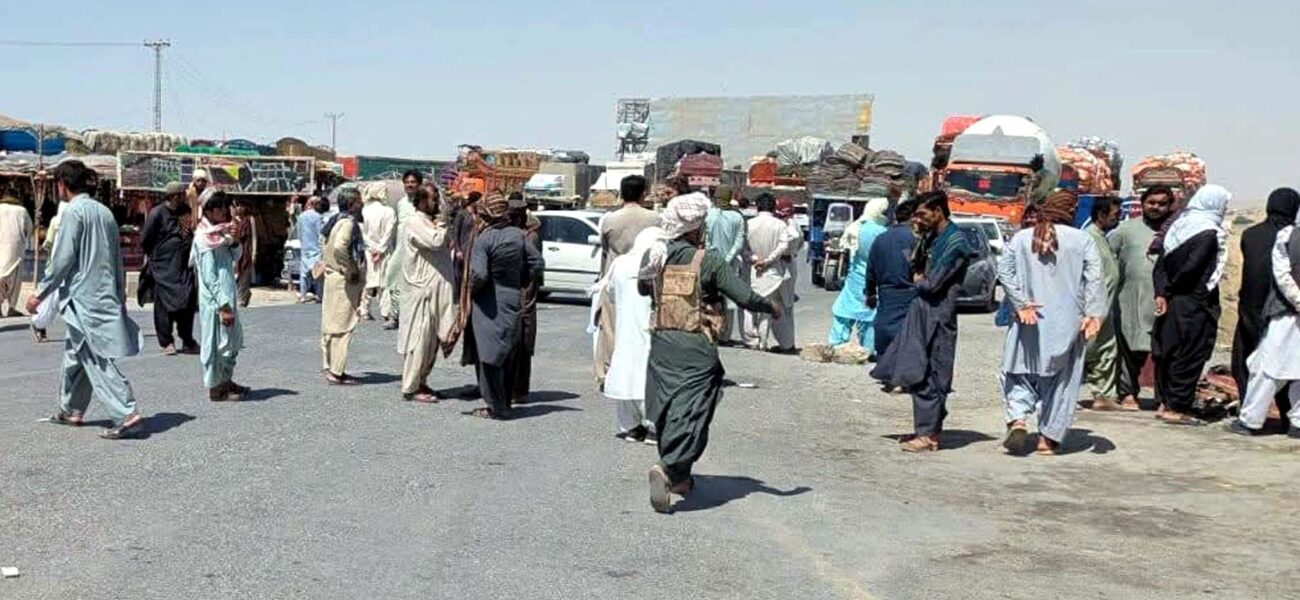
It’s an old story, told with new bodies. Latest reports, though often contested and hard to verify in the province’s isolated stretches, suggest a recent spike in hostilities has left nearly a hundred people dead across several districts in Pakistan’s southwestern expanse. These aren’t just statistics; they’re sons, fathers, sisters, livelihoods extinguished. Burnt to ashes. Many of these unfortunates were reportedly caught between renewed clashes involving separatist militants and state security forces, or became casualties of targeted sectarian attacks that routinely plague this frontier.
And it’s an agonizing loop. The government, as expected, is quick with condemnation. “This won’t stand. We’re resolute in our fight against elements aiming to destabilize the state and sow discord among our people,” declared Pakistan’s Interior Minister, Rana Sanaullah, in a typically firm address. He promised swift justice. But for residents who’ve seen decades of this back-and-forth, such promises sometimes feel like hollow echoes across the desolate landscape, where promises don’t bring back the dead, or heal the festering wounds.
Because the roots here run deep. They’re intertwined with a perception of historical grievances, resource exploitation by the central government, and an often-heavy-handed military response that breeds more resentment than peace. Balochistan, for all its immense natural gas and mineral wealth—including what some estimates peg as the world’s fifth-largest gold and copper deposits at Reko Diq—remains Pakistan’s least developed province. Over 60% of its population lives below the poverty line, starkly contrasting with the national average of around 24%—a persistent imbalance cited by the World Bank’s recent reports on regional disparities.
The latest bloodshed didn’t just pop out of nowhere. It’s the bitter fruit of an escalating cocktail: armed nationalist groups seeking greater autonomy, proxy games played by regional adversaries, and extremist Sunni and Shiite outfits that turn the province into a sectarian battleground. It’s a complex, ugly stew. Like other prolonged, bitter conflicts, Balochistan’s woes illustrate how decades of unresolved issues can erupt, despite any national desire for stability. The silence surrounding its suffering only makes it scream louder, doesn’t it?
But the government, strapped for cash and already juggling a mountain of domestic woes and international pressures, seems perpetually caught between asserting control and addressing legitimate local demands. “These death tolls aren’t just numbers; they’re the accumulated debt of neglected governance, year after weary year,” observed Dr. Ayesha Siddiqa, a leading defense analyst — and frequent critic of state policy, during a recent security forum. “It’s a protracted policy failure, not merely another skirmish; the region becomes a proxy theater, destabilizing not just Pakistan, but the broader South Asian periphery.” Her words hang heavy.
You can’t just carpet-bomb your way to loyalty. You can’t negotiate with ghost-like insurgencies without addressing why people picked up arms in the first place. That’s the hard truth, buried somewhere beneath all those bodies.
📄 POLICY WIRE WHITEPAPER PUBLISHED: PAKISTAN'S NATIONAL SECURITY POLICY PRIORITIES
👉 READ BY CLICKING HEREWhat This Means
This renewed eruption of violence in Balochistan is a bellwether, not an anomaly. Politically, it signals the enduring fragility of Islamabad’s writ in its largest, least populous, and strategically most sensitive province. For the current government, it’s yet another thorn in its side—a relentless internal security challenge that drains resources, diverts attention from economic recovery, and undermines its narrative of a stabilizing nation.
Economically, instability in Balochistan is a major red flag for foreign investment, particularly impacting the China-Pakistan Economic Corridor (CPEC). Beijing’s ambitious projects, stretching through Balochistan to the Arabian Sea port of Gwadar, are regularly targeted, creating substantial security overheads and discouraging broader commercial engagement. No one wants to pour money into a conflict zone, even one with such tantalizing prospects. It complicates Pakistan’s relations with neighboring Iran and Afghanistan too, both of which share long, porous borders with Balochistan and have their own security concerns spilling over.
For the wider Muslim world and South Asia, this perpetual low-intensity conflict, layered with sectarian violence and separatist fervor, showcases the intricate web of grievances that can tear nations from within. It’s a somber lesson on the perils of developmental inequality and unresolved ethnic aspirations, perpetually threatening regional stability. And it’s one we just keep relearning, aren’t we?