


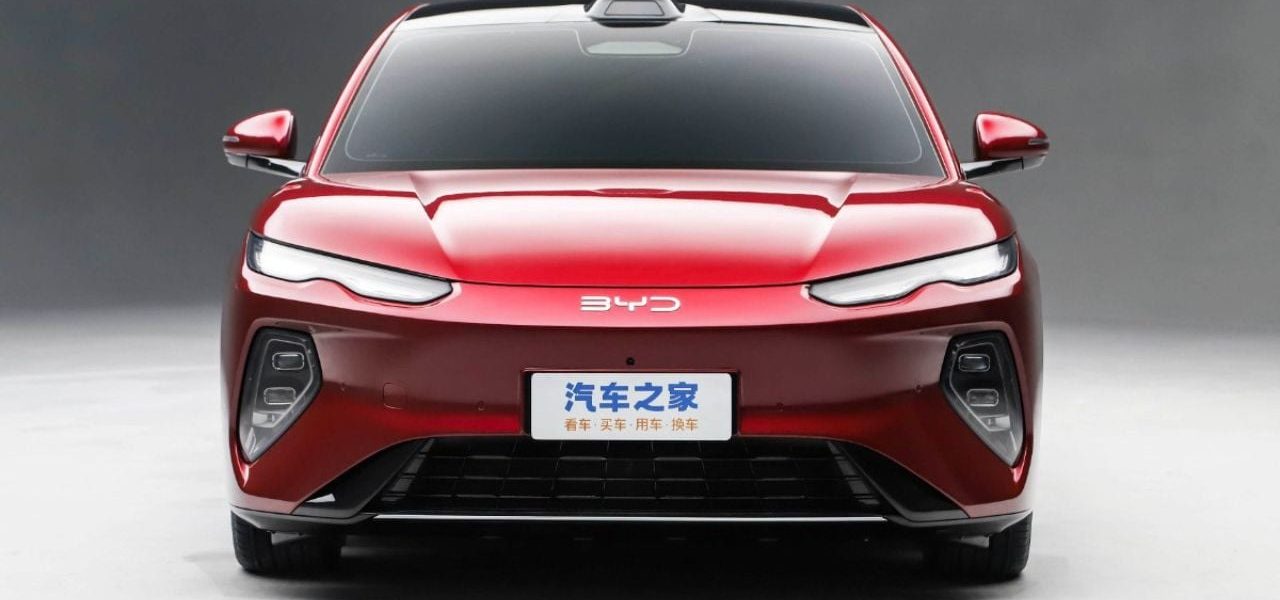
BYD’s Electric Conundrum: When Flash Charging Meets Fractured Supply Lines
POLICY WIRE — Beijing, China — It was supposed to be the automotive revolution without a hiccup. Electric vehicles, smooth sailing, batteries magically appearing to power a cleaner, faster future....

POLICY WIRE — Beijing, China — It was supposed to be the automotive revolution without a hiccup. Electric vehicles, smooth sailing, batteries magically appearing to power a cleaner, faster future. But the shiny veneer, as it always does, has begun to chip. You see it in the charging stations, in the whispered grumbles from the manufacturing floor. The truth, finally out in the open: China’s BYD, a titan in the electric vehicle (EV) realm, has confessed a ‘serious shortage’ of the very components that make its next-gen, flash-charge models so desirable.
It’s a peculiar twist, isn’t it? The company known for its vertically integrated supply chain—they build nearly everything themselves, batteries included—is now finding itself tied up in knots by its own success. Turns out, human impatience, a desire for rapid gratification even in car charging, has consequences. Flash charging isn’t just about faster pumps; it’s about pushing battery technology, demanding specialized cell chemistries and cooling systems that gulp down critical raw materials faster than the mining operations can cough them up. And this isn’t just a glitch. This is a bellwether, a loud, clear signal about the strains on a global ambition.
“We’ve seen unprecedented interest in our advanced fast-charging vehicles,” admitted Stella Zhu, BYD’s Global Sales Director, in a recent, somewhat understated, briefing. “But the pace at which consumers are embracing this technology – the sheer velocity – has outstripped even our most aggressive internal projections for battery component supply. You can’t just conjure gigafactories overnight, can you? It’s a supply chain tango with geology, economics, and, frankly, geopolitics as our reluctant dance partners.” Her carefully chosen words don’t quite hide the manufacturing headache that must be pulsing through BYD’s corporate offices right now. This isn’t just about output; it’s about the entire ecosystem.
Because, make no mistake, this isn’t just a ‘BYD problem.’ This particular bind points to a broader structural vulnerability in the global dash for electrification. Think about it: every manufacturer is chasing similar goals, scrambling for similar rare earths, lithium, nickel, and cobalt. And that means a pricing squeeze, an availability crunch, — and a whole lot of jostling for position. The raw materials market is as volatile as a desert mirage; a commodity analyst might call it ‘unstable,’ but a factory manager likely calls it a nightmare. Global EV sales, for instance, are projected to reach approximately 73 million units by 2040, according to a recent report by BloombergNEF. And where will all those batteries come from?
This challenge extends far beyond the sleek showrooms of Shanghai or Silicon Valley. Consider markets like Pakistan. There, the burgeoning middle class looks at EVs as a status symbol, an escape from volatile petrol prices, and a nod to a cleaner future—however aspirational. But the infrastructure for even standard EV charging is nascent, let alone the high-powered grid support for flash charging. If global manufacturers can’t even secure enough components for their primary markets, how long until those emerging economies, those with growing but still fragile power grids, become second-class citizens in the EV rollout? They need the tech, but the supply chokepoints hit them hardest, creating another layer of global inequity.
But then, there’s an alternative reading: Perhaps this forced slowdown gives other players, perhaps even domestic ventures in places like India or Pakistan, a brief window. A chance to develop their own, more localized battery tech. It’s a long shot, sure. Yet, history tells us innovation thrives on scarcity.
📄 POLICY WIRE WHITEPAPER PUBLISHED: PAKISTAN'S NATIONAL SECURITY POLICY PRIORITIES
👉 READ BY CLICKING HEREWhat This Means
This BYD revelation isn’t just a corporate hiccup; it’s a stark re-evaluation of the global EV transition’s pace and priorities. Economically, expect continued volatility in raw material prices. Countries rich in minerals, like those in Africa or Latin America, are suddenly—or, let’s be honest, *still*—wielding disproportionate geopolitical leverage. China’s deep integration, once its strength, is now revealing its internal stress points, showing the world that even the most meticulous planners can misjudge raw demand.
Politically, this story feeds into broader narratives of resource nationalism. Governments might begin subsidizing domestic mining or processing operations more aggressively, trying to shield their automotive sectors from such supply shocks. And that’s a tough play, economically inefficient often, but politically attractive. “This isn’t just BYD’s problem; it’s a litmus test for the entire global push towards electrification,” remarked Dr. Faisal Khan, Director of Research at the Centre for Asian Strategic Studies. “If you can’t get the juice, you can’t move the car, — and certainly can’t move markets forward consistently. It’s an urgent call for diversification—of suppliers, yes, but also of geopolitical dependencies. The shadows of resource scarcity stretch long and wide across policy debates now.” This scarcity, he suggests, could even exacerbate trade tensions, transforming industrial policy into a new front for great power competition.
For consumers, it simply means longer waiting lists, potentially higher prices for flash-charge capable EVs, and perhaps a return to more pragmatic charging speeds. The sprint to an all-electric future is proving to be less of a bullet train — and more of a gritty, arduous climb. We thought we had the destination in sight; turns out, the map keeps getting redrawn. And we’re not quite sure who has the pencils anymore.