

Berlin’s New Front Line: German Banks, Mexican Cartels, and a Shadow War for Dirty Billions
POLICY WIRE — Berlin, Germany — You wouldn’t expect Berlin, that bastion of fiscal rectitude and meticulous policy-making, to throw its hat into the visceral, blood-soaked ring of...

POLICY WIRE — Berlin, Germany — You wouldn’t expect Berlin, that bastion of fiscal rectitude and meticulous policy-making, to throw its hat into the visceral, blood-soaked ring of Mexico’s drug cartels. Yet here we’re. It’s not about boots on the ground—or Bundeskriminalamt agents in balaclavas for that matter—it’s about cold, hard cash, and the often-ignored financial lifelines that sustain these sprawling, violent empires.
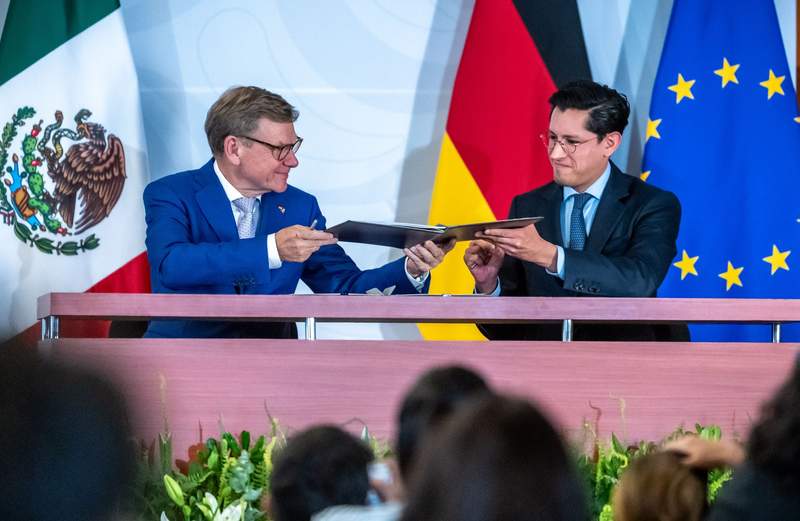
German lawmakers, particularly those like Johann Wadephul, a senior figure in the Christian Democratic Union (CDU), are making noise. Loud noise. Their target isn’t just the street corner pusher, it’s the banking architecture that funnels billions of dollars in illicit profits around the globe. This isn’t a gesture. It’s a belated acknowledgment that organized crime isn’t confined by borders, or by predictable spheres of influence. Global crime demands a global crackdown. Who’d have thought?
“We’ve always championed stability, not just within our borders but across international systems,” Wadephul told Policy Wire, his voice measured but firm. “But the lines blur. Financial networks supporting narco-trafficking in one hemisphere can easily corrupt economies in another. Mexico’s fight is, increasingly, our collective fight, especially when it concerns disrupting their ill-gotten gains before they infect legitimate markets back home. We can’t just turn a blind eye, can we?”
And that’s the rub. For years, European nations, Germany included, often treated Latin American drug woes as… well, Latin American drug woes. Their problem. Our cocaine consumption, sure, but their problem to fix. But the scale of cartel wealth, its sheer muscle, means it’s seeping into global supply chains, tech ventures, real estate – practically everything. You can’t just wish it away anymore. But it’s complicated, very. These are sophisticated outfits.
This evolving stance suggests Germany sees itself not merely as a victim of drug imports but as an unwilling financier, its institutions potentially unwitting conduits for cartel lucre. They’re focusing on financial intelligence, money laundering countermeasures, and—one suspects—closer cooperation between their financial regulators and Mexican counterparts. Imagine the headache that’ll be. They’ll need more than spreadsheets for this.
“The narco-states aren’t confined to our geographical region; their influence, bought with dirty money, is truly global,” said Mexican Foreign Minister Alicia Bárcena, in a recent diplomatic exchange, likely echoing this sentiment. “Any support from our international partners, especially on the financial intelligence front, strengthens our capacity to dismantle these criminal structures that frankly, make governments tremble. It’s a never-ending battle, but one we absolutely can’t afford to lose.”
The numbers speak volumes, stark — and unforgiving. The United Nations Office on Drugs and Crime (UNODC) estimated in 2020 that global illicit financial flows from drug trafficking could amount to as much as $500 billion annually. That’s a staggering figure, enough to distort entire national economies, to buy politicians, to equip private armies, and to build parallel power structures. This isn’t small fry. Because this isn’t just about drugs. It’s about sovereignty. And it’s about control.
📄 POLICY WIRE WHITEPAPER PUBLISHED: PAKISTAN'S NATIONAL SECURITY POLICY PRIORITIES
👉 READ BY CLICKING HEREWhat This Means
Germany’s more assertive posture, pivoting beyond traditional aid or diplomatic platitudes to active anti-cartel financial warfare, marks a significant shift. Politically, it signals Berlin’s deepening realization that global instability, wherever its origin, demands direct intervention—not just chequebook diplomacy—if German interests are to remain secure. This isn’t about being moral guardians; it’s pragmatic, even a bit self-serving, as any smart foreign policy should be. They’re safeguarding their own financial sector from being polluted, which makes perfect sense.
Economically, if effective, this could deal a significant blow to the cartels’ ability to ‘clean’ their profits, forcing them to find even more convoluted—and riskier—avenues. Think about it: a billion dollars locked up or seized is a billion dollars not spent on AK-47s, corrupting officials, or building clandestine labs. But don’t expect miracles overnight. Criminal enterprises are notoriously adaptable, a fact that’s frustrating for legitimate law enforcement. Just look at the enduring problem of illicit hawala networks often tied to drug and human trafficking that crisscross through places like Pakistan and other parts of South Asia. While seemingly distant, these informal financial systems exemplify how adaptable, opaque networks can bypass conventional banking scrutiny, funneling funds globally. The struggle is everywhere, — and interconnected.
For Mexico, any substantial German technical assistance in financial intelligence could be a genuine game-changer. For too long, the US has been their primary foreign partner in the drug war, often with strings attached, often with mixed results. A European counterweight, particularly one with Germany’s financial muscle and reputation for thoroughness, opens new avenues. It’s like getting a fresh pair of eyes on an old, ugly problem. And it also perhaps signals a broader European awareness of just how much impact Latin American instability can have, extending beyond regional squabbles. This kind of international partnership, tackling issues that affect distant economies, shows how interconnected our world really is. Or rather, how interconnected the *criminal* world has made us.
This isn’t about sending in the military. It’s far more insidious. It’s a war on balance sheets, a high-stakes chess match played out in ledger books — and offshore accounts. But it’s a war nonetheless. The stakes? Just the integrity of the global financial system itself. No big deal, right?
— POLICY WIRE Staff