


The Whale That Swallowed Germany’s Attention: ‘Timmy’s’ Demise & Europe’s Curious Gaze
POLICY WIRE — Copenhagen, Denmark — Europe, it seems, has an insatiable appetite for narrative, even when that narrative swims far beyond human comprehension. For weeks, Germany fixated on...

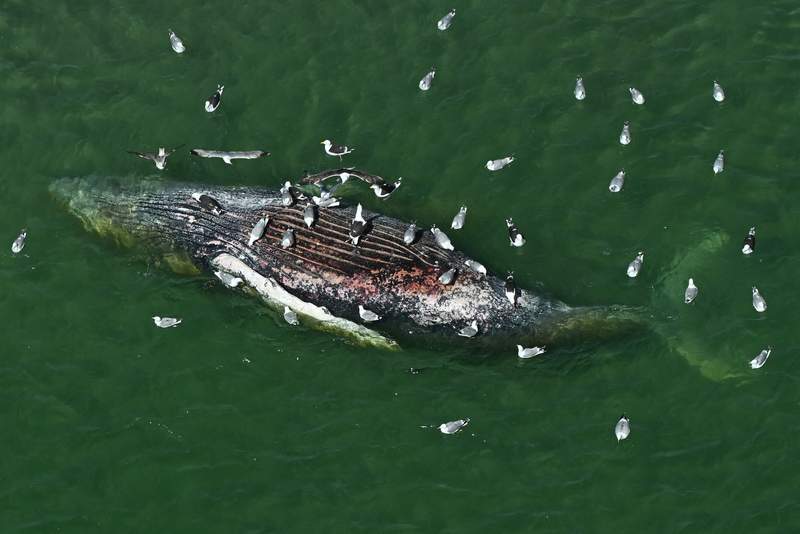
POLICY WIRE — Copenhagen, Denmark — Europe, it seems, has an insatiable appetite for narrative, even when that narrative swims far beyond human comprehension. For weeks, Germany fixated on ‘Timmy,’ a male sperm whale, as if his Atlantic meanderings held the key to Brussels’ next directive. He’d captured hearts, spawned hashtags, and become a marine celebrity, navigating the intricate currents of continental adoration. Now, he’s just a tragic echo.
His story, which began as an endearing, unusual migration into the Baltic and North Seas – an atypical playground for a deep-sea creature of his stature – ended predictably, sadly, off the Danish coast. Authorities confirmed what many had feared: Timmy, the enigmatic cetacean who’d briefly made himself an accidental, unwitting ambassador for something… well, something vaguely ecological, was dead. And wasn’t that just the way it goes?
It’s not every day a lone whale commands headlines typically reserved for inflation figures or parliamentary bickering. But Timmy did. He was, for a spell, Germany’s sweetheart, the massive, magnificent distraction from whatever actual crises were unfolding. Danish maritime authorities located the immense carcass, bringing a somber close to a saga that had transfixed millions. Experts say it’s not unusual for sperm whales to strand, but Timmy’s journey had, for reasons unclear, become an emotional investment.
“We’re not just mourning a marine mammal; we’re contemplating our place in a shared, fragile ecosystem. Timmy, in his own way, held a mirror to our anxieties,” remarked Bettina Vogel, Germany’s Deputy Environment Minister, her voice tinged with a solemn gravitas often reserved for heads of state. She wasn’t wrong. Because for all the policy papers on biodiversity loss, sometimes it takes one large, charismatic creature to penetrate the public consciousness. A bit too late, wouldn’t you say?
But while the German public collectively clutched its pearls over a whale’s demise, the ocean’s silent suffering — an invisible, relentless assault — continues largely unchecked. Consider the stark numbers: a 2021 study by the Zoological Society of London reported that 75% of marine mammals in European waters showed signs of exposure to plastics. Seventy-five percent! That’s not a narrative; it’s an apocalypse in slow motion. Yet, it rarely generates the same urgent, collective breath-holding as a single, charismatic wanderer.
This sort of concentrated, almost theatrical, mourning over individual animals often feels a touch performative when viewed against the backdrop of systemic ecological destruction. It’s a sentiment not lost on regions often at the sharp end of environmental degradation. In Pakistan, for example, coastal fishing communities along the Arabian Sea face ever-increasing threats from plastic pollution, oil spills, and extreme weather events—impacts that strip livelihoods and devastate entire marine habitats. You don’t see those struggling populations becoming global mascots; their daily fight for survival gets less column inches than a wayward cetacean in Northern Europe. But, that’s the media landscape we’ve built, isn’t it?
📄 POLICY WIRE WHITEPAPER PUBLISHED: PAKISTAN'S NATIONAL SECURITY POLICY PRIORITIES
👉 READ BY CLICKING HEREProfessor Lars Jensen, a marine biologist with the Danish Technical University, offered a more clinical, if equally grim, perspective. “Its journey was indeed remarkable, an outlier. But the sheer pressures on such magnificent creatures in our increasingly industrialized and polluted waters are immense. Timmy’s death is a stark reminder of what they face every single day, often far from our cameras — and concerns.”
One wonders what policymakers really take from these spectacles. Is it genuine introspection? Or is it simply a temporary public relations opportunity, a moment to emote before pivoting back to the prosaic?
What This Means
Timmy’s death isn’t just an ecological footnote; it’s a political bellwether for what captures and deflects public attention in advanced Western economies. While nations grapple with complex issues—energy crises, geopolitical realignments, the persistent drag of inflation—a singular whale, for a fleeting moment, unified a populace in shared anxiety and eventual grief. This public yearning for simpler narratives, even tragic ones involving animals, sometimes serves as a convenient smokescreen, allowing politicians to demonstrate empathy without confronting deeper, structural environmental policy failures.
It highlights a stark disparity: the disproportionate emotional capital invested in photogenic, rare occurrences versus the chronic, often devastating, environmental assaults plaguing less visible regions. This human tendency to anthropomorphize and sensationalize individual cases, while neglecting the aggregate data, poses a serious challenge for meaningful policy change. It’s tough to galvanize support for incremental improvements in water quality or sustainable fishing practices when the public’s focus is on the drama of a singular animal’s life and death. The question isn’t whether we care for animals; it’s what forms that caring takes, and which narratives gain traction, echoing perhaps like the strategic media pushes seen in everything from sports to geopolitics (see: Gridiron Guruship). And it implies that our global consciousness is both hyper-connected and profoundly fragmented, often chasing after emotional spikes rather than sustained engagement with truly consequential, if less dramatic, threats. It’s an approach to global impact that too often sidesteps real, infrastructural problems, not unlike the dilemmas explored in Bangkok’s Tragic Commute.