
Moscow’s Phantom Peace: Russia Draws a Red Line for Post-War Ukraine Forces
POLICY WIRE — Geneva, Switzerland — The specter of peace, it seems, isn’t enough to quell the old impulses of conflict. Even before any ink can dry on a theoretical accord, the groundwork for...

POLICY WIRE — Geneva, Switzerland — The specter of peace, it seems, isn’t enough to quell the old impulses of conflict. Even before any ink can dry on a theoretical accord, the groundwork for the next confrontation is already being laid—a bleak reminder of the durable nature of geopolitical mistrust. It’s almost as if some players aren’t just looking for an endgame; they’re already plotting the next move on a chessboard that seems destined for perpetual motion.
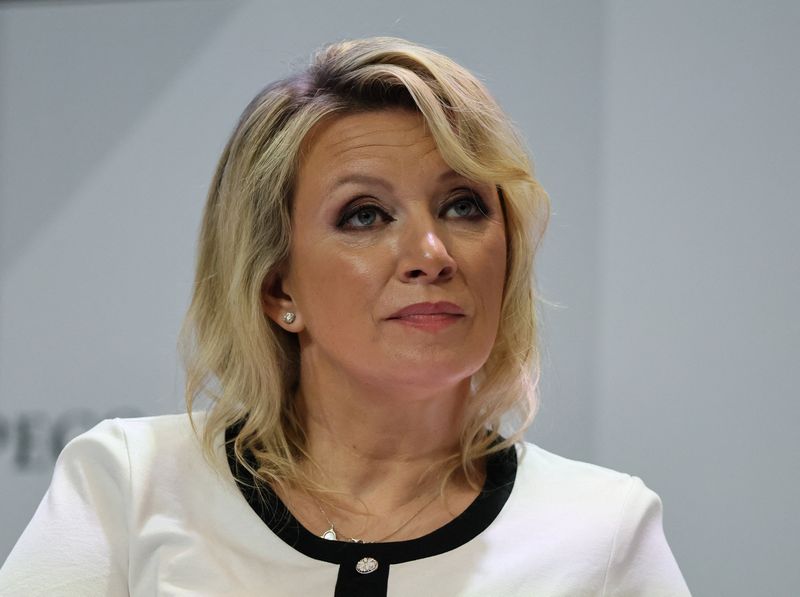
Russia, in a pronouncement delivered with characteristic bluntness, recently articulated a clear warning. Any future “foreign troops” deployed to the conflict zone in “Ukraine” subsequent to “after a peace deal” has been brokered would find themselves labeled as “legitimate targets.” Not just undesirable, mind you, but legitimate targets. This isn’t just a threat; it’s a pre-emptive strike at the very notion of a negotiated, internationally supervised calm. [QUOTE_PLACEHOLDER]
Because, really, who exactly are these hypothetical “foreign troops” meant to be? Peacekeepers? Monitors? Advisers tasked with rebuilding a shattered nation? Moscow isn’t distinguishing, is it? This isn’t just about Ukraine’s immediate future, but the entire international framework of post-conflict stabilization. It signals a hard line, perhaps intended to deter any Western aspirations of a sustained security presence—even one designed to bolster a fledgling peace. The messaging, folks, couldn’t be clearer.
The implied stakes here couldn’t be higher. Any European nation or NATO ally considering a robust role in a post-conflict Ukraine is now put on notice. This isn’t a diplomatic nicety; it’s a direct warning that flips the script on what peace often entails—a period of stabilization and observation by neutral or international forces. It begs the question: What kind of “peace deal” is Russia contemplating if its enforcement mechanisms are immediately subject to hostile engagement? A very specific, very Russian kind, it would seem.
And let’s not pretend this doesn’t ripple across the globe. Take a moment to consider Pakistan. A nation that, while geographically distant, navigates its own complex relationships with major global powers, including historical ties to various security blocs and current strategic partnerships. For countries like Pakistan, observing such an aggressive posture against potential international peacekeepers creates a chilling precedent. It forces a recalibration of what international engagement means in conflict zones. Does it imply that a security architecture supported by Muslim-majority nations, or nations from the Global South generally, would be viewed any differently? One can only assume the answer would be a resounding, — and unsettling, no.
But the broader implications don’t stop there. This rhetoric comes at a time when global military spending hit an unprecedented $2.44 trillion in 2023, according to the Stockholm International Peace Research Institute (SIPRI)—a staggering 6.8% increase from the previous year. This escalating spending reflects a worldwide trend towards increased militarization, not détente. And Russia’s statement fits snugly into that rather grim narrative, underscoring a hardening of positions, not a softening towards conciliation.
It’s an aggressive play, meant to constrict the potential landscape of any future Ukrainian sovereignty, denying it the right to choose its security partners or its pathway to reconstruction with international support. We’re not talking about military aid during an active war here. We’re talking about a potential scenario *after* the fighting has ostensibly stopped, creating a Catch-22 for international community involvement.
What This Means
This Russian declaration, stripped of its diplomatic niceties, does a few things. First, politically, it’s a clever if cynical tactic to pre-emptively limit any Western-backed security guarantees for Ukraine in a future settlement. It raises the entry cost, complicating the prospect of any significant NATO or EU post-conflict presence, even under the guise of stabilization. It’s designed to sow hesitation, making any allied commitment to “foreign troops” feel like an unacceptably risky gamble against a nuclear power. That, naturally, keeps Ukraine isolated, even in peace.
Economically, this sort of threat extends the timeline of global instability. Investor confidence in Eastern Europe, already shaky, certainly won’t get a boost. Companies eyeing post-war reconstruction opportunities might think twice, calculating the risk of their personnel, or even their civilian infrastructure projects, somehow getting entangled in this vague “legitimate targets” designation. It means continued elevated energy prices for countries dependent on Russian resources—or scrambling to find alternatives—affecting everything from the bazaars of Lahore to the markets of London. It’s a persistent cloud over recovery efforts, making every “peace deal” look less like an end, and more like a tactical pause. One can also see why countries like China are keeping a close eye on global dynamics like this.
But there’s also the element of subtle irony at play. Moscow’s insistence on labeling potential peacekeepers as targets highlights an underlying fear: that a truly secure and internationally integrated Ukraine would be antithetical to its own long-term strategic goals. Because in this grand game, stability is sometimes less desired than perpetual leverage, isn’t it? And frankly, it shows an almost performative disdain for the international norms that supposedly govern conflict resolution.
It’s not just an assertion of sovereign rights over disputed territories; it’s a claim of a veto over how that “peace” might look to anyone else. We’ve come to a point where a peace proposal seems to start not with olive branches, but with a new list of acceptable targets. It’s a challenging time for diplomacy, an awful time for anyone banking on a quiet resolution. And we’re still just talking about a theoretical future.