

Interrogation Nation: Progressive Purity Tests on Israel and the Fraying Left
POLICY WIRE — Washington, D.C. — America’s political stage, these days, feels less like a forum for robust debate and more like an arena for ideological jousting. Forget nuance; it’s a...

POLICY WIRE — Washington, D.C. — America’s political stage, these days, feels less like a forum for robust debate and more like an arena for ideological jousting. Forget nuance; it’s a high-stakes performance, often playing out under the unforgiving glare of cable news lights. Politicians, for all their talk of principle, often find themselves trapped in a theater where the script demands an answer not merely true, but ideologically pure.
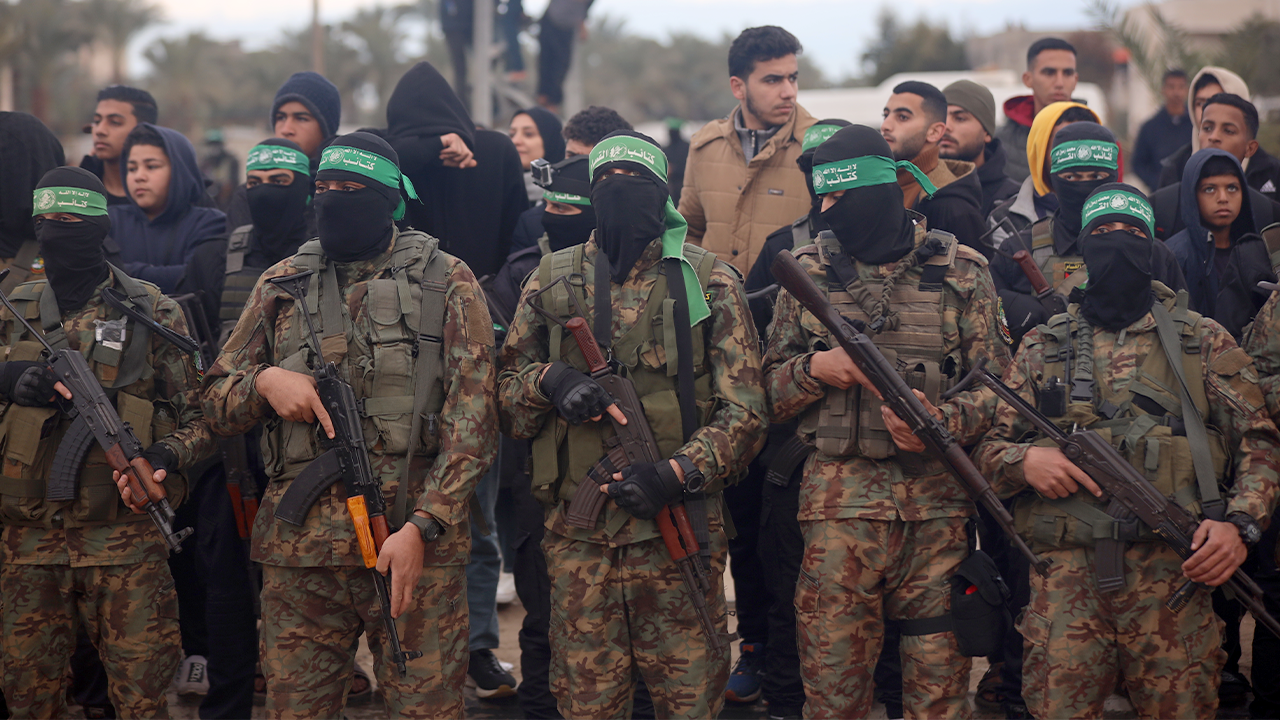
It’s into this gladiatorial contest that Congressman Ro Khanna, a Democrat from California, stepped recently, finding himself in a most unenviable position. A particular interview, hosted by a commentator generally recognized as being on the more progressive end of the media spectrum, sought not just an opinion, but a judgment—a moral and geopolitical one, laid bare for all to dissect. The central thrust? Whether Hamas had any conceivable justification for its actions on October 7.
This isn’t about mere policy disagreement anymore, you see. It’s about fundamental interpretations of resistance, occupation, — and the very definitions of terror. And these conversations, amplified by screens — and echo chambers, don’t just stay in a Brooklyn studio or a D.C. newsroom. They bounce around the globe, shaping perceptions, feeding narratives—sometimes incendiary ones—far beyond the beltway.
The host, unyielding, began with a line of questioning that probed at the very foundation of U.S. foreign policy and, implicitly, the U.S. ally. The goal, it seemed, wasn’t to understand Khanna’s perspective, but to see if it aligned with a specific, hardened view prevalent on parts of the left. Khanna was asked whether [QUOTE_PLACEHOLDER]. He was then pressed on whether, from the perspective of an occupied people, certain acts might be seen as [QUOTE_PLACEHOLDER]. It wasn’t just asking about October 7th, but probing the larger context of decades of conflict, rights, — and suffering.
Khanna, for his part, navigated this minefield with the practiced dexterity of a seasoned politician. He articulated his stance clearly. And he did so without losing his cool, managing to condemn the specific acts of violence. He insisted that [QUOTE_PLACEHOLDER], affirming the actions were terrorism — and illegal. But the line of inquiry didn’t relent; it dug deeper, pushing him on the historical grievances that might lead to such desperation, challenging him on the systemic issues preceding the violence. Because in these interviews, you’re not just speaking for yourself; you’re speaking for your wing of the party, your constituents, and, increasingly, for an imagined global audience.
Consider the ripple effect of such dialogues in a place like Pakistan, for instance, or across the wider Muslim world. To many in these regions, the Western media’s portrayal of the Israel-Palestine conflict often appears myopic, fixated on immediate events while conveniently sidelining decades of dispossession and daily indignities. When a U.S. progressive leader struggles to articulate a condemnation that *also* acknowledges historical context, it doesn’t just pass unnoticed. It solidifies a perception that even the American left operates within a framework that implicitly validates, or at least normalizes, the suffering of Palestinians. This fuels skepticism toward U.S. pronouncements on human rights or international law, complicating diplomatic efforts and potentially driving public opinion further towards more extreme interpretations of global events—including, tellingly, the ongoing geopolitical tussle over energy resources, where shifting allegiances are already quite apparent in certain corners. You just can’t escape it.
A recent data analysis by the Pew Research Center in late 2023 showed that American partisan divides on the Israeli-Palestinian conflict have widened considerably over the past decade, with Democrats far more likely than Republicans to sympathize with Palestinians. This specific interview, then, illustrates precisely how those intra-party divisions become intensely visible.
What Khanna’s ordeal highlights isn’t just one Congressman’s uncomfortable few minutes. It’s about the increasing litmus testing within the Democratic party—a constant drive to confirm adherence to the burgeoning progressive catechism on complex geopolitical matters. And when figures like Khanna don’t perfectly toe a certain line, even with condemnation in hand, they face swift, often brutal, correction from their own ideological brethren. It’s a circular firing squad, sometimes, disguised as journalism.
What This Means
This episode reflects a significant tension within the modern progressive movement: the struggle to reconcile condemnations of terrorism with an unwavering commitment to anti-colonialist narratives and the rights of occupied peoples. For politicians, it’s a tightrope walk—condemning the explicit violence while also acknowledging the root causes that fuel desperation, without being seen as providing rhetorical cover for heinous acts. Failing to strike that balance can cost them dearly, not just in votes, but in credibility among key activist groups.
Economically, the political fallout from such intense ideological debates has indirect but measurable impacts. Businesses dependent on international relations, or those operating in regions sensitive to geopolitical sentiment, often face increased instability when U.S. foreign policy signals appear muddled or inconsistent. the fracturing of traditional political alliances over issues like the Israeli-Palestinian conflict can complicate efforts to form unified fronts against other economic or strategic challenges, impacting trade agreements, defense spending, and investment flows. We’ve seen similar dynamics at play when it comes to resource acquisition, where countries are shifting alliances based on perceived geopolitical alignments. The public, always fickle, doesn’t always appreciate such granular distinction, particularly when it touches on raw emotional nerves. For the policy establishment, it suggests a narrowing bandwidth for nuanced international dialogue, threatening to reduce complex global challenges into stark, binary moral choices with little room for error.