


The Art of the Finish: How Arsenal’s Tactical Game Transforms Careers on Europe’s Grand Stage
POLICY WIRE — London, UK — The modern football match, with its dizzying substitutions and marathon injury times, isn’t simply two 45-minute halves anymore. No, it’s often an hour of cautious, almost...

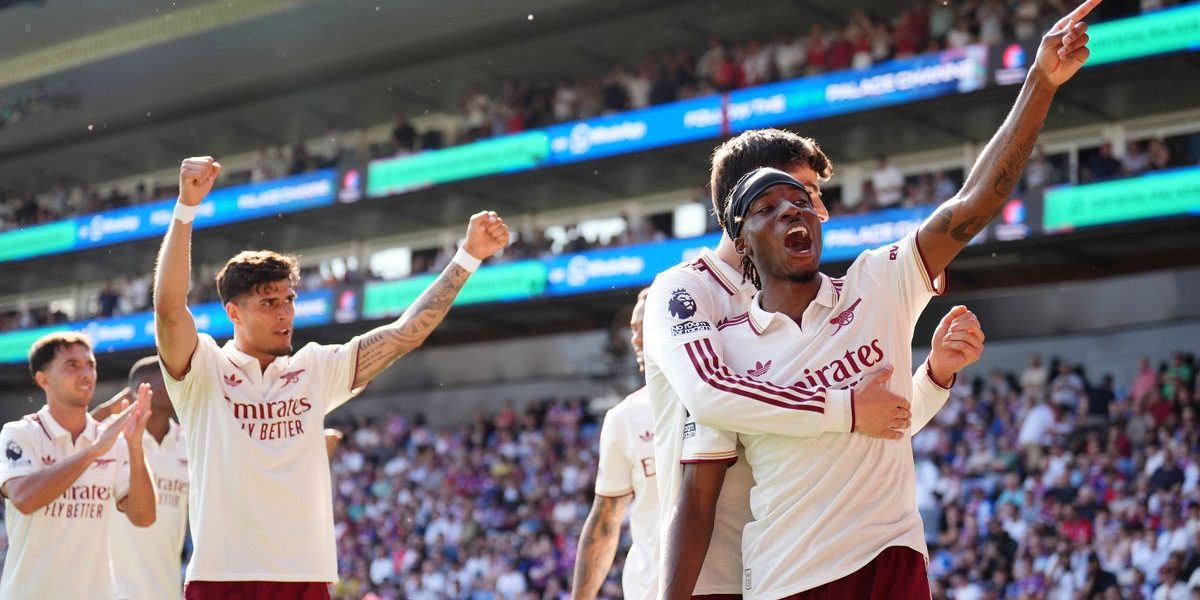
POLICY WIRE — London, UK — The modern football match, with its dizzying substitutions and marathon injury times, isn’t simply two 45-minute halves anymore. No, it’s often an hour of cautious, almost chess-like maneuvering, followed by a chaotic, improvisational sprint to the finish line—a theatre where specialized roles now flourish, particularly the enigmatic ‘finisher’. And Arsenal’s Noni Madueke, young and ostensibly a backup, has inadvertently become the poster child for this evolving craft.
It’s not the flashy lead role, naturally. His season has been a curious case study, an almost gravitational tether to superstar Bukayo Saka’s availability. They’ve danced around each other on the pitch, occasionally sharing the stage, but mostly, it’s one or the other. It’s a dynamic that spotlights the ruthlessly efficient, almost corporate, logic driving top-tier football now, where individual glory often bows to tactical necessity. Madueke, for all his evident talent, clocks an average of just 53 minutes per appearance this season, an intriguing statistic from analyst reports that paints a stark picture of his sub-role, not his potential.
Madueke himself doesn’t sugarcoat it, even if there’s an undercurrent of acceptance in his tone. “It’s been different for sure. But B is a top player,” he’d confided to reporters, a nod to the hierarchy. “We kind of fight on all fronts – same for England, same for Arsenal. But it’s been good. We know that we’re pulling in the same direction.” That’s the party line, isn’t it? The collective ethos overriding personal ambition—a narrative carefully curated, no doubt, by management.
But the numbers speak, don’t they? And the unspoken tensions hover, even in the most tightly run ships. The club’s tactical wizard, Mikel Arteta, champions a philosophy of ‘profiles’—a bureaucratic term for differing skill sets, ready for deployment like assets on a ledger. Madueke is Saka’s antithesis in some ways, an alternative weapon, designed to run directly, relentlessly, towards the byline. “Every player, irrespective of minutes, brings a unique dimension to our collective,” Arteta reportedly remarked to club officials last month, a statement that manages to be both profoundly inclusive and subtly depersonalizing in its corporate efficiency. Because, really, who wants to be just a ‘dimension’?
This nuanced squad management isn’t just an Arsenal quirk. It’s endemic in Europe’s elite clubs, a global game responding to diverse fan bases—including the surging viewership from regions like South Asia. Football here isn’t just entertainment; it’s a spectacle of economic power — and cultural export. Data from FIFA indicated that for the 2022 World Cup, an astonishing 32% of total global viewership stemmed from the Asia-Pacific region, with significant segments from nations like Pakistan and India, underscoring the universal resonance of these players and their high-stakes sagas. It’s why the narrative of a team’s unity, even amidst internal competition, becomes so absolutely crucial for brand coherence.
And so, Madueke continues to perfect his craft, preparing for the Champions League final against PSG, an event that casts a long, almost impossible shadow. His influence isn’t merely about goals, though he delivered one in the pivotal 3-1 win over Bayern Munich. It’s about disrupting, creating momentum, transforming static scenarios into fluid, aggressive attacks when bodies tire and minds wander. He’s a second-half weapon, an arrow from Arteta’s quiver when the initial assault has blunted.
📄 POLICY WIRE WHITEPAPER PUBLISHED: PAKISTAN'S NATIONAL SECURITY POLICY PRIORITIES
👉 READ BY CLICKING HERE“He’s instilled in us a dedication to the minutiae, those tiny aspects that compound into victory or defeat,” Madueke said of Arteta. “You learn to respect that, you internalize it.” It’s a statement reflecting the precise, almost obsessive focus required at this level, where the slightest misstep can cost millions—not just in prize money, but in global prestige. They’ve just bagged the Premier League, but Madueke’s pragmatic. “The Premier League will be irrelevant on the night. It will be full focus on the Champions League, just giving our all and trying to make sure we bring that to the final.” There’s no let-up, never is.
What This Means
This Madueke-Saka dynamic offers a telling glimpse into the hyper-specialization driving top-flight football careers today. Gone are the days when players simply occupied a fixed position for 90 minutes, week in, week out. Now, players like Madueke aren’t just battling opponents; they’re navigating an intricate system of squad rotation, tactical profiling, and performance metrics, all under immense pressure. Their financial value, their future contracts—it all hinges on how adeptly they adapt to these shifting expectations.
Economically, it makes sense. A versatile squad minimizes reliance on any single, ultra-expensive star, distributing the strategic and financial risk. Politically, it’s about maintaining a delicate balance within the dressing room, fostering collective ambition while acknowledging individual aspiration. The ability to deploy different ‘profiles’ gives coaches like Arteta greater leverage, shaping the flow of the game rather than simply reacting. This also means young players must not only hone their core skills but develop secondary competencies, becoming strategic chess pieces rather than just ‘footballers’. Madueke’s journey isn’t just his; it’s a microcosm of the sport’s ruthless evolution, a policy of distributed power at play, redefining success in an increasingly intense arena. And sometimes, it’s just about having the grit to make an impact, even if it’s for 20 minutes.