


IPL’s 15-Year-Old Firestorm: India’s Cricket Gold Rush Finds a New Prodigy
POLICY WIRE — Jaipur, India — Forget the usual slow grind of athletic maturation; the world’s most lucrative cricket league just ripped up the rulebook. In a tournament long obsessed with...

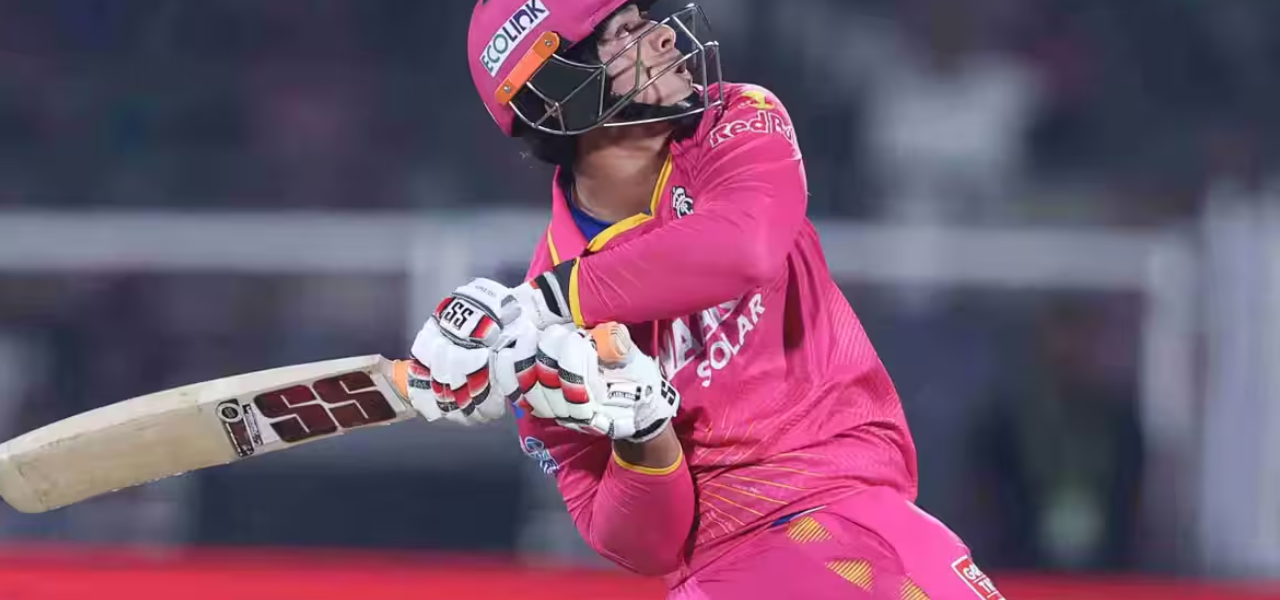
POLICY WIRE — Jaipur, India — Forget the usual slow grind of athletic maturation; the world’s most lucrative cricket league just ripped up the rulebook. In a tournament long obsessed with celebrity and multi-million dollar contracts, a mere child has, quite literally, smacked it out of the park. At fifteen years old, Vaibhav Sooryavanshi isn’t just playing in the Indian Premier League (IPL); he’s tearing it apart. And honestly, it’s a bit jarring—a perfectly structured spectacle suddenly interrupted by a force of nature who probably still has homework.
It was against the Gujarat Titans that Sooryavanshi, despite his team the Rajasthan Royals’ 77-run pasting, once again stole the headlines. You’d think the loss would overshadow everything, wouldn’t you? Not when a kid’s hitting bombs from his very first ball, making grown, seasoned professionals look decidedly sluggish. He’s this season’s indisputable breakout act, having already amassed 440 runs in 11 matches. Not bad for someone who likely can’t even legally drive.
Ravichandran Ashwin, India’s seasoned spin maestro — and a man not given to hyperbole, seems to be a little in awe. “He’s leaving no stone unturned,” Ashwin observed on JioHotstar, sounding less like a critic and more like an impressed parent. “Putting every ounce of force he can into the cricket ball. There are very few windows in your cricketing career where you can absolutely enjoy your cricket, and he’s only 15 years old. I think we should just let him be. There’s no point asking him to do things he shouldn’t be doing at this stage of his career.” It’s a rare, almost protective endorsement for a player this green, but then, Sooryavanshi isn’t playing green. He’s playing fearless.
But the numbers? They speak louder than any pundit. His average sits at a respectable 40.00. But that strike rate—that unhinged, brutal strike rate—is 236.56, according to IPL statistics. That’s not just aggressive; that’s a declaration of intent, a personal war against inertia. His hundred against Sunrisers Hyderabad, achieved in just 37 balls, was the second-fastest by an Indian in IPL history. He even holds the record for most sixes in powerplays, with 32 maximums this season. You can’t ignore a kid who’s breaking records faster than most can even process what he’s doing. Because he’s doing it with such an insouciance.
This phenomenal display hasn’t gone unnoticed in India’s labyrinthine cricketing corridors. A senior official within the Board of Control for Cricket in India (BCCI), speaking off the record, conveyed a mix of thrill and tempered caution. “Look, the raw talent is undeniable,” the official conceded. “Every so often, a generational player emerges, — and Vaibhav certainly has that spark. We’re excited, yes, absolutely. But managing such precocious talent, ensuring he develops correctly, away from excessive pressure and expectations—that’s where the real challenge lies for us.” It’s a tricky tightrope, balancing hype with prudent long-term development.
And what’s interesting, this sort of breakout player—a teenager who seemingly rewrites the script overnight—it doesn’t just create ripples in Mumbai or Bengaluru. No, it sends waves across the entire subcontinent. From Karachi to Dhaka, from Kabul to Colombo, cricket is more than a game; it’s a shared obsession, a passion that often transcends geopolitical squabbles. India’s ability to continually churn out such raw, explosive talent through the IPL system isn’t just about sports; it’s a massive amplifier for India’s cultural influence and soft power across the region. Imagine the discussions around evening tea in Lahore or Islamabad. But of course, a star of this magnitude—and so young—he represents a specific kind of triumph.
His latest cameo, a quickfire 36 off 16 balls, showed it again. He wants to hit every ball for six. And why wouldn’t he? He usually does. It’s almost a statement of pure, unfiltered joy in aggression. He’s taking bowlers down. He’s putting on a show. And honestly, people are turning up just to watch him.
What This Means
Sooryavanshi’s eruption onto the national stage is more than a mere sporting headline; it’s a fascinating policy case study. Economically, his rise underscores the IPL’s unparalleled prowess as a talent incubator, driving multi-billion dollar broadcasting deals and cementing India’s position as global cricket’s financial behemoth. The league isn’t just generating revenue; it’s creating individual wealth and inspiring a generation, pushing untold thousands into increasingly professionalized cricket pathways.
Politically, the constant emergence of such stars bolsters India’s image as a dynamic, youthful nation on the ascendancy, wielding considerable cultural heft in South Asia and the Muslim world where cricket enjoys quasi-religious status. It diverts from more fraught discussions—like, say, cross-border tensions or regional instability—to focus on a shared love for the game. But what’s less talked about is the implicit pressure. Can the BCCI truly shield this 15-year-old phenomenon from the intense commercial pull — and public expectation? Or will this prodigious spark, nurtured by an insatiable system, ultimately find itself prematurely burnt out? That’s the real policy challenge lurking behind every six he smashes: how to harvest genius without destroying it.