


The WNBA’s Sudden Hurricane: Caitlin Clark and the Unforeseen Economics of Stardom
POLICY WIRE — Washington, D.C. — Nobody, it seems, was truly prepared for the earthquake. Not the venerable WNBA, certainly not its established players, and most definitely not the...

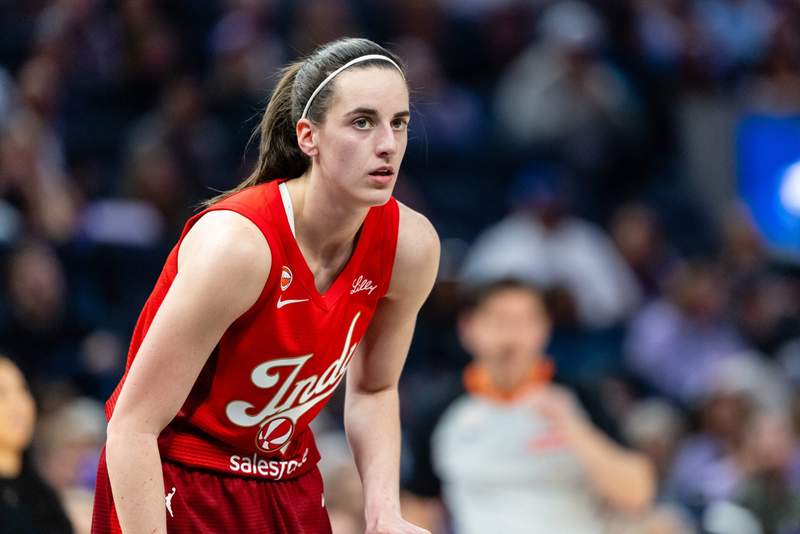
POLICY WIRE — Washington, D.C. — Nobody, it seems, was truly prepared for the earthquake. Not the venerable WNBA, certainly not its established players, and most definitely not the twenty-two-year-old dynamo at its epicenter. The ascent of Caitlin Clark, from collegiate phenomenon to professional lightning rod, wasn’t just a career jump; it was a detonation, reshaping the commercial landscape of women’s sports with such velocity that even she—the person experiencing it firsthand—describes being “thrown into the fire.”
It’s a curious turn of phrase, coming from an athlete who seemed genetically engineered for pressure, but it speaks volumes. Clark, fresh off a National Championship game appearance that felt like the capstone to an epochal college career, found herself hurtled into the pro ranks. Two days home, she recalled recently, was the sum total of her “offseason.” She was, for all intents and purposes, still juggling university assignments while attempting to master new offensive sets and professional-level physicality. You don’t often hear a professional athlete confessing they graduated, degree in hand, but couldn’t make the ceremony. “I was still finishing classes while playing my first WNBA games,” Clark put it plainly. That’s a schedule that’d snap lesser talents.
The speed, paradoxically, offered a perverse kind of mercy. “You don’t have time to process everything,” she admitted, suggesting the whirlwind actually shielded her from the full, crushing weight of the transformation. But that doesn’t mean it wasn’t brutal. Learning a new system, new teammates, living in a new city—all while carrying the financial expectations of an entire league on your shoulders. It’s a brutal reality check, even for someone who made a habit of shattering records at the collegiate level. The Indiana Fever, who snagged her as their first overall pick in 2024, wasn’t just drafting a point guard; they were acquiring a spectacle, an economic engine, and, by extension, an instant magnet for scrutiny. Every misstep, every airball, was amplified across traditional and social media, scrutinized by an audience several magnitudes larger than the league had ever previously commanded.
WNBA Commissioner Cathy Engelbert hasn’t shied away from acknowledging the seismic shifts. “Her impact’s undeniable,” Engelbert stated in a recent conference, her tone reflecting both awe and perhaps a touch of fatigue from the frantic pace. “We’ve seen metrics jump like never before. But it’s also presented unprecedented operational challenges—scaling up, managing sudden, intense scrutiny. It’s a fantastic problem to have, make no mistake, but a problem nonetheless.” Because even growth, when it arrives this fast, demands agile navigation and, sometimes, brute force adaptation. It’s akin to having a sleepy, small-town airport suddenly designated an international hub overnight—the infrastructure simply isn’t there, initially.
And the numbers? They don’t lie. The league has experienced an unprecedented surge in interest, with recent data showing a staggering 132% increase in viewership compared to last year’s season-to-date figures. That’s not a marginal bump; that’s an economic transformation on warp speed. Stadiums are selling out, merchandise flies off shelves, — and sponsorship dollars are flooding in. But for Clark, that translated to a glaring spotlight she had little time to acclimate to. She didn’t just join a team; she became the team, at least in the eyes of many. It’s a level of commercial responsibility that rarely falls to a rookie, regardless of their prodigious talent.
Even beyond the American sports landscape, the ‘Clark Effect’ holds resonance. In places like Karachi or Dhaka, where cricket typically dominates the sporting consciousness and women’s professional sports are only beginning to find their footing, snippets of her games or viral highlight reels inevitably filter through social media. It’s a subtle, ongoing recalibration of expectations, pushing against antiquated norms, slowly, perhaps imperceptibly to most, helping to chip away at the existing narratives around women in competitive environments. The narrative isn’t just about a star player; it’s about the very concept of women commanding global, economic attention through sport. It’s a different kind of policy shift, playing out on courts, not in legislatures.
“You’ve got communities talking basketball who never did before,” observed Indiana State Senator Patricia Gaines, whose district includes a swath of suburban Indianapolis. “It’s an economic boon, certainly for Indiana, but more than that, it’s shifting perceptions. Women’s sports aren’t niche anymore; they’re the main event. And honestly, it’s long overdue.”
What This Means
Clark’s rapid integration into the WNBA, coupled with her unprecedented drawing power, isn’t just a feel-good sports story; it’s a case study in market disruption. Economically, the league is grappling with sudden, explosive growth that existing infrastructure—everything from travel accommodations to media contracts—wasn’t designed for. This necessitates significant investment, renegotiations, — and strategic expansions. Politically, the narrative around women’s sports shifts from a progressive ideal to a proven economic engine. This opens doors for increased public funding for sports programs, greater advocacy for equal pay and facilities, and a general elevation of women athletes in the cultural discourse. There’s a subtle but powerful signal sent to societies globally: that the talent and marketability of female athletes are boundless, a truth that, when monetized effectively, can erode older, restrictive paradigms.