


Manhattan’s Siren Song for a Titan: The Perplexing Demand Echoing Globally
POLICY WIRE — New York, USA — A peculiar symphony of collective desire, rather than triumph, echoed through the canyons of Manhattan recently. Forget celebratory roars for an Eastern Conference title...

POLICY WIRE — New York, USA — A peculiar symphony of collective desire, rather than triumph, echoed through the canyons of Manhattan recently. Forget celebratory roars for an Eastern Conference title – the discerning ears of onlookers (and, let’s be honest, many less-than-discerning social media feeds) caught a different, somewhat audacious chorus: We want Wemby! We want Wemby!
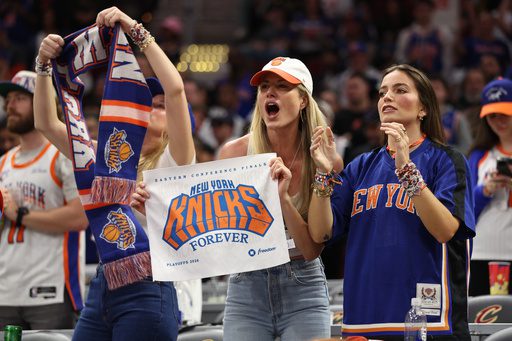
This wasn’t a protest. No, this was the fervent, almost desperate, plea of New York Knicks fans, whose team, despite making it to the NBA Finals, apparently harbors aspirations beyond their immediate roster’s capabilities. A curious thing, isn’t it? To stand at the precipice of championship contention and yet clamor for the prodigious talent of an opponent, a rookie no less, who might be preventing your victory.
It’s an emotional paradox, really. Here’s a team, the Knicks, riding an eleven-game winning streak. They pulled themselves from a 2-1 deficit against Atlanta, then swept Philadelphia, then swept Cleveland. That’s a heck of a run, a bona fide joyride for a fan base starved for this kind of dominance for what feels like eons. And yet, this underlying current of wanting more—or specifically, wanting Victor Wembanyama—persists, bubbling up on social media and spilling into the actual streets of the city that supposedly never sleeps (but apparently always wants more shiny new toys). It wasn’t just idle chatter either; videos capturing fans shouting We want Wemby!
after Game 1 of the East finals against the Cavaliers were hardly difficult to find. They were everywhere. [QUOTE_PLACEHOLDER]
Across the continent, away from the celebratory (and yet acquisitive) chaos of New York, a coach for the very player these New Yorkers are coveting remained, perhaps tellingly, oblivious. San Antonio Spurs coach Mitch Johnson, preparing his squad for a pivotal Western Conference finals game, had not heard the chants. Not one peep. But he wasn’t exactly floored by the notion, either. I know New York’s on fire. They won so that city is obviously enjoying it and they’ve had a heck of a playoff run,
Johnson stated, offering a professional, albeit somewhat detached, acknowledgment. But unfortunately, I’ve been pretty locked-into what we’ve got going right here in front of us.
You can’t fault the man for his focus; the NBA playoffs demand precisely that kind of singular concentration. But his comments betray the interesting chasm between player/coach tunnel vision and the swirling, often nonsensical, vortex of modern sports fandom. Tip your cap to New York, for sure,
he conceded, granting the Knicks their due. They’re having a heck of a run.
One assumes, though, he wasn’t quite tipping it to the chants. Why would he?
Because, here’s the thing, this isn’t just about New York or the NBA. This cultural phenomenon—this audacious, almost entitled demand for a transcendent talent to augment an already successful entity—resonates far beyond the basketball courts of America. Social media ensures it. Globally, the reach of sports content is staggering. In fact, a recent report by Statista indicates that roughly 53% of internet users worldwide consume sports content online each month. That’s billions of eyes and ears, soaking up not just game results but also the granular, often absurd, narratives that form around them.
Think about it. That peculiar chant, broadcast from Manhattan’s asphalt, isn’t contained by geographical boundaries. It makes its way to Lahore, Karachi, and Islamabad, where an equally passionate, if not more intense, sports culture thrives. Football, cricket, field hockey – these sports elicit fierce loyalties in Pakistan. The collective fervor, the demanding of ‘more’, the often irrational hope associated with a single charismatic player to elevate a team to mythical status—it’s a shared human trait. Whether it’s an American basketball prodigy or a beloved Pakistani cricketer, the yearning for a singular force to transcend existing limitations is profoundly familiar. We’ve seen similar collective yearnings in Pakistan, whether for political change, economic stability, or even the rise of a new sporting hero. The channels through which these sentiments are expressed, often through social media and news reports picked up by global wire services, ensure that an unusual sports story in Oklahoma City becomes known in Khyber Pakhtunkhwa. It’s a testament to the inescapable, globalized churn of information, where a minor, if notable, fan outburst can become part of a larger conversation about the political economy of attention itself. You can’t hide anything, not really.
📄 POLICY WIRE WHITEPAPER PUBLISHED: PAKISTAN'S NATIONAL SECURITY POLICY PRIORITIES
👉 READ BY CLICKING HEREWhat This Means
This incident, seemingly trivial in the grand scheme of geopolitics, serves as a fascinating microcosm of several significant trends. Firstly, it highlights the increasingly complex dynamics of celebrity — and consumption in the digital age. Wembanyama isn’t just an athlete; he’s a brand, a symbol of potential, almost a commodity. Knicks fans, by chanting for him, aren’t just expressing a desire for better basketball; they’re demonstrating a consumerist mindset, believing the acquisition of a superstar is the ultimate shortcut to glory. It’s an immediate gratification culture, demanding the best, irrespective of current performance. And this demand isn’t limited to sports; it reflects a broader societal expectation that everything—from political leaders to technological advancements—should deliver instantaneous, superlative results. There’s less patience for organic growth.
Secondly, it illuminates the incredible power of media dissemination, particularly social media. A few dozen fans, captured on a smartphone, can create a global news item. This amplification of often-marginal voices has profound implications for public discourse, opinion-forming, and even political movements in regions like South Asia. Minor events can escalate rapidly, shaping narratives that might have otherwise remained localized. Lastly, the subtle irony of Johnson’s obliviousness versus the fans’ vocal ambition points to the perpetual disconnect between the protagonists on the field (or court) and the impassioned spectators off it. Athletes and coaches are focused on the tactical minutiae, while fans are swept up in the grand, often fantastical, narratives. It’s a fascinating, perpetual dialogue, sometimes a monologue, about aspiration versus reality in the cutthroat, globalized world of modern sports, with echoes that can’t help but seep into broader sociopolitical understandings.