


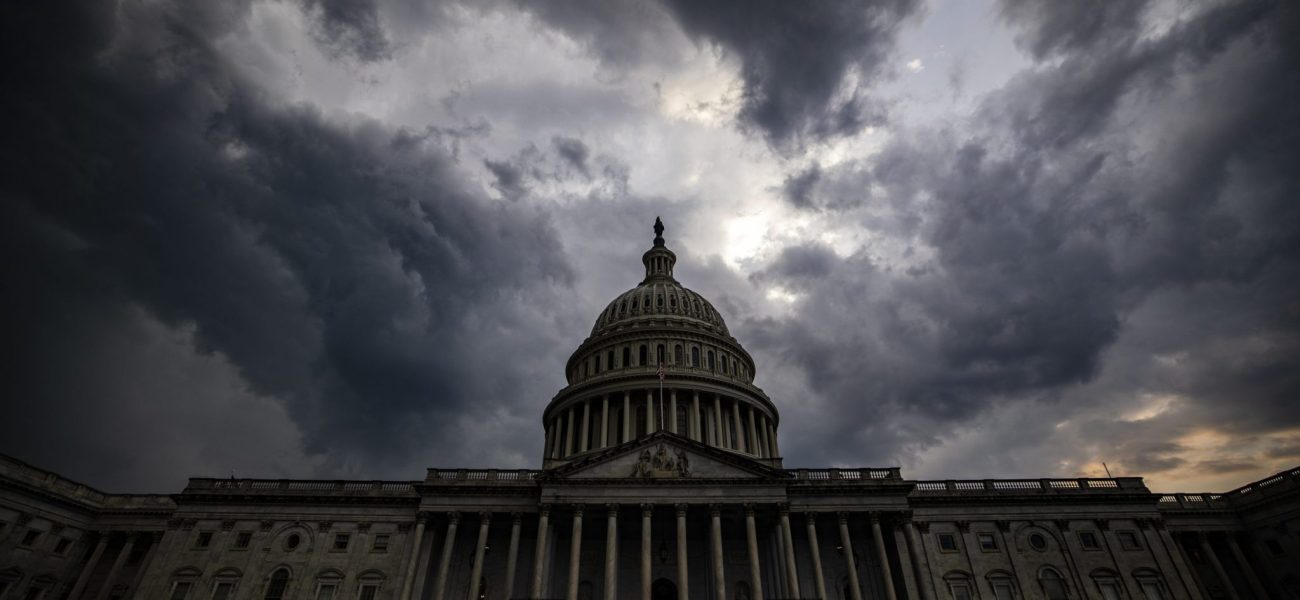
America’s Debt Serpent: When Bills Become Too Big to Bear, and What it Means for Us All
POLICY WIRE — Washington, D.C. — Imagine a homeowner with a mortgage payment so staggering, so absolutely monstrous, it devours their entire paycheck — then some. And every year,...

POLICY WIRE — Washington, D.C. — Imagine a homeowner with a mortgage payment so staggering, so absolutely monstrous, it devours their entire paycheck — then some. And every year, that payment balloons, irrespective of their income. Now, stretch that metaphor across the sprawling economy of the United States, and you start to get a sense of the precarious ledge upon which the world’s most powerful nation currently dangles.
It isn’t the headline-grabbing deficit, nor the sheer sum of money we collectively owe that keeps the smart folks up at night, though those are indeed mind-numbing. No, it’s the insidious creep of interest payments, the quiet but relentless toll on the national wallet. These payments, less exciting than grand infrastructure plans or military outlays, have become a beast all their own. And we’re not talking about some abstract financial theory; we’re talking about real dollars sucked straight from the public coffers, unable to fund schools, roads, or scientific research. We’ve got a system, see, where our bills are due, but the cash flow simply isn’t keeping up. It’s a structural imbalance that makes those loud, public debates about tax increases or spending cuts sound awfully quaint — a bit like rearranging deck chairs on a sinking battleship, some would argue. [QUOTE_PLACEHOLDER]
Because the consensus among economists — a rare enough commodity — seems to be coalescing around a genuinely alarming notion: even dramatically higher taxes might not plug this fiscal chasm. We’ve built up such a mountain of debt, particularly since the turn of the century (think dot-com bubble, two wars, a global financial meltdown, and a pandemic), that simply increasing Uncle Sam’s income isn’t enough to cover the freight. It’s akin to having a hundred leaks in the hull and trying to patch them with a roll of duct tape, while the tide just keeps on coming in.
The numbers themselves are staggering. The U.S. national debt, for instance, recently topped $34.5 trillion, according to the U.S. Treasury Department’s latest figures. Think about that for a second. Thirty-four-and-a-half trillion dollars. The interest paid on that debt has quickly become one of the government’s largest expenditures, easily surpassing spending on national defense in certain projections, and eating into the budgets of programs most Americans actually rely on. And as the Federal Reserve has cranked up interest rates to fight inflation, borrowing costs for the government have naturally shot through the roof. It’s a vicious cycle, you see. Higher rates mean bigger interest payments, which means more debt, which means — well, you get the picture.
So, what happens when this behemoth can’t roll over its debt, or its ability to borrow new money is questioned by global investors? A default crisis. Not a theoretical concept, mind you, but a gut-wrenching economic cataclysm that would make the 2008 meltdown look like a minor skirmish in comparison. Global markets would spasm. The dollar’s status as the world’s reserve currency — our seemingly unassailable competitive advantage — could evaporate overnight. And then, well, then things get truly ugly.
From the bustling streets of Karachi to the energy hubs of the Persian Gulf, a U.S. financial meltdown wouldn’t just be an inconvenience; it would be catastrophic. Countries like Pakistan, already navigating their own tricky fiscal waters and deeply reliant on dollar-denominated trade, remittances, and international aid (much of it from U.S.-backed institutions like the IMF), would face an immediate, existential threat. Their currency would be devalued even further against what would become a chaotic global landscape. Investment would flee. Aid pipelines would freeze. The already delicate balance of trade and stability in the broader South Asia and Muslim world would shatter, triggering untold political and social unrest. Their reliance on global financial stability — often predicated on American economic strength — isn’t a luxury; it’s the air they breathe. Without it, there’s just suffocation.
The irony isn’t lost on any long-time observer of Washington’s fiscal habits. We spend, and then we spend some more. And sometimes, you just know that even our political leadership doesn’t really have a full grasp of the scale of the monster we’ve been feeding. It’s become a problem so big, so endemic, that it transcends easy fixes or partisan posturing. You just can’t gloss over it with talking points anymore.
What This Means
The trajectory of U.S. debt and its interest payments points to a coming political and economic reckoning, not just for Washington but for the global order it anchors. Domestically, the fiscal crunch will increasingly constrain policymakers’ ability to respond to future crises, whether they’re recessions, natural disasters, or international conflicts. Imagine trying to mount a robust defense or kickstart an ailing economy when a quarter of your revenue is dedicated solely to paying the bank’s interest. The result? A hollowed-out public sector and a political class forced into unpopular, brutal choices — or, more likely, prolonged paralysis.
Internationally, this crisis directly undermines U.S. influence. If the U.S. dollar wobbles, if global confidence in American financial stewardship erodes, then alternatives — like the Chinese Yuan — become more appealing, chipping away at Washington’s soft power and strategic leverage. It means nations reliant on U.S. stability, from Europe to Southeast Asia, will start to diversify their risks, potentially leading to a more fractured, less predictable geopolitical landscape. China’s gray zone tactics in places like Taiwan, for example, could suddenly feel a lot bolder if they perceive America to be distracted and financially hobbled. The message is simple, yet stark: America can’t be a global leader if it can’t manage its own checkbook.
And then there’s the long game. Because this isn’t just about avoiding a default next week. This is about who pays, how they pay, and whether future generations are inheriting a solvent nation or a balance sheet drenched in red ink. It’s a slow-moving train wreck, but the tracks are clear. The question now isn’t if it’s coming, but how violently it derails — and whether anyone has the courage to pull the emergency brake before it’s too late. History won’t be kind to an era that saw the problem coming — and did precious little to truly address it.