

Billion-Dollar Bastion: GOP Hooks White House ‘Ballroom Fortress’ to Contentious Border Funds
POLICY WIRE — WASHINGTON, D.C. — A sum of money, prodigious enough to fund several small nations’ defense budgets, now stands tethered to a decidedly domestic, almost surreal, proposition:...

POLICY WIRE — WASHINGTON, D.C. — A sum of money, prodigious enough to fund several small nations’ defense budgets, now stands tethered to a decidedly domestic, almost surreal, proposition: fortifying a White House ballroom. This isn’t merely about presidential comfort; it’s about a proposed $1 billion congressional allocation for White House security enhancements — a gargantuan figure — bundled into a partisan fiscal battle over immigration enforcement, all sparked by a rather undignified incident at a press dinner.
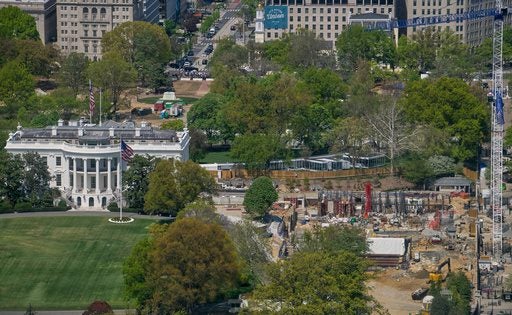
It began with a scare. After an individual, Cole Tomas Allen, allegedly stormed the White House Correspondents’ Association dinner with a cache of weapons, a security chink was perceived. And thus, Senate Republicans moved with alacrity. Their latest legislative maneuver, unveiled late Monday, earmarks a colossal billion dollars for the U.S. Secret Service. This isn’t for frontline agents, mind you, but specifically for “security adjustments and upgrades” tied to President Donald Trump’s much-discussed ballroom project. It’s a project he — and his party have championed with considerable zeal.
The legislation articulates a vision of enhanced security, encompassing “above-ground and below-ground security features.” But, crucially, it specifies that this largesse cannot be diverted to “non-security elements.” So, no new chandeliers, it seems. Davis Ingle, the White House spokesperson, lauded the GOP’s foresight, characterizing the funds as “long overdue.” He asserted it would “provide the United States Secret Service with the resources they need to fully and completely harden the White House complex,” along with their “many other critical missions.” One wonders what “fully and completely harden” entails beyond what’s already one of the world’s most secure addresses.
Still, this billion-dollar bounty isn’t a standalone item. It’s embedded within a broader bill destined to bankroll Immigration and Customs Enforcement (ICE) and Border Patrol. Democrats, it’s worth noting, haven’t just been quibbling; they’ve been actively blocking funds for both agencies since mid-February. Congress did manage to pass bipartisan legislation for the rest of the Homeland Security Department in April, ending a record-long shutdown, but the GOP, with characteristic bluntness, is using this partisan budget maneuver to force through the ICE and Border Patrol dollars, alongside the ballroom’s metamorphosis.
The House, bless its deliberative heart, hasn’t yet unveiled its own version. But the Senate, it’s anticipated, will commence voting on its iteration next week. The precise deployment of the $1 billion remains, frankly, opaque. It’s also vastly exceeds the estimated $400 million initially floated for the ballroom’s construction alone. White House court documents have previously detailed a “heavily fortified” East Wing project, complete with bomb shelters, military installations, and even a subterranean medical facility beneath the planned ballroom. President Trump himself has previously opined that it should feature bulletproof glass and possess the capability to repel drone attacks. (He really does think of everything, doesn’t he?)
The National Trust for Historic Preservation has, predictably, sued to halt construction, though a federal appeals court last month permitted the project to proceed for now. Initially, the White House suggested private funding would cover construction, with public funds addressing security. Yet, some Republicans now champion public money for the entirety, using the dinner’s “security breach” as compelling evidence that the President needs an impenetrable venue for his official functions. “It would be insane” to hold such events at a hotel again, shot back Republican Sen. Lindsey Graham of South Carolina, a staunch advocate who introduced a prior bill alongside Sen. Katie Britt, R-Ala., to fund the construction.
But Democrats aren’t buying it. “While Americans are struggling to make ends meet as a result of President Trump’s failed policies, Republicans are focused on providing tens of billions of dollars for the President’s vanity ballroom project and cruel mass deportation campaign,” contended Illinois Sen. Dick Durbin, the ranking Democrat on the Senate Judiciary Committee, the very body overseeing the U.S. Secret Service.
Such grand allocations, even for presidential safety, frequently spark a stark contrast with the nuanced, often meager, security outlays in nations deemed critical to U.S. interests, like Pakistan, where stability frequently hangs by a thread. This domestic fiscal gambit, some analysts contend, sends peculiar signals across the globe—especially to allies grappling with truly existential threats where even fractions of such sums could be transformative for basic infrastructure or counter-terrorism initiatives. One ponders, for instance, the perpetual struggle for adequate security in Pakistan’s restive tribal areas, or the funding deficits for humanitarian efforts across the broader Muslim world, while Washington debates a bulletproof ballroom. Consider that, globally, annual U.S. foreign military financing for all of Pakistan hovers around $200-$300 million in recent years, according to Congressional Research Service data — a figure dwarfed by this single domestic security initiative. This prioritization, critics might argue, underscores a peculiar disconnect in foreign policy messaging.
What This Means
At its core, this congressional maneuver signifies a textbook instance of legislative hostage-taking. Republicans are weaponizing critical immigration enforcement funding — a key priority for their base — to push through a project that many view as an extravagant personal indulgence for the President. This bundling strategy forces Democrats into an unenviable position: either greenlight a “vanity project” they detest, or continue blocking border funds, thereby fueling accusations of obstructing national security. The political implications are immense, especially heading into an election cycle, providing both sides with potent talking points to galvanize their respective electorates. Economically, the allocation of $1 billion for a single, albeit highly fortified, domestic structure raises questions about fiscal prudence and opportunity costs. That money could address a myriad of other pressing federal needs, from infrastructure repair to social programs, or even bolster U.S. foreign policy objectives abroad. It’s a stark demonstration of how deeply intertwined domestic political theatrics can become with national budgetary priorities, potentially shaping perceptions of American leadership and resource allocation both at home and across continents.